
 |
 |
 |
 |
 |
 |
 |
 |
 |
 |

| . |  |
. |
White House Lays Foundation For US Troop Withdrawal
The White House for the first time has claimed possession of an Iraq withdrawal plan, arguing that a troop pullout blueprint unveiled this past week by a Democratic senator was "remarkably similar" to its own. It also signaled its acceptance of a recent US Senate amendment designed to pave the way for a phased US military withdrawal from the violence-torn country. The statement late Saturday by White House spokesman Scott McClellan came in response to a commentary published in The Washington Post by Joseph Biden, the top Democrat of the Senate Foreign Relations Committee, in which he said US forces will begin leaving Iraq next year "in large numbers." According to Biden, the United States will move about 50,000 servicemen out of the country by the end of 2006, and "a significant number" of the remaining 100,000 the year after. The blueprint also calls for leaving only an unspecified "small force" either in Iraq or across the border to strike at concentrations of insurgents, if necessary. In the White House statement, which was released under the headline "Senator Biden Adopts Key Portions Of Administration's Plan For Victory In Iraq," McClellan said the administration of President George W. Bush welcomed Biden's voice in the debate. "Today, Senator Biden described a plan remarkably similar to the administration's plan to fight and win the war on terror," the spokesman went on to say. McClellan added that as Iraqi security forces gain strength and experience, "we can lessen our troop presence in the country without losing our capability to effectively defeat the terrorists." McClellan said the White House now saw "a strong consensus" building in Washington in favor of Bush's strategy in Iraq. Speaking on US television Sunday, Biden said that with or without a near-term troop withdrawal, the window is rapidly closing on the opportunity for a US success in Iraq. "I think we have a six-month window here to get it right," he said. Even if conditions on the ground there improve, "I have to admit that I think the chances are not a lot better than 50-50," the Democratic lawmaker said. "Are we going to have traded a dictator for chaos? Or are we going to have traded a dictator for a stable Iraq? That's the real question. And that depends on the president's actions from here out," said Biden. Less than two weeks ago, McClellan blasted Democratic Representative John Murtha for calling for an immediate withdrawal from Iraq. McClelland accused Murtha of "endorsing the policy positions of Michael Moore," a stridently anti-war Hollywood filmmaker. Biden's ideas, relayed first in a November 21 speech in New York, however, got a much friendlier reception. Even though Bush has never publicly issued his own withdrawal plan and criticized calls for an early exit, the White House said many of the ideas expressed by the senator were its own. The Biden plan calls for preparatory work to be done in the first six months of next year, ahead of the envisaged pullout. It includes: - forging a compromise among Iraqi factions, under which the Sunnis must accept that they no longer rule Iraq and Shiites and Kurds admit them into a power-sharing arrangement; - building Iraq's governing capacity; - transferring authority to Iraqi security forces; - establishing a contact group of the world's major powers to become the Iraqi government's primary international interlocutor. The White House statement also embraced a Senate amendment to a defense authorization bill overwhelmingly passed by the Senate on November 15 that asked the administration to make next year "a period of significant transition to full Iraqi sovereignty" thereby creating conditions "for the phased redeployment of United States forces from Iraq." The measure was largely seen as a reprimand to the Bush administration, which has often been accused of lacking a viable strategy in Iraq. But the White House insisted again the Senate was reading from its own playbook. "The fact is that the Senate amendment reiterates the president's strategy in Iraq," the statement said.
related report "I think to look at withdrawal from Iraq ... could lead to disaster," said Kissinger, who served as the top US diplomat in the administrations of presidents Richard Nixon and Gerald Ford. "We have to keep in mind what our objective should be, and if we leave Iraq under conditions at the end of which there will be a radical government in Baghdad, or part of the country becomes a haven for terrorism, it will have turned into a disaster that will affect the whole world," Kissinger said in an interview with CNN television. He added that the global nature of terrorism makes it particularly difficult to chart a US exit strategy from Iraq. "The terrorism is not confined to Iraq. It has gone from Bali in Indonesia to central Europe across many countries -- Saudi Arabia, Turkey, Tunisia, Morocco, Spain, in some respects India," the former diplomat said. Kissinger was speaking amid a raging debate in the US polical establishment over whether Iraqi forces are ready to take over from US troops and whether a timetable for a withdrawal of American forces from Iraq should be made public. Kissinger told CNN that it is important to frame the discussion in broader terms. "We should ask ourselves very thoughtfully what the political situation will be that will allow us to withdraw troops, and not simply put it in terms of the training of Iraqi troops," he said. All rights reserved. � 2005 Agence France-Presse. Sections of the information displayed on this page (dispatches, photographs, logos) are protected by intellectual property rights owned by Agence France-Presse. As a consequence, you may not copy, reproduce, modify, transmit, publish, display or in any way commercially exploit any of the content of this section without the prior written consent of Agence France-Presse. Related Links SpaceWar Search SpaceWar Subscribe To SpaceWar Express  Outside View: Russia Back In Iraq
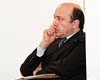 Moscow (UPI) Nov 23, 2005
Igor Ivanov, Secretary of the Russian Security Council, made a surprise visit to Baghdad earlier this month. It was the first visit by a high-ranking Russian official to Iraq since the downfall of Saddam Hussein. Before that, only delegates from the countries whose troops were stationed in Iraq visited the country. |
|
|
| The content herein, unless otherwise known to be public domain, are Copyright 1995-2016 - Space Media Network. All websites are published in Australia and are solely subject to Australian law and governed by Fair Use principals for news reporting and research purposes. AFP, UPI and IANS news wire stories are copyright Agence France-Presse, United Press International and Indo-Asia News Service. ESA news reports are copyright European Space Agency. All NASA sourced material is public domain. Additional copyrights may apply in whole or part to other bona fide parties. Advertising does not imply endorsement, agreement or approval of any opinions, statements or information provided by Space Media Network on any Web page published or hosted by Space Media Network. Privacy Statement All images and articles appearing on Space Media Network have been edited or digitally altered in some way. Any requests to remove copyright material will be acted upon in a timely and appropriate manner. Any attempt to extort money from Space Media Network will be ignored and reported to Australian Law Enforcement Agencies as a potential case of financial fraud involving the use of a telephonic carriage device or postal service. |
