
TERROR WARS
Balkan weapon trafficking still a major problem; 2015 terror deaths fall
By Jovan MATIC, Rachel O'BRIEN
Belgrade (AFP) Nov 16, 2016


Terrorism deaths fall in 2015: annual global index
London (AFP) Nov 16, 2016 - Terrorism deaths fell last year thanks to a weakening of the Islamic State group in Iraq and Boko Haram in Nigeria, but both groups expanded their geographic reach, a new index revealed Wednesday.

Some 29,376 people died from terrorism in 2015, down 3,389 on the previous year and the first fall since 2010, according to the Global Terrorism Index published by the Institute for Economics and Peace.

This fall was thanks largely to 5,556 fewer deaths in Iraq and Nigeria -- a reduction of one third since 2014 -- as military operations weakened IS and Boko Haram.

However, both groups also expanded their geographical reach last year, with Boko Haram killing more people in Niger, Cameroon and Chad than in the previous year.

IS affiliates meanwhile carried out attacks in 28 countries in 2015, 15 more than in 2014.

Deaths in OECD countries increased from 77 in 2014 to 577 the following year, more than half of them connected to IS.

"The attacks by IS in Paris, Brussels and in Turkey's capital Ankara were amongst the most devastating in the history of these countries and reflect a disturbing return of the transnational group-based terrorism more associated with al-Qaeda before and immediately after September 11," the report said.

Six countries saw a significantly deteriorating situation in 2015 -- France, Turkey, Saudi Arabia, Kuwait, Tunisia and Burundi.

Deaths from the Taliban in Afghanistan also increased significantly. However, Pakistan, India and Thailand recorded improvements.

More than 90 percent of all terrorist deaths occurred in countries already engaged in some form of internal or international conflict.

And just five countries -- Iraq, Afghanistan, Nigeria, Pakistan and Syria -- accounted for 72 percent of all terrorism-related deaths in 2015.

Meanwhile four groups -- IS, Boko Haram, the Taliban and al-Qaeda -- were responsible for 74 percent of deaths, with IS and its affiliates alone killing 6,141 people.

Terrorism cost an estimated $89.6 billion in 2015, down 15 percent on the previous year.

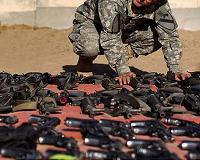
A year after jihadists used weapons manufactured in Serbia to gun down victims in Paris, Balkan countries are struggling to end the scourge of illegal arms trafficking.

The killers who opened fire at the Bataclan theatre, cafes and restaurants in the French capital last November used Yugoslav-era assault rifles produced by Serbia's Zastava Arms.

Months earlier the Kouachi brothers, behind the deadly assault on the Charlie Hebdo magazine offices, carried a rocket launcher from the Balkans, a region littered with weapons since the wars of the 1990s.

According to a top French magistrate, Robert Gelli, Serbian citizens come up in nearly a third of international arms trafficking probes carried out in France.

"The weapons getting through to western Europe and the effects they have is still a major problem," said Ivan Zverzhanovski, who leads a UN Development Programme project in the Balkans to help combat illegal arms trafficking.

The international monitoring project Small Arms Survey said in late 2014 that an estimated 3.6 million to 6.2 million firearms were in the hands of civilians in the Western Balkans, a region home to less than 25 million people.

In Serbia alone there are between 200,000 and 900,000 unregistered weapons, according to authorities, despite various amnesty campaigns launched since the assassination of reformist prime minister Zoran Djindjic in 2003.

On Wednesday, the interior ministry announced its biggest weapons haul in at least 16 years, which led to the arrests of 10 people.

Police in Serbia's northwest seized arms including 111 hand grenades, 12 anti-tank grenades, two rocket launchers, 10 rifle grenades, 10 automatic or semi-automatic rifles, six pistols, 6,000 bullets and dozens of kilos of explosives.

In neighbouring Bosnia, "it is a fact that... there are weapons that are not under control and traffickers buy these weapons," Security Minister Dragan Mektic told news portal Klix.ba recently, stressing that the problem existed across the region.

- Micro-trafficking -

Zverzhanovski told AFP that, based on information from law enforcement agencies, a gun bought for 250 to 500 euros on the Balkan black market could sell for 3,000 to 5,000 euros in a country such as Sweden.

The weapons are rarely transported by the truck-load but a few at a time, in private cars or the countless buses that link the Balkans with western Europe.

Some are sent in pieces to be reassembled later and some are even sent by post, experts say. Smuggling on this micro-scale makes the problem difficult to tackle.

"Until now, no serious groups of arms traffickers have been dismantled in Bosnia," said Jasmin Ahic, an analyst from Sarajevo's faculty of criminology.

The arms have their roots in communist Yugoslavia, where large stockpiles were kept across the federation for use by civilian-staffed "territorial defence" units, designed to defend against a surprise foreign attack.

They ended up deployed in inter-ethnic civil war as the federation collapsed, while more weapons were smuggled into the region to build up armies in the face of international sanctions.

- 'Turning point' -

Such arms went untracked in the chaos of conflict until resurfacing again on the streets of Aachen, Stockholm or Paris, where 130 people were killed in the attacks on November 13, 2015.

"The Paris attacks were a turning point on many levels," said Zverzhanovski, referring to growing cooperation within the EU and between Balkan law enforcement agencies.

Serbian and French officials signed an accord in October to form joint teams to investigate arms smuggling, and Belgrade's prosecutor for organised crime Mladen Nenadic said "determination and clarity" were needed to tackle the problem.

In April, 5,000 police officers were mobilised in all former Yugoslav republics in a 48-hour Interpol-led operation -- but it resulted in the seizure of just 40 firearms and six kilos of explosives, along with 22 arrests, according to Bosnian police.

According to Zverzhanovski, efforts are "still relatively ad hoc, case-based," and the EU needs to help to build the capacity of Balkan police forces, along with plying political pressure on the region to deal with illegal possession.

"This is the moment to tackle it, before these countries come into the EU," he said, noting that Croatia's efforts on firearms dropped off significantly once it joined the bloc.


Comment on this article using your Disqus, Facebook, Google or Twitter login.

.


Related Links
The Long War - Doctrine and Application


Share this article via these popular social media networks
del.icio.usdel.icio.us DiggDigg RedditReddit GoogleGoogle

Previous Report
TERROR WARS
European 'concern' over returning jihadist fighters: Belgium
Brussels (AFP) Nov 15, 2016
EU countries must step up intelligence cooperation to tackle growing numbers of jihadist fighters returning home from battlefields in Syria and Iraq, Belgian Foreign Minister Didier Reynders said Tuesday. Reynders told a press briefing in Brussels there is "concern" that "foreign fighters" were increasingly returning to Europe as US-backed coalition forces drive Islamic State group from terr ... read more


TERROR WARS
Saudis intercept missile fired from Yemen

US general says missile system in S. Korea in 8-10 months

Yemen rebel missile shot down near Mecca: coalition

US to deploy missile defense to South Korea 'soon'

TERROR WARS
Iran missile programme 'non-negotiable': spokesman

USS Carl Vinson test-fires Rolling Airframe Missile, Phalanx

Is China's new short-range missile system designed to compete with Iskander

Raytheon receives Rolling Airframe Missile contract modification

TERROR WARS
A tethered drone-based asset management solution

LDS unveils SpectroDrone to find explosives

AeroVironment Launches Integrated Commercial Information Solution

A remote-controlled drone helps in designing future wireless networks

TERROR WARS
Upgraded telecommunications network for Marines

Unfurlable mesh reflectors deploy on 5th MUOS satellite

Ultra Electronics, GigaSat becomes channel partner for Milspace comms in Indonesia

NATO contracts for satellite services

TERROR WARS
Elbit launches wide-area and persistent intelligence gathering system

Polaris Defense receives USMC order for off-road vehicles

Duterte approves U.S. assault rifle deal for Philippine police

Lithuania acquires sniper rifles

TERROR WARS
U.S. Foreign Military Sales hit $33.6 billion for 2016

After State Dept. blocks the sale, Rodrigo Duterte cancels order for 26,000 U.S. M16s

UK ex-minister says MoD misled him over Saudi arms deal

Turkish foreign minister hits back at 'weak' Iraq PM

TERROR WARS
NATO chief 'certain' Trump will meet US commitments

Chinese media praise Trump's 'experience and ideology'

US-Philippines military cooperation intact: official

Poland founds volunteer force with eye on Russia

TERROR WARS
Researchers use acoustic waves to move fluids at the nanoscale

First time physicists observed and quantified tiny nanoparticle crossing lipid membrane

Shedding light on the formation of nanodroplets in aqueous

'Pressure-welding' nanotubes creates ultrastrong material