Earlier this week the world celebrated the International Day of Human Space Flight. Fifty-seven years ago, the Soviet cosmonaut Yuri Gagarin became the first man to fly to outer space. The landmark event became a starting point for human space exploration.
Sputnik discussed the use of space for military purposes with Duncan Blake, a PhD candidate in law and the military uses of outer space from the University of Adelaide, and a consultant in space law and strategy at the International Aerospace Law and Policy Group, Australia.
Sputnik: Has space been maintained for peaceful purposes since the adoption of the resolution?
Duncan Blake: The idea that space should be used for peaceful purposes was an idea from the very beginning. The issue there is – what do we mean by peaceful purposes? Because it can't mean non-military; in fact, the first man-made object to enter outer space was a German V2 rocket towards the end of World War II.
The first uses of space were inspired by the military and the military was heavily involved. That's not necessarily to say that the military use of outer space is a bad thing. For example, the military has developed global navigation satellite systems like the Russian GLONASS system or the United States Global Positioning System, and they provide navigation assistance, which has a wide range of purposes beyond military ones.
So the peaceful use of outer space does not necessarily mean the non-military use of outer space.
There are lots of other purposes, but the fact is that space is becoming more contested, so potentially more hostile.
Sputnik: Can you elaborate on that? Why do you feel that space is becoming more contested and possibly more aggressive?
Duncan Blake: So for some time states have been thinking about the advantages that they each get for their military forces from military uses of space. The fact is that something far out in outer space provides a very broad field of view, it's something that's up there on an enduring basis, it's not necessarily there all the time because the satellite has to orbit, so it has some disadvantages compared to aircraft, but it's apparently under-regulated.
For example, there are no national borders, I'll say it's apparently under-regulated because I'm very interested in the law that applies to outer space. It's relatively remote, so it's difficult to get to it, it seems protected, so there's a lot that appeals to military forces about how they could use space. It can be used for intelligence surveillance, reconnaissance, for communications, for position navigation and timing, and military forces around the world do use it for all of these sorts of things to fantastic effects.
In fact, they make military conflicts more humanitarian, so precision-guided munitions, aided by high-quality intelligence surveillance and reconnaissance, allow modern military forces to minimize collateral damage. Modern military forces get great advantages from their access to space infrastructure, so you would expect states to consider how they would deny their adversary the use of outer space.
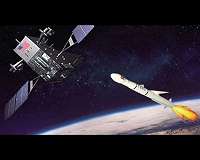
They do do that, by developing anti-satellite missiles, by thinking about how they can use electronic warfare and cyber interference, or daze with laser weapons or high altitude nuclear donations to cause electromagnetic pulses. All these sorts of things can potentially interfere with space infrastructure.
Sputnik: Another thing I want to ask you about is the problem of space debris. We're hearing more and more about the satellites that are no longer functional and other bodies that have been launched; who is responsible for space debris and is there sufficient regulation to regulate that problem? Because I've heard that it's getting to the point where there might even be issues with being able to launch new satellites or even spaceships because of the amount of space garbage.
Duncan Blake: There are somewhere between 1,400 and 1,500 active satellites in outer space right now. One of the best ways we have to know about the plans of commercial entities and others to launch satellites is that they seek permission to use a frequency years in advance.
Having to look at the applications that commercial entities have made to use frequencies, we are expecting something like 14,000 or 15,000 satellites to be launched within the next decade. When you compare that to the 1,400 active satellites in space at the moment, that's a huge leap in the number of satellites in outer space. A lot of those will be relatively small satellites, but you don't need to be very big when you're moving between seven and eleven kilometers per second to do a lot of damage.
There are over 20,000 pieces of space debris. Who is responsible for those? Well, ideally all states should be responsible for mitigating the debris that they create or minimizing the debris that they create, but, perhaps, the more difficult question is who is responsible for cleaning up the debris that already exists.