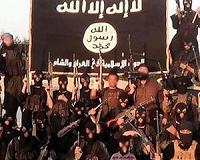
It was in Mosul's Great Mosque of al-Nuri that Abu Bakr al-Baghdadi declared the Islamic State group's "caliphate" and its recapture would finally end that dream of statehood.
When the IS supremo publicly proclaimed the caliphate from the minbar of the mosque in Mosul in June 2014, the group was inviting Muslims globally to move to an expanding new "state".
After losing several key cities in Iraq and also in Syria, the jihadists' "state" is already looking threadbare and the loss of Mosul would all but seal its disintegration.
"The continued loss of swathes of territory makes it more difficult for the group to sustain the fiction of a 'caliphate'," the Soufan consultancy wrote in its latest brief.
The organisation has lost key territory and cities, including among the most emblematic, adopting exit strategies that showed more pragmatism than the heroism it vaunts in its propaganda.
In June, Iraqi forces took Fallujah, a city west of Baghdad where the US marines suffered their worst losses since the Vietnam War, with relative ease despite a fierce initial battle.
As recently as Saturday, anti-IS forces took Dabiq, a town in Syria that looms large in the group's mythology and where jihadists had vowed an apocalyptic battle against "crusaders".
The group's slick English-language magazine was even named after the northern Syrian town, which IS fighters eventually quit without fighting to the end.
The publication's very first issue in July 2014 focused on state-building and tried very hard to paint the "caliphate" as a credible entity.
– Dented image –
But the group was built partly on the cooptation of existing state infrastructure, such as the continued payment of salaries to Iraqi civil servants, said Aymenn al-Tamimi, a jihadism expert at the Middle East Forum.
"When the government stopped paying those salaries last summer, it hurt IS financially to a considerable degree," he said.
"The powerful state image of IS has certainly been dented and I think it partly explains the reduction of foreign fighter inflow."
Besides being the place where the "caliphate" was proclaimed, Mosul was the scene of several events that fashioned the group's gruesome legend.
Its disarmingly easy capture by around 1,500 IS fighters in June 2014 touched off a domino effect that saw the group sweep across Iraq's Sunni heartland virtually unopposed.
The conquest of Mosul featured in a long documentary IS made later and was painted as an epic, founding moment in the caliphate's history.
Mosul has become a by-word for the complete failure of the Iraqi armed forces, and by extension of the US training they were supposed to have received.
The offensive Prime Minister Haider al-Abadi declared launched early Monday provides an opportunity to restore the Iraqi security forces' reputation and pride.
IS once controlled more than a third of Iraq and large part of Syria but it has now shrunk to a fraction of its original territory.
– Insurgent tactics? –
The loss of Mosul would all but mark the end of IS as a land-holding force in Iraq and further encourage it to revert to insurgent tactics such as hit-and-run attacks and bombings.
An organisation that once terrified the planet and controlled territory roughly the size of Britain, IS as a jihadist group now looks increasingly "ordinary".
Tamimi said Al-Qaeda, which was temporarily overshadowed by the rise of its more brutal and media-savvy offshoot, will exploit IS's decline as a vindication of "its more gradualist approach".
"Internationally IS will not be seen as the leading global jihadist brand," he said.
IS once had the monopoly of fear but after its half-hearted defence of Dabiq, social media users joked that the apocalypse had been postponed.
In Iraq, a comedian parodied Baghdadi at the Nuri mosque minbar begging Iraqi forces to respect the sovereignty of the "caliphate" and resolve differences at a summit on terrorism.
The Soufan group said however that while the ongoing battle of Mosul could go down as the moment the Islamic State group collapsed, much would need to be done to call it a genuine success.
"If handled poorly, it could be yet another pause before an inevitable resurgence of terror," it said, warning against revenge killings and sectarian abuses.
burs-jmm/dv