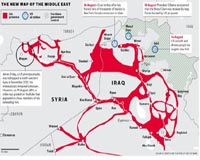
The Islamic State group is losing ground in Iraq, struggling to replenish its ranks after it is attacked and is increasingly unable to mount major operations, a US general said Wednesday.
Baghdad-based Major General Gary Volesky said efforts are paying off for US-backed Iraqi security forces, who are trying to recapture vast tracts of territory seized by IS jihadists in 2014, including the key cities of Mosul and Fallujah in the Anbar and Nineveh provinces.
The jihadists' "ability to conduct large-scale offensive operations has primarily stopped," Volesky told Pentagon reporters in a video call.
"They're more on the defensive, trying to delay Iraqi security forces just to buy time."
He added that the IS group is "losing terrain every single day."
In August 2014, the United States launched an international coalition to fight back against the IS group after they captured large parts of Syria and Iraq.
Much of the work is being conducted through US-led air strikes, although coalition trainers are also helping advise and equip Iraqi forces and moderate Syrian fighters.
Volesky said that at the start of the campaign, it wasn't unusual to see dozens of jihadists attack at once, but that is less frequently the case now.
"When we used to see, you know, 50, 60, 70 fighters, now what we're seeing is five to eight, maybe 15, with a VBIED (car suicide bomber) associated."
"We're not seeing them generate these large operations. We expect it's about a two- to three-week cycle after they do an operation to be able just to try to generate enough combat power to maintain relevance, frankly."
Still, the jihadists did mount a surprise attack on May 3 in northern Iraq, when a Navy SEAL was killed while on a mission to rescue US advisers working with peshmerga forces.
And three car bombs in Baghdad, including a huge blast at a market in a Shiite area, killed at least 94 people Wednesday. The IS group claimed all the attacks.
A government spokesman said the IS group now only controls 14 percent of Iraq, down from 40 percent.
Washington decided last autumn to increase its military support for Iraqi forces to quicken the pace of the anti-IS campaign.