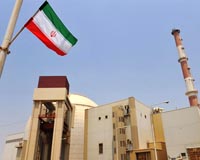
Iran's atomic energy agency said Monday it could reverse its nuclear programme to its status before curbs were imposed under a landmark 2015 agreement with world powers.
"If the Europeans and the Americans don't want to carry out their duties… we will decrease our commitments and… reverse the conditions to four years ago," agency spokesman Behrouz Kamalvandi said, quoted by IRNA state news agency.
"These actions are not out of obstinacy. It is to give diplomacy a chance so that the other side come to their senses and carry out their duties," he added.
The deal promised economic benefits and sanctions relief to Iran, but US President Donald Trump withdrew from the accord in May 2018 and reimposed tough punitive measures against the Islamic republic.
Angered that its beleaguered economy is not receiving sanctions relief it believes it was promised under the deal, Iran has intensified sensitive uranium enrichment work.
European foreign ministers were meeting in Brussels on Monday for crisis talks on the deal.
On Sunday, the European parties to the deal — Britain, France and Germany — called for dialogue as tensions further intensified between Iran and the United States.
In a statement, the so-called E3 expressed concern the deal was at risk of further unravelling but said it was up to Iran to ensure its survival.
Iran has repeatedly threatened to leave the deal unless the remaining parties to the agreement bypass US sanctions and deliver the promised benefits.
Iran's top diplomat warns US is 'playing with fire'
United Nations, United States (AFP) July 16, 2019 –
Iranian Foreign Minister Mohammad Javad Zarif warned Monday that the United States is "playing with fire," echoing remarks by President Donald Trump as the two sides are locked in a standoff over Tehran's nuclear program.
The United States quit an international deal aimed at curbing Iran's nuclear program last year, hitting Tehran with crippling sanctions.
Tensions have since soared, with the US calling off air strikes against Iran at the last minute after Tehran downed an American drone, and Washington blaming the Islamic republic for a series of attacks on tanker ships.
"I think the United States is playing with fire," Zarif told NBC News.
Iran announced last week that it had enriched uranium past the 3.67 percent limit set by the nuclear deal, and has also surpassed the 300-kilogram cap on enriched uranium reserves.
But "it can be reversed within hours," Zarif told the channel, adding: "We are not about to develop nuclear weapons. Had we wanted to develop nuclear weapons, we would have been able to do it (a) long time ago."
Zarif's comments came as the United States imposed unusually harsh restrictions on his movements during a visit to the United Nations.
Weeks after the United States threatened sanctions against Zarif, Secretary of State Mike Pompeo said that Washington issued him a visa but forbade him from moving beyond six blocks of Iran's UN mission in Midtown Manhattan.
"US diplomats don't roam around Tehran, so we don't see any reason for Iranian diplomats to roam freely around New York City, either," Pompeo told The Washington Post.
– UN 'concerns' –
No US diplomats are based in Iran as the two countries broke off relations in the aftermath of the 1979 Islamic revolution that toppled the Western-backed shah.
"Foreign Minister Zarif, he uses the freedoms of the United States to come here and spread malign propaganda," the top US diplomat said.
UN spokesman Farhan Haq told reporters that the UN Secretariat was in contact with the US and Iranian missions about Zarif's travel restrictions and "has conveyed its concerns to the host country."
The United States, as host of the United Nations, has an agreement to issue visas promptly to foreign diplomats on UN business and only rarely declines.
Washington generally bars diplomats of hostile nations from traveling outside a 40-kilometer (25-mile) radius of New York's Columbus Circle.
Zarif is scheduled to speak Wednesday at the UN Economic and Social Council, which is holding a high-level meeting on sustainable development.
Despite the restrictions, the decision to admit Zarif is the latest sign that Trump's administration appears to be retreating from its vow to place sanctions on him as part of its "maximum pressure" campaign on Iran.
Treasury Secretary Steven Mnuchin said on June 24 that sanctions against Zarif would come later that week.
Critics questioned the legal rationale for targeting Zarif and noted that sanctions would all but end the possibility of dialogue — which Trump has said is his goal.
Zarif said in an interview with The New York Times he would not be affected by sanctions as he owns no assets outside of Iran.