
IRAQ WARS
Iraqi forces deploy to guard huge Shiite pilgrimage
By Mohammed Sawaf
Karbala, Iraq (AFP) Oct 11, 2016


IS propaganda arm weakened by military setbacks: study
Washington (AFP) Oct 11, 2016 - The IS group's propaganda machine, largely credited with effectively attracting fresh recruits, has been weakened by military setbacks in Iraq and Syria, a US study said Tuesday.

The jihadist group's photo and video dissemination has been cut drastically year over year, research by the West Point military academy's Combating Terrorism Center revealed.

While 700 pieces of media were produced by the IS group in August of 2015, numbers began declining late last year, with only 200 put out during the same month in 2016, the researchers said.

"It is clear that the organization has been forced to cut back these activities in response to the increasing amount of counterterrorism pressure brought to bear against the organization," said the study.

It also noted there were fewer images depicting a well-running jihadist "caliphate" in the form of schools, libraries, police and public services.

"This decline suggests that the group is struggling to maintain the outward appearance of a functioning state," the study said.

Meanwhile, videos showing the execution of spies have increased significantly, demonstrating either "paranoia" amid increasing pressure or challenges from within that are causing a public display of brutality.

The view that the IS group's online outreach is weakening is shared by a number of experts in the field, said JM Berger, a US specialist known for his studies on jihadists' Twitter presence.

The IS group's propaganda arm has been decimated by coalition strikes and has found a tough time amid a crackdown by social networks, he said.

"They have less media available now, it is more difficult to find, and the content itself is considerably less optimistic and less varied," he told AFP.

"All of this is likely to continue to depress their recruitment efforts, although it doesn't completely mitigate the problem," he said.

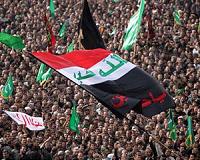
Thousands of Iraqi security personnel guarded areas in and around Karbala on Tuesday to protect hundreds of thousands of Shiite pilgrims flocking to the shrine city for annual mourning rituals.

Shiites in Iraq have come under frequent attack by Sunni extremists of the Islamic State group who regard them as heretics and who still control some territory in Anbar province, to the west of Karbala, though attacks in the city itself are rare.

Imam Hussein, the grandson of the Prophet Mohammed, is buried in Karbala, and Shiite pilgrims pack the city each year for Ashura commemorations, which mark his death in the 7th century.

"Our forces from the army and local and federal police took strict security measures culminating today to protect pilgrims in and around Karbala," police spokesman Colonel Alaa al-Ghanimi told AFP.

"Forces from the Hashed al-Shaabi have implemented security measures to control areas in the west of Karbala province," Ghanimi said, referring to an umbrella organisation for pro-government militiamen.

According to Ghanimi, some 30,000 security personnel are taking part in efforts to guard the city and its surroundings.

On Tuesday, pilgrims sang songs about the story of Imam Hussein's death, some beating their chests with their hands or their backs with chains in mourning.

Black banners were draped around the city, and pilgrims, most of them black-clad, packed the streets around the shrines of Imam Hussein and his brother Abbas.

The number of pilgrims participating in the Ashura commemorations is expected to be huge, with Karbala deputy governor Ali al-Mayali saying it was expected to reach three million.

Some 250,000 pilgrims have arrived over the past two days, Mayali said.

Ghanimi said there had been no security breaches so far, and while IS frequently targets Shiites in Baghdad and elsewhere, Karbala is usually much more secure.

- 1,300 years of mourning -

IS claimed a Sunday bombing in Baghdad that hit a tent where Shiites were distributing refreshments on the occasion of the commemorations for Imam Hussein, killing at least five people.

Imam Hussein was killed in 680 AD by forces of the Caliph Yazid, and his death is marked every year on the 10th day of Muharram, the first month of the Islamic calendar, which is known as Ashura.

Imam Hussein's death was part of a dispute over who should succeed the Prophet Mohammed, which eventually developed into a bitter schism between the Sunni and Shiite branches of Islam.

Some Muslims, who became known as Shiites, believed that a blood relative of the Prophet Mohammed should succeed him as the spiritual and temporal leader of Muslims, and backed his cousin and son-in-law Ali -- Hussein's father -- as successor.

Others, now known as Sunnis, insisted that relationship to the prophet by blood was not required -- a position that carried the day for his three immediate successors before Imam Ali became the fourth.

Muawiyah, who founded the Umayyad dynasty, took power as caliph on Ali's death, and, according to Shiite tradition, named his son as successor in violation of an agreement under which Imam Hussein should have succeeded.

According to Shiite belief, Imam Hussein went knowingly to his death at the hands of Yazid's forces in what is now Iraq in a bid to expose the corruption and irreligiosity of his rule.

This ideal of self-sacrifice is a key tenet of Shiite Islam to this day, inspiring followers to give their lives for causes, including the war against IS.

Iraqi forces are currently preparing for a final push on Mosul, the last city in Iraq held by IS, which has lost much of the ground it seized in 2014.

.


Related Links
Iraq: The first technology war of the 21st century


Comment on this article via your Facebook, Yahoo, AOL, Hotmail login.

Share this article via these popular social media networks
del.icio.usdel.icio.us DiggDigg RedditReddit GoogleGoogle

Previous Report
IRAQ WARS
Iraq PM hits back in war of words with Turkey's president
Baghdad (AFP) Oct 11, 2016
Iraqi Prime Minister Haider al-Abadi hit back on Tuesday against dismissive comments by Turkey's president, mocking his appeal to the nation via video call during a failed coup attempt. Turkish President Recep Tayyip Erdogan told Abadi earlier in the day to "know your place," and said that he is "not on my level" - another escalation in the war of words between the two sides over Ankara's ... read more


IRAQ WARS
China, Russia blast US missile defence at regional forum

Raytheon to update the Netherlands' Patriot missile system

Lockheed's PAC-3 missile destroys ballistic missile targets in test

Saab gets order for man-portable air defense missile system

IRAQ WARS
New targeting system to double range of Russia's Pantsir: Report

State Dept. approves missile warning system sale to Egypt

Raytheon successfully tests newest AMRAAM variant

Russia sends S-300 missile system to Syria port

IRAQ WARS
US Air Force's Space Plane Has Been in Orbit for 500 Days, But Why?

IS drone kills Kurdish fighters, hurts French troops

Thales ready for Royal Navy test of its unmanned systems

Historic Solar Impulse team planning drone

IRAQ WARS
Canada defence dept selects Newtec for first DVB-S2X Airborne Modem

Arizona aerospace company wins $19M Navy satellite contract

TeleCommunications Systems continues USMC satellite services

SES unveils new tactical surveillance and communications solution

IRAQ WARS
Oshkosh gets $42 million JLTV delivery order

Elbit to provide Bradley Fighting Vehicle's gunner hand station

GenDyn unit to support U.S. Special Operations

LTM gets $35 million military engineering support contract

IRAQ WARS
Airbus protests furiously over Poland's handling of chopper deal

Egypt military seen as expanding economic share

Moscow says Syria campaign shows 'reliability' of Russian arms

Poland drops talks in 3 bn euro Airbus chopper deal: ministry

IRAQ WARS
Gorbachev says world at 'dangerous' point as US-Russia tensions soar

Philippines' Duterte to visit China

S. Korea vows armed crackdown on Chinese fishing ships

Russia to hold military drills in Egypt in October

IRAQ WARS
Nanotechnology for energy materials: Electrodes like leaf veins

Electron beam microscope directly writes nanoscale features in liquid with metal ink

A 'nano-golf course' to assemble precisely nanoparticules

NIST-made 'sun and rain' used to study nanoparticle release from polymers