
 |
 |
 |
 |
 |
 |
 |
 |
 |
 |

| . |  |
. |

Washington (UPI) Jun 30, 2010 Early in 2008, the Atlantic Council released a report over the signature of its chairman, retired U.S. Marine Gen. James L. Jones that began, "Make no mistake: NATO is not winning in Afghanistan." After a firestorm of protest from Brussels, the word "NATO" was changed to "the international community." Legend has it that the report was read by U.S. Sen. Barack Obama, D-Ill., and put the general in contention for his current job, which is national security adviser in the administration of President Barack Obama. If that report were released in summer 2010, it could easily read: "Make no mistake: we are losing in Afghanistan." The reasons have less to do with the current counterinsurgency campaign designed by U.S. Army Gen. Stanley McChrystal and all to do with the overarching Obama strategy produced last year. Those flaws are profound and so potentially fatal that unless rectified, the chances of a George Washington, Dwight Eisenhower or even David Petraeus succeeding aren't good. First, the so-called AfPak strategy is backward. It should be called PakAf as Pakistan is the strategic center of gravity, not Afghanistan. Yet, virtually all of our energy and resources are going into Afghanistan. Second, the aim of the original strategy was to disrupt, dismantle and defeat al-Qaida and prevent its return. Yet, there are perhaps only a handful of al-Qaida militants in Afghanistan. The rest have relocated to Pakistan, Yemen, Somalia and other ports of call. Third, the strategy was based on bringing a Western style of centralized government to Afghanistan. Yet that country and culture had always been and was likely always to be decentralized in its political structure. Fourth, as the Taliban became the surrogates for al-Qaida, the strategy focused on them. Yet, the crux of the problem is dealing with the Pashtuns and enfranchising them into the body politic. Fifth, while military forces can counter the Taliban, they cannot bring the necessary governance and governing process. Yet, we have failed to provide the civilian side of this equation and "government in a box" is a dangerous hoax. Sixth, success rests on a competent and legitimate government in Kabul. Yet, the Karzai government has failed to meet either criterion. Seventh, success is based on recruiting, training and maintaining effective and sufficient Afghan security forces. While the jury is still out, progress has been slow and episodic. Yet we haven't determined who will ultimately be responsible for paying these troops as, despite recent reports of finding a $1 trillion Afghan mineral reserve, that government will not have the billions to meet those bills. Eighth, despite our understanding of the need to appreciate local culture, that is a work in progress. Unfortunately, reports that many of our translators aren't fluent in Pashto or even Dari suggest that the difficulty of communicating a Western message to an Afghan audience has been increased many fold. Indeed, operations are often named in Dari even when they take place in Pashtun areas reinforcing this cultural unawareness. Finally, the strategy assumes a largely bilateral approach. Yet, only a regional solution that engages Afghanistan's neighbors is likely to produce a lasting effect. Petraeus is experienced, gifted, canny and shrewd. While he has the authority to change the campaign plan, he will have to move subtly and cleverly to correct the strategic flaws that threaten and impede success in Afghanistan. First and most importantly, he needs to reverse AfPak to PakAf. Fortunately, he knows and is respected by Pakistan's political and military leadership. Finding the equipment the Pakistan army desperately needs will expedite this shift to PakAf. Second, a regional approach and strategy are vital. Recommendations to that end up the chain of command can begin this process. Third, few better understand the need for the closest political and military interactions. Petraeus and Ambassador Ryan Crocker did this brilliantly in Iraq and Petraeus knew how to deal with Prime Minister Nouri al-Maliki. This must be duplicated in Kabul. Fourth, while protection of the Afghan people is key, Petraeus knows this must conform to their and not our cultural norms. That will include greater reliance on reintegration and dialogue with insurgent groups. The downside is that there is no equivalent to the Iraqi awakening that stood up to the mass religious killings and persecutions. The magic will be finding or inventing an equivalent. Finally, the December assessment and the ambiguities inherent in the July 2011 date to begin considering or withdrawing troops will weigh very heavily as will the November elections here. Petraeus will be under great pressure to perform his magic. Yet, he needs time and time may be his biggest enemy. Petraeus is among the best we have and President Barack Obama picked the right general for the job. Let us hope that under his dress uniform or desert fighting gear the general wears a blue suit with a big Red S on his chest. For that is what is needed. (Harlan Ullman is chairman of the Killowen Group, which advises leaders of government and business, and senior adviser at Washington's Atlantic Council.) (United Press International's "Outside View" commentaries are written by outside contributors who specialize in a variety of important issues. The views expressed do not necessarily reflect those of United Press International. In the interests of creating an open forum, original submissions are invited.)
Share This Article With Planet Earth
Related Links News From Across The Stans

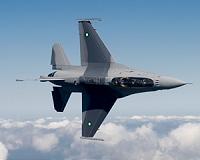 Delivery Of New F-16s To Pakistan Shows Deepening Relations
Washington DC (AFNS) Jun 30, 2010 The Air Force is set to deliver the first of 18 new F-16 Fighting Falcon jet fighters to the Pakistani air force in a sign of deepening relations between the United States and Pakistan. Three F-16s are scheduled to arrive in Pakistan on June 26, with 15 more to be delivered later this year and next, Air Force Maj. Todd Robbins, the Pakistan country director in the office of the undersecret ... read more |
|
|
| The content herein, unless otherwise known to be public domain, are Copyright 1995-2010 - SpaceDaily. AFP and UPI Wire Stories are copyright Agence France-Presse and United Press International. ESA Portal Reports are copyright European Space Agency. All NASA sourced material is public domain. Additional copyrights may apply in whole or part to other bona fide parties. Advertising does not imply endorsement,agreement or approval of any opinions, statements or information provided by SpaceDaily on any Web page published or hosted by SpaceDaily. Privacy Statement |


 del.icio.us
 Digg
Digg Reddit
 YahooMyWeb
 Google
 Facebook


