It was supposed to be a step towards reconciliation: Friday prayers bringing Sunni and Shiite Muslims together in a small town notorious as a historical jihadist bastion.
But shortly before midday, the verdict landed: "Everything is cancelled."
Long before the Islamic State group took over swathes of Iraq in 2014, Al-Shura had a reputation as a purveyor of die-hard jihadists, including when Al-Qaeda led the insurgency.
Iraqi forces retook the town, which lies about 35 kilometres (20 kilometres) south of Mosul, late last month.
"Al-Shura was only defended by around 40 fighters, we destroyed three car bombs driven by suicide attackers and the rest fled," said an officer from the interior ministry's Rapid Response forces.
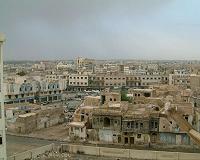
Since then Al-Shura, which used to be home to around 1,000 families, had been a ghost town.
But on Friday morning, the silence was disrupted by the rumble of dozens of armoured police vehicles rimming the Abrar mosque, above which the Iraqi flag recently replaced IS's black banner.
"We came here to attend a joint prayer, one which will unite Sunnis and Shiite, side by side, under the protection of the police," said General Shaalan Ali Sadr, an Iraqi police commander.
"This will be the first prayer since the town was retaken. It used to be the terrorists' capital here," he said.
Moments later he had to cancel the event for lack of an available Sunni cleric to lead the prayer.
Beyond the immediate military goal of liberating Mosul from the jihadists' yoke, the wider stake is a reconciliation between the communities.
One of the reasons IS was able to take over the country's second city in a few hours was the deep resentment among its Sunni majority towards Shiite-dominated security forces.
– Distrust –
But the only Shiite Iraqis who could be seen near the mosque ahead of the joint Friday prayer were security forces flying religious flags on their vehicles in the distance.
The handful of Sunni Muslims who showed up, including some community leaders in full tribal attire, did so on a misunderstanding.
"The security forces came to fetch us from the villages we fled because of the fighting. We thought they were going to tell us we could go home," said one man who gave his name as Ahmed.
"We still haven't received any help from anybody and we're having to drink polluted water," he said.
Access to the village is controlled by the police and forces from the Hashed al-Shaabi, a paramilitary umbrella dominated by Shiite militias loyal to Tehran.
"The real problem here is the burnt houses. Not burnt during the fighting, but now," said another man in the group, who gave his as Ali.
"I don't know yet whether my own house is still standing or has been burnt down," he said.
Most of the residents dodged questions on the identity of the alleged arsonists but one of them stepped aside from the group to point a finger at the Hashed al-Shaabi.
"It's men from the militias, they come at night, with the complicity of some policemen who let them through," he said.
"The worst thing about this is that the houses they burn do not belong to IS members but to innocent people," the man said, refusing to give his name out of fear for his security.
AFP reporters saw burnt houses in the area but it was not possible to establish how recent the damage was.
Iraq's federal police commander, Raed Shaker Jawdat, denied the allegation.
"The high command has given very clear instructions banning any act against civilians. It is the enemy (IS) which has routinely torched its own positions before fleeing," he said.
"It must be understood that Al-Shura was always a hub for extremists backed by Saudi Arabia, even in the time of (former president) Saddam Hussein," Jawdat said.
"We want to free them from his radical mentality."