
. Military Space News .
FARM NEWS
African Sahelian farmers diversify crops to adapt to climate change
by Staff Writers
Barcelona, Spain (SPX) Nov 08, 2021

stock image only

Farming communities in the African Sahel have adapted their crops to the high seasonal variability and rising temperatures caused by climate change over this past century. This is the main conclusion of a study carried out by the Institute of Environmental Science and Technology of the Universitat Autonoma de Barcelona (ICTA-UAB), which highlights the importance of environmental knowledge of rural and indigenous communities in adapting to climate change.

The study documents Sereer farmers' observations of local environmental changes in the Fatick region of Senegal, and analyses how the farmers use crop diversity to adapt to those changes. These rural populations in the Sahel are highly dependent on rain-fed agriculture, making them highly vulnerable to climate variability, which threatens their main source of food and income.

According to the study conducted by ICTA-UAB researchers Anna Porcuna-Ferrer and Victoria Reyes-Garcia, alongside Faustine Ruggieri from the CIRAD (France), over the past century Sereer farmers have had to face four different climatic periods - with variations in rainfall, temperature and winds - in which they modified the variety of crops to respond to climate change, as well as to the corresponding socio-economic and cultural changes.

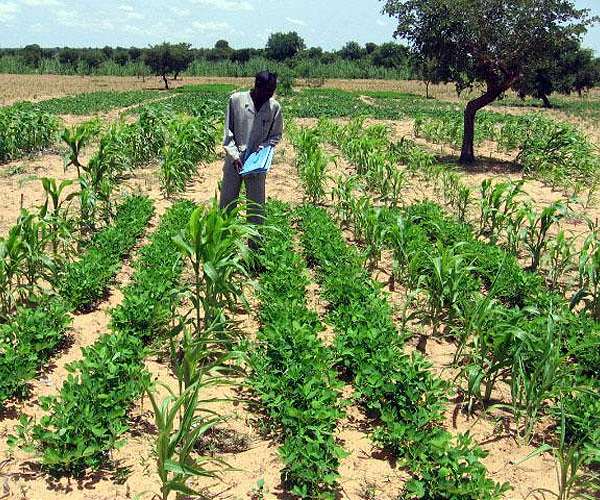
The results show that during drought periods, farmers adopt short-cycle agricultural varieties, which need less time to mature. They are thus less affected if the rainy season starts later and ends earlier. Long-cycle varieties are abandoned and reinstalled during periods when rainfall is more abundant. They alternate long and short-cycle varieties of sorghum (Sorghum bicolor), pearl millet (Pennisetum glaucum), groundnut (Arachis hypogaea), and cowpea (Vigna unguiculate).

Sereer farmers define four distinct climatic periods since 1900. The first period, up to 1960, was marked by a long rainy season (lasting from May to November) with heavy and abundant rainfall, high temperatures in the months preceding the rains and cold temperatures in the months after.

In the early 1970s, a period of intense drought - called "ofein" in local language - began, which for a decade was characterized by low rainfall (from July to early September), warm temperatures throughout the year and no cold spells.

The lack of rainfall during the crop flowering time in September and October resulted in poor harvests and famines, lack of pasture, reduction of herds, and the disappearance of many wild animals due to drying and loss of forest habitat. During this period, and in order to maintain production during dry spells, farmers introduced most of the short-cycle varieties they maintain today.

The period following the drought, from the early 1980s to the late 1990s, gradually recovered rainfall levels, albeit with shorter periods. Temperatures ceased to be seasonal and the cold at the end of the rainy season never came back.

The most recent period described by farmers started in 2000 and is still ongoing. According to respondents, rainfall has returned to pre-drought levels. The rainy season remains short, but rainfall is abundant and evenly distributed over time. Farmers agree that, compared to the 1960s, temperatures are now warmer and windier, which they relate to the lack of a natural barrier provided by the trees.

Farmers have adapted to the shorter rainy season by using animal-driven tools, which enable them to cultivate larger areas faster, thus increasing the chances of a good harvest. Herd sizes have not increased because all accessible pastureland is now under cultivation, and trees do not regenerate because the use of animal-driven tools such as seed drills and hoes kill young shoots. With the recovery of rainfall, farmers have recovered long-cycle varieties, which now coexist in their fields with short-cycle varieties.

"Understanding how Sereer farmers use crop diversity to adapt to climate variations can be the basis for climate change adaptation policies that address local needs and constraints," explains Anna Porcuna-Ferrer, co-author of the study and member of the LICCI research group ("Local Indicators of Climate Change Impacts - The Contribution of Local Knowledge to Climate Change Research"), led by ICTA-UAB anthropologist Victoria Reyes-Garcia.

The results, recently published in the Journal of Ethnobiology, highlight the important role of agrobiodiversity management in climate change adaptation and recommend including local knowledge, and therefore farmers, in both the elaboration and implementation of climate change adaptation policies.

Research Report: "Crop diversity management as smallholders' response to climatic variability. Insights from the Sereer in Senegal"


Related Links
Universitat Autonoma De Barcelona
Farming Today - Suppliers and Technology


Thanks for being here;
We need your help. The Space Media Network continues to grow but revenues have never been harder to maintain.

With the rise of Ad Blockers, and Facebook - our traditional revenue sources via quality network advertising continues to decline. And unlike so many other news sites, we don't have a paywall - with those annoying usernames and passwords.

Our news coverage takes time and effort to publish 365 days a year.

If you find our news sites informative and useful then please consider becoming a regular supporter or for now make a one off contribution.
SpaceMediaNetwork Contributor
$5 Billed Once


credit card or paypal
SpaceMediaNetwork Monthly Supporter
$5 Billed Monthly


paypal only


FARM NEWS
'Extremely low' wine production this year: trade body
Paris (AFP) Nov 4, 2021
Bad weather in Europe's top wine-making countries means 2021 will be an extremely low year for wine production, the International Organisation of Vine and Wine (OIV) said on Thursday. The Paris-based industry body said that world wine production volume is expected to come in at around 250 million hectalitres, a drop of four percent from last year and seven percent below the 20-year average. "The 2021 wine production can be considered extremely low, only slightly above the historically small prod ... read more

Comment using your Disqus, Facebook, Google or Twitter login.


Share this article via these popular social media networks
del.icio.usdel.icio.us DiggDigg RedditReddit GoogleGoogle

FARM NEWS
Israel begins initial testing for deployment of elevated sensor

Anti-missile defences tested to protect 'sensitive' sites: Iran

Next Generation Interceptor Program Achieves Critical System Requirements Review

SBIRS GEO-6 Space Vehicle completes production

FARM NEWS
Zumwalt destroyers will replace rapid-fire guns with hypersonic missiles

China's conducted 100s of hypersonic weapon tests

Chinese hypersonic test like a "Sputnik moment': top US general

US Army, Navy hold 3 successful tests in bid to advance hypersonic weapons'

FARM NEWS
Gremlins Program Demonstrates Airborne Recovery

Putin calls for boost to drone arsenal with AI

Turkey says cannot be blamed for Ukraine's drone use

US targets Iran's drone program with sanctions

FARM NEWS
France launches state-of-art military communications satellite

Space Systems Command awards $46.5 million contract for meshONE-Terrestrial

Cesiumastro deploys active phased array experimental satellites

US Space Force to take over SATCOM operations from Army, Navy

FARM NEWS
Army tests MK-22 Precision Sniper Rifle at Fort Bragg ahead of fielding

Pentagon asks employees to report cases of strange, sudden sickness

Defense Department establishes supply chain resiliency working group

Kazakh defence minister resigns after deadly depot blasts

FARM NEWS
France calls leaked Macron text 'new low' in Australia subs row

Biden offers France mea culpa in Europe trip

Leaders of France, Australia hold first talks since subs row

Turkey's Islamic defence consultancy takes on West

FARM NEWS
China ruling party plenary to further cement Xi's grip on power

India ramps up Himalayan border defences after deadly China clashes

Laughing or crying, Biden wears heart on sleeve

Ukraine denies Russia border build-up as defence minister quits

FARM NEWS
The secret of ultralight but stiff sandwich nanotubes

AFRL Nano Team takes lead in building stronger ties with India

Striking Gold: A Pathway to Stable, High-Activity Catalysts from Gold Nanoclusters


The content herein, unless otherwise known to be public domain, are Copyright 1995-2024 - Space Media Network. All websites are published in Australia and are solely subject to Australian law and governed by Fair Use principals for news reporting and research purposes. AFP, UPI and IANS news wire stories are copyright Agence France-Presse, United Press International and Indo-Asia News Service. ESA news reports are copyright European Space Agency. All NASA sourced material is public domain. Additional copyrights may apply in whole or part to other bona fide parties. All articles labeled "by Staff Writers" include reports supplied to Space Media Network by industry news wires, PR agencies, corporate press officers and the like. Such articles are individually curated and edited by Space Media Network staff on the basis of the report's information value to our industry and professional readership. Advertising does not imply endorsement, agreement or approval of any opinions, statements or information provided by Space Media Network on any Web page published or hosted by Space Media Network. General Data Protection Regulation (GDPR) Statement Our advertisers use various cookies and the like to deliver the best ad banner available at one time. All network advertising suppliers have GDPR policies (Legitimate Interest) that conform with EU regulations for data collection. By using our websites you consent to cookie based advertising. If you do not agree with this then you must stop using the websites from May 25, 2018. Privacy Statement. Additional information can be found here at About Us.