Australia announced an assertive new defence strategy Wednesday, beefing up its long-range strike capabilities and cyber-warfare efforts amid escalating tensions with China.
Prime Minister Scott Morrison earmarked Aus$270 billion ($185 billion) for new and upgraded defence capabilities over the next decade — a nearly 40 percent increase — saying the defence force would significantly shift its focus to projecting military power across the Indo-Pacific.
"We must face the reality that we have moved into a new and less benign strategic era," Morrison said in a major policy speech, eyeing the end of unquestioned US hegemony and the rise of an increasingly assertive China.
"Even as we stare down the COVID pandemic at home, we need to also prepare for a post-COVID world that is poorer, that is more dangerous and that is more disorderly."
Australia's government has committed to spending at least two percent of GDP on defence — as US President Donald Trump has angrily demanded of allies — and plans to spend almost 40 percent more on weapons systems over the last defence review in 2016.
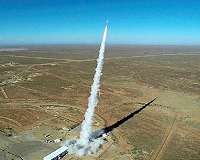
The country will acquire a more powerful strike capability that can hit targets thousands of kilometres from Australia, starting with the United States' AGM-158C Long Range Anti-Ship Missile.
It will also invest in newer platforms like drones, and boost research into hypersonic and direct energy weapons like lasers.
– Middle power –
While acknowledging the nation of 25 million people cannot match its rivals in the region — China officially plans to spend $178 billion on defence in 2020 alone — Morrison framed Australia as a regional power committed to an "open, sovereign Indo-Pacific, free from coercion and hegemony".
Though Morrison said Australia remains prepared to send troops further afield "where it is in our national interest to do so", he underscored that could come at the cost of the country's ability to respond to threats from and in its own backyard.
Australia has fought alongside the United States in every major war of the last century, often in areas far from its shores.
The announcement marks a significant shift in Australia's defence posture and will be widely seen as an effort to counter Beijing's growing influence in the region.
As part of the strategic pivot, the Australian Defence Force will focus on building "stronger deterrence capabilities" to raise the cost for any would-be aggressor and concentrate on the immediate region over operations further afield, he said.
It also follows Morrison's "Pacific Step-Up" policy — announced in 2018 to rebuild support among regional allies drifting toward Beijing — which has seen his government ramp up diplomatic engagement and offer greater financial aid to its developing neighbours.
"We want a region where all countries, large and small, can engage freely with each other, guided by international rules and norms," he said Wednesday.
Morrison said Australia would significantly increase investment in defence space capabilities — including a network of satellites to create an independent communications network — calling it a "whole new theatre" for the country, which recently launched its own space agency.
He also pinpointed cybersecurity as key to Australia's defence strategy, a day after announcing the "largest-ever" boost in cybersecurity spending — a roughly 10 percent hike that takes the budget for the next decade to Aus$15 billion.
The government says Australia has been targeted in a wave of state-sponsored attacks, which are suspected to have been carried out by China.
Beijing has clashed repeatedly with Canberra as it looks to increase the cost for Australia of speaking out against Communist Party interests.
Most recently, Australia enraged China by calling for an investigation into the origins of the coronavirus pandemic.
Canberra has also pushed back against what it describes as China's economic "coercion", covert influence campaigns and the use of technology companies like Huawei as a tool for intelligence-gathering and geopolitical leverage.
China has warned its students and tourists against going to Australia, slapped trade sanctions on Australian goods and sentenced an Australian citizen to death for drug trafficking.