
The sparsely populated, underdeveloped region will provide a quiet environment to ensure the electromagnetic waves, the crucial requirement of operation, are not interrupted by human activities.
The sparsely populated, underdeveloped region will provide a quiet environment to ensure the electromagnetic waves, the crucial requirement of operation, are not interrupted by human activities. |
The dish-like telescope, as large as 30 football fields, will stand in a region of typical Karst depressions in Guizhou Province when it's done in 2013.
Karst depressions are usually located in regions plentiful in limestone and dolomite, where groundwater has enlarged openings to form a subsurface drainage system.
The facility will greatly improve China's capacity for astronomical observation, according to the National Astronomical Observatory (NAO), the major developer of the program.
FAST's main spherical reflector will be composed of 4,600 panels. Its observation sensitivity will be 10 times more powerful than the 100-m aperture steerable radio telescope in Germany. Its overall capacity will be 10 times larger than what is now the world's largest (300 m) Arecibo radio telescope developed by the United States, according to Nan Rendong, the chief scientist of the project and an NAO researcher.
The project, costing more than 700 million yuan (102.3 million U.S. dollars), will allow international astronomers and scientists to discover more of the secrets of the universe based on cutting-edge technologies, said Zhang Haiyan, an NAO official in charge of construction.
Scientists have so far observed only 1,760 pulsars, which are strongly magnetized spinning cores of dead stars. With the help of FAST, they could find as many as 7,000 to 10,000 within a year, Nan said.
Pulsars have allowed scientists to make several major discoveries, such as confirmation of the existence of gravitational radiation as predicted by the theory of general relativity.
FAST could also be a highly sensitive passive radar to monitor satellites and space debris, which would be greatly helpful for China's ambitious space program.
The telescope could also help to look for other civilizations by detecting and studying communication signals in the universe.
Chinese scientists and officials selected Dawodang, Pingtang County as the site, where a Karst valley will match the shape of the huge bowl-like astronomical instrument.
The sparsely populated, underdeveloped region will provide a quiet environment to ensure the electromagnetic waves, the crucial requirement of operation, are not interrupted by human activities.
Construction of a new residential area about 60 km away also began on Friday to relocate 12 households. By 2013, when the telescope is to be in operation, all 61 farmers will move to their new houses in Kedu town, with farmland allocated by the government.
"The project is beyond my imagination. I'm glad to see that an ordinary old guy like me could contribute to the country's science program," said Yang Chaoli, 68.
The project was approved by the National Development and Reform Commission, the country's top planning body, the Ministry of Science and Technology, the Chinese Academy of Sciences and its subordinating NAO, Guizhou Province and other departments.
Source: Xinhua News Agency
Share This Article With Planet Earth
 del.icio.us del.icio.us |
 Digg Digg |
 Reddit Reddit |
 YahooMyWeb YahooMyWeb |
 Google Google |
 Facebook Facebook |
 ALMA Observatory Equipped With Its First Antenna
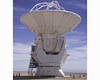 Chajnantor, Chile (SPX) Dec 22, 2008
| The content herein, unless otherwise known to be public domain, are Copyright 1995-2007 - SpaceDaily.AFP and UPI Wire Stories are copyright Agence France-Presse and United Press International. ESA Portal Reports are copyright European Space Agency. All NASA sourced material is public domain. Additional copyrights may apply in whole or part to other bona fide parties. Advertising does not imply endorsement,agreement or approval of any opinions, statements or information provided by SpaceDaily on any Web page published or hosted by SpaceDaily. Privacy Statement |