
SUPERPOWERS
China sea security issues pushed Philippine U-turn on US troop pact
by Staff Writers
Manila (AFP) June 3, 2020

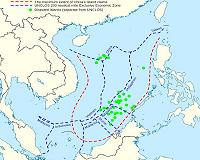
Security issues in the disputed South China Sea helped convince the Philippines to delay quitting a key US military pact, the nation's envoy to Washington said Wednesday.

The government of Philippine President Rodrigo Duterte announced Tuesday it had suspended plans to cancel the Visiting Forces Agreement (VFA), a deal that is important to Washington's moves to counter Beijing's rising regional power.

Duterte has cosied up to China in search of trade and investment, sparking US concern that its long-time ally and former colony would change sides in a strategic boost to Beijing.

"Because of security issues... in that part of the world (South China Sea), both our governments have seen it would be prudent for us to simply suspend any implementation of the termination," Philippine Ambassador to the US Jose Manuel Romualdez told ANC news channel.

Since taking power in 2016 Duterte has moved closer to Beijing, but has faced push back from the Philippine public and concern in the military wary of its territorial ambitions in the disputed South China Sea.

Billions in trade pass through the strategic waterway and it is thought to contain rich petroleum deposits, making it a frequent source of regional tension.

Philippine analyst Richard Heydarian said the VFA reversal showed Duterte had to decide between an aggressive China and an historic ally that has been helpful.

"This is not the time to initiate an ugly divorce, especially when China is spreading its tentacles everywhere," he said.

The 1998 pact is key to the US-Philippines' broader decades-old military alliance, and underpins hundreds of joint military activities per year as well as speedy disaster aid and ongoing anti-terror efforts.

The Philippine military receives significant American training and equipment, obtaining $554.55 million in US security assistance from 2016-2019.

Manila's termination of the military pact was to have taken effect in August and was triggered by the cancellation of the visa of Ronald Dela Rosa, a senator who served as the main architect of Duterte's drug war.

Duterte bristles at any criticism and sanction of his signature policy, which has seen police kill thousands of alleged drug users and pushers.

Though Duterte has repeatedly threatened to pull the Philippines away from the US, ties have remained close.

Romualdez said a US offer to assist the Philippines in its battle to contain its coronavirus outbreak also helped discussions on preserving the VFA for now.

The suspension is for six months from June 1 and can be extended a further six months.

An extension of the reversal would push the deal's life up to the final year of Duterte's constitutionally-mandated single term, which ends in June 2022.


Related Links
Learn about the Superpowers of the 21st Century at SpaceWar.com
Learn about nuclear weapons doctrine and defense at SpaceWar.com

SUPERPOWERS
Growing US-China rivalry seen fueling UN paralysis amid virus crisis
United Nations, United States (AFP) May 31, 2020
For nearly a decade, the UN Security Council has been frequently paralyzed by Russia's obstinacy over the Syrian crisis. Today, however, it is the US-China rivalry that has infected a growing array of issues, according to officials and diplomats. As recently as 2017, an understanding between Washington and Beijing allowed the United Nations on three occasions - involving separate sets of economic sanctions - to project international unity in the face of the North Korean nuclear threat. Three ... read more

Comment using your Disqus, Facebook, Google or Twitter login.

Share this article via these popular social media networks
del.icio.usdel.icio.us DiggDigg RedditReddit GoogleGoogle

SUPERPOWERS
US approves sale of 84 Patriot missiles to Kuwait

Advanced Air and Missile Defense, in the hands of soldiers

Boeing awarded $128.5M modification to GMD missile upgrade contract

US pulling Patriot missile batteries from Saudi

SUPERPOWERS
Raytheon nabs $92.4M for work on NASAMS

Morocco to purchase missiles, missile defense system from France

Boeing nabs $3.1B in cruise missile deals for Saudi Arabia, other partners

Boeing scores deals to deliver more than 1,000 missiles to Saudi

SUPERPOWERS
Citadel Defense launches Deepfake AI to prevent drone attacks on military and government assets

How drones can monitor explosive volcanoes

Northrop Grumman supports government flight testing of the MQ-8C Fire Scout Radar

FLIR to supply Black Hornet Nano-UAV Systems for US Army's Soldier Borne Sensor Program

SUPERPOWERS
UK nears final stage of Skynet satellite contract competition

Roccor creates Helical L-Band Antenna for first-ever space demonstration of Link 16 Networks

NIST researchers boost microwave signal stability a hundredfold

IBCS Goes Agile

SUPERPOWERS
DoD to phase out stop-movement order

Continuous production agility in action

West Point prepares for June 13 graduation ceremony

US military will no longer ban COVID-19 survivors from serving

SUPERPOWERS
UAE still a top client as French arms sales fall

Trump planning new arms sale to Saudi Arabia, says senator

China military budget growth slows to 6.6 percent

Northrop Grumman's long-lasting relationship with Norway

SUPERPOWERS
China slams 'senseless' US move at UN over Hong Kong

Russia slams 'dangerous' US foreign policy moves

India sidesteps Trump mediation offer over China border showdown

Caution on China from EU, West's 'soft underbelly'

SUPERPOWERS
Transporting energy through a single molecular nanowire

To make an atom-sized machine, you need a quantum mechanic

Magnetic nanoparticles help researchers remotely release adrenal hormones