
Subscribe free to our newsletters via your
. Military Space News .


WATER WORLD
Drought and climate change: An uncertain future?
by Staff Writers
London, UK (SPX) Dec 19, 2013


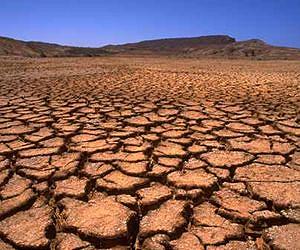
File image.

Drought frequency may increase by more than 20% in some regions of the globe by the end of the 21st century, but it is difficult to be more precise as we don't know yet how changes in climate will impact on the world's rivers.

The results come from a study, published today in Proceedings of the National Academy of Sciences (PNAS), which examined computer simulations from an ensemble of state of the art global hydrological models driven by the latest projections from five global climate models used for the fifth assessment report of the Intergovernmental Panel on Climate Change.

The research was led by Dr Christel Prudhomme from the UK's Centre for Ecology and Hydrology working with colleagues from the UK, USA, the Netherlands, Germany and Japan.

Increasing concentrations of greenhouse gases in the atmosphere are widely expected to influence global climate over the coming century. The impact on drought is uncertain because of the complexity of the processes but can be estimated using outputs from an ensemble of global hydrological and climate models.

The new study concluded that an increase in global severity of hydrological drought - essentially the proportion of land under drought conditions - is likely by the end of the 21st century, with systematically greater increases if no climate change mitigation policy is implemented.

Under the 'business as usual' scenario (an energy-intensive world due to high population growth and slower rate of technological development), droughts exceeding 40% of analysed land area were projected by nearly half of the simulations carried out.

This increase in drought severity has a strong signal to noise ratio at the global scale; this mean we are relatively confident that an increase in drought will happen but we don't know exactly by how much.

Dr Prudhomme said, "Our study shows that the different representations of terrestrial water cycle processes in global hydrological models are responsible for a much larger uncertainty in the response of hydrological drought to climate change than previously thought. We don't know how much changed climate patterns will affect the frequency of low flows in rivers."

One important source of uncertainty depends on whether the models allow plants to adapt to enriched carbon dioxide atmosphere. If this is accounted for, the increase in droughts due to warmer climate and changes in precipitation is mitigated by reduced evaporation from plants, because they are more efficient at capturing carbon during photosynthesis.

The process of plant adaptation under an enriched carbon dioxide atmosphere is currently absent from the majority of conceptual hydrological models and only considered on a few land surface and ecology models.

Dr Prudhomme added, "When assessing the impact of climate change on hydrology it is hence critical to consider a diverse range of hydrological models to better capture the uncertainty."

The study is to be published in a special feature of the Proceedings of the National Academy of Sciences that assembles first results of the Inter-Sectoral Impact Model Intercomparison Project, a unique community-driven effort to bring research on climate change impacts to a new level.

.


Related Links
Centre for Ecology and Hydrology
Water News - Science, Technology and Politics


Comment on this article via your Facebook, Yahoo, AOL, Hotmail login.

Share this article via these popular social media networks
del.icio.usdel.icio.us DiggDigg RedditReddit GoogleGoogle


WATER WORLD
Saving the Great Plains water supply
East Lansing MI (SPX) Dec 17, 2013
Significant portions of the Ogallala Aquifer, one of the largest bodies of water in the United States, are at risk of drying up if it continues to be drained at its current rate. In the current issue of Earth's Future, a journal of the American Geophysical Union, Michigan State University scientists are proposing alternatives that will halt and hopefully reverse the unsustainable use of water dr ... read more


WATER WORLD
Patriot missiles demonstrate field readiness

U.S. to boost Israel defense missile funding by $173M

Astrium, Raytheon team to compete for NATO ballistic missile defense work

Iran nuclear accord means NATO missile defence unnecessary: Russia

WATER WORLD
US to cut funding on Turkish Chinese-missile purchase

Merrill Lynch rejects Turkey role over China missile plans: report

Turkey says no new bids to rival China missile offer

Kongsberg seals Penguin missile deal with New Zealand

WATER WORLD
US Air Force has secretly built a new stealth drone

Northrop starts production of Global Hawk UAS for NATO

Pentagon chief talks drones with Pakistan PM

Northrop Grumman Begins On-Time Production of First NATO Global Hawk

WATER WORLD
Military Communication Improved as 6th Boeing-built Wideband Satellite Enters Service

Radio Gateway Connects US and Allied Troops to a Common Mobile Network

Northrop Grumman Reinvents Satellite Communications for Aircraft

US Navy Accepts MUOS-2 Satellite, Ground Stations After On-Orbit Testing

WATER WORLD
Researchers Develop World's Highest Quantum Efficiency UV Photodetectors

Lockheed Martin Joint Light Tactical Vehicle Completes Manufacturing Review

Raytheon demonstrates unparalleled precision in live-fire testing of self-propelled howitzer

U.S. Army holds online development event

WATER WORLD
Congress passes US defense bill, Obama to sign

Lockheed Martin names CEO Hewson as new chair

Bristol-Myers Squibb Foundation funds veteran programs

Obama opens way to Gulf grouping military sales

WATER WORLD
EU leaders stumble on defence, economic integration despite bank deal

China warship 'followed protocol' in stand-off: officials

Pardon shows Putin no longer fears jailed tycoon

'No one will prevail over Russia militarily'

WATER WORLD
Nanoparticles and their orbital positions

Alzheimer-substance may be the nanomaterial of tomorrow

Oregon scientists offer new insights on controlling nanoparticle stability

Less is more with adding graphene to nanofibers


The content herein, unless otherwise known to be public domain, are Copyright 1995-2014 - Space Media Network. AFP, UPI and IANS news wire stories are copyright Agence France-Presse, United Press International and Indo-Asia News Service. ESA Portal Reports are copyright European Space Agency. All NASA sourced material is public domain. Additional copyrights may apply in whole or part to other bona fide parties. Advertising does not imply endorsement,agreement or approval of any opinions, statements or information provided by Space Media Network on any Web page published or hosted by Space Media Network. Privacy Statement