
. Military Space News .
SPACE MEDICINE
Improving memory with magnets
by Staff Writers
Montreal, Canada (SPX) Mar 29, 2017


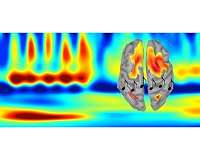
Researchers gave 17 individuals auditory memory tasks that required them to recognize a pattern of tones when it was reversed, while being recorded on MEG and EEG. Image courtesy Philippe Albouy.

The ability to remember sounds, and manipulate them in our minds, is incredibly important to our daily lives - without it we would not be able to understand a sentence, or do simple arithmetic. New research is shedding light on how sound memory works in the brain, and is even demonstrating a means to improve it.

Scientists previously knew that a neural network of the brain called the dorsal stream was responsible for aspects of auditory memory. Inside the dorsal stream were rhythmic electrical pulses called theta waves, yet the role of these waves in auditory memory were until recently a complete mystery.

To learn precisely the relationship between theta waves and auditory memory, and to see how memory could be boosted, researchers at the Montreal Neurological Institute of McGill University gave seventeen individuals auditory memory tasks that required them to recognize a pattern of tones when it was reversed.

Listeners performed this task while being recorded with a combination of magnetoencephalography (MEG) and electroencephalography (EEG). The MEG/EEG revealed the amplitude and frequency signatures of theta waves in the dorsal stream while the subjects worked on the memory tasks. It also revealed where the theta waves were coming from in the brain.

Using that data, researchers then applied transcranial magnetic stimulation (TMS) at the same theta frequency to the subjects while they performed the same tasks, to enhance the theta waves and measure the effect on the subjects' memory performance.

They found that when they applied TMS, subjects performed better at auditory memory tasks. This was only the case when the TMS matched the rhythm of natural theta waves in the brain. When the TMS was arrhythmic, there was no effect on performance, suggesting it is the manipulation of theta waves, not simply the application of TMS, which alters performance.

"For a long time the role of theta waves has been unclear," says Sylvain Baillet, one of the study's co-senior authors. "We now know much more about the nature of the mechanisms involved and their causal role in brain functions. For this study, we have built on our strengths at The Neuro, using MEG, EEG and TMS as complementary techniques."

The most exciting aspect of the study is that the results are very specific and have a broad range of applications, according to Philippe Albouy, the study's first author.

"Now we know human behavior can be specifically boosted using stimulation that matched ongoing, self-generated brain oscillations," he says. "Even more exciting is that while this study investigated auditory memory, the same approach can be used for multiple cognitive processes such as vision, perception, and learning."

The successful demonstration that TMS can be used to improve brain performance also has clinical implications. One day this stimulation could compensate for the loss of memory caused by neurodegenerative diseases such as Alzheimer's.

"The results are very promising, and offer a pathway for future treatments," says Robert Zatorre, one of the study's co-senior authors. "We plan to do more research to see if we can make the performance boost last longer, and if it works for other kinds of stimuli and tasks. This will help researchers develop clinical applications."

This study was published in the journal Neuron on March 23, and was a result of collaboration between the Neuroimaging/Neuroinformatics and Cognition research groups of the MNI.

SPACE MEDICINE
Graphene-based neural probes probe brain activity in high resolution
Munich, Germany (SPX) Mar 30, 2017
Measuring brain activity with precision is essential to developing further understanding of diseases such as epilepsy and disorders that affect brain function and motor control. Neural probes with high spatial resolution are needed for both recording and stimulating specific functional areas of the brain. Now, researchers from the Graphene Flagship have developed a new device for recording ... read more

Related Links
McGill University
Space Medicine Technology and Systems


Thanks for being here;
We need your help. The Space Media Network continues to grow but revenues have never been harder to maintain.

With the rise of Ad Blockers, and Facebook - our traditional revenue sources via quality network advertising continues to decline. And unlike so many other news sites, we don't have a paywall - with those annoying usernames and passwords.

Our news coverage takes time and effort to publish 365 days a year.

If you find our news sites informative and useful then please consider becoming a regular supporter or for now make a one off contribution.
SpaceMediaNetwork Contributor
$5 Billed Once


credit card or paypal
SpaceMediaNetwork Monthly Supporter
$5 Billed Monthly


paypal only


Comment using your Disqus, Facebook, Google or Twitter login.

Share this article via these popular social media networks
del.icio.usdel.icio.us DiggDigg RedditReddit GoogleGoogle

SPACE MEDICINE
Saudi shoots down 'smuggled' Yemen rebel missiles

U.S. Missile Defense Agency buys Lot 9 THAAD Interceptors

Raytheon tapped for two more MK 99 ship sets

Israel's David's Sling missile system to be operational in weeks

SPACE MEDICINE
China aims advanced DF-16 missiles at Taiwan: minister

State Dept. approves possible sale of Hellfire missiles to Britain

Pakistan test fires land-based anti-ship missile

Russia's Baltic Fleet trains with S-400 air defense systems

SPACE MEDICINE
Happy Wanderer? Mysterious X-37B Space Plane Breaks Its Own Orbital Record

A novel hybrid UAV that may change the way people operate drones

General Atomics building ground control station for drones

China to open first drone factory in Saudi Arabia

SPACE MEDICINE
Israel taps Elbit Systems for advanced radios

Hensoldt, Leonardo offering Mode 5 IFF systems

9th Wideband Global SATCOM satellite expands military communications capabilities of US and Allies

Delta IV rocket launches military communications satellite

SPACE MEDICINE
German state buys first Survivor R vehicle from Rheinmetall

U.S. Army picks AM General for Humvee sale to Iraq

NATO agency to offer 40 tech refresh contracts

Israel Aerospace Industries gets border protection sale

SPACE MEDICINE
Trump pressured to approve defense deals with India

Israel defence exports surge to $6.5 bln

Mattis presses Congress for $30B defense hike

Where Trump wants the Pentagon to spend its extra billions

SPACE MEDICINE
New talks on eve of Tillerson visit

US general seeks weapons support for Ukraine

Philippines, China to hold direct talks on sea row: Manila

Japan loans Manila military planes for South China Sea

SPACE MEDICINE
New Nano Devices Could Withstand Extreme Environments in Space

3-D printing turns nanomachines into life-size workers

Scientists created nanopowders for the synthesis of new aluminum alloys

Light-controlled gearbox for nanomachines


The content herein, unless otherwise known to be public domain, are Copyright 1995-2024 - Space Media Network. All websites are published in Australia and are solely subject to Australian law and governed by Fair Use principals for news reporting and research purposes. AFP, UPI and IANS news wire stories are copyright Agence France-Presse, United Press International and Indo-Asia News Service. ESA news reports are copyright European Space Agency. All NASA sourced material is public domain. Additional copyrights may apply in whole or part to other bona fide parties. All articles labeled "by Staff Writers" include reports supplied to Space Media Network by industry news wires, PR agencies, corporate press officers and the like. Such articles are individually curated and edited by Space Media Network staff on the basis of the report's information value to our industry and professional readership. Advertising does not imply endorsement, agreement or approval of any opinions, statements or information provided by Space Media Network on any Web page published or hosted by Space Media Network. General Data Protection Regulation (GDPR) Statement Our advertisers use various cookies and the like to deliver the best ad banner available at one time. All network advertising suppliers have GDPR policies (Legitimate Interest) that conform with EU regulations for data collection. By using our websites you consent to cookie based advertising. If you do not agree with this then you must stop using the websites from May 25, 2018. Privacy Statement. Additional information can be found here at About Us.