
Subscribe free to our newsletters via your
. Military Space News .


BIO FUEL
Methanotrophs: Could bacteria help protect our environment?
by Staff Writers
Newcastle, UK (SPX) Sep 01, 2015


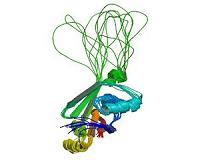
illustration only

New insight into methanotrophs, bacteria that can oxidise methane, may help us develop an array of biotechnological applications that exploit methane and protect our environment from this potent greenhouse gas. Publishing in Nature, scientists led by Newcastle University have provided new understanding of how methanotrophs are able to use large quantities of copper for methane oxidation.

They have identified a new family of copper storage proteins called Csp that are present in a range of bacteria. These proteins store metal in a way that has not been seen previously and their widespread presence amongst diverse bacteria raises important questions about how bacteria use copper ions, which can also be toxic to cells.

The potential
Methane availability is rising as the extraction of natural gas booms, and more methane is escaping into the atmosphere. Methanotrophs are the primary biological mechanism for mitigating the release of methane by consuming it for carbon and energy. These organisms also have great potential in the biotechnological utilisation of methane, a readily renewable carbon source, for the production of bulk and fine chemicals and sustainable energy.

To oxidise methane, methanotrophs use an enzyme called methane monooxygenase whose essential cofactor is copper (some can also use iron). Understanding how methanotrophs handle copper is therefore of great importance for all potential applications of these organisms.

The scientists describe the discovery and characterisation of Csp1 from a methanotroph that can bind large quantities of copper and propose this is a protein that accumulates copper for methane oxidation.

Lead author Chris Dennison, Professor of Biological Chemistry at Newcastle University explained: "Methane is such a useful and plentiful commodity but we need more cost effective methods to unlock its potential. Using bacteria could be the best option so a better knowledge of how these bacteria operate is required.

"As copper is so important for the oxidation of methane, all potential applications based on this reactivity requires knowing how methanotrophs acquire and store copper. The discovery of the Csps adds a new dimension to our understanding of this complex process."

Co-author Colin Murrell, Professor in Environmental Microbiology at the University of East Anglia, commented: "We have known that copper is a vital element for biological methane oxidation for over thirty years and this new information will really help us to formulate new strategies for exploiting these bacteria both in the laboratory and in the environment."

Method
Metalloproteomics was used to discover Csp1 in a highly complex mixture of proteins. The analysis of recombinant Csp1 using an array of biochemical and biophysical techniques has allowed copper binding by Csp1 to be understood at the molecular level. This includes determination of Csp1 crystal structures using the facilities at Diamond Light Source. A genetically modified methanotroph has been generated to demonstrate the physiological function of Csp1.

Dr Neil Paterson, a post-doctoral research associate at Diamond Light Source, said: "The ability of Diamond Light Source to provide tuneable X-ray energy allowed us to use the intrinsic copper ions within the protein to solve the crystal structure by X-ray diffraction and also define their oxidation state through X-ray fluorescence spectroscopy."

Structure
Csp1 possesses a four-helix bundle fold, a well-established structural motif for proteins. The striking feature of Csp1 is that multiple cysteine residues, known to avidly bind copper, point into the core of the bundle that suggested a novel way of storing a metal. Copper-binding studies and the crystal structure of the protein with copper provide a detailed insight into how the four-helix bundle of Csp1 can be filled with copper ions.


Thanks for being here;
We need your help. The Space Media Network continues to grow but revenues have never been harder to maintain.

With the rise of Ad Blockers, and Facebook - our traditional revenue sources via quality network advertising continues to decline. And unlike so many other news sites, we don't have a paywall - with those annoying usernames and passwords.

Our news coverage takes time and effort to publish 365 days a year.

If you find our news sites informative and useful then please consider becoming a regular supporter or for now make a one off contribution.
SpaceMediaNetwork Contributor
$5 Billed Once


credit card or paypal
SpaceMediaNetwork Monthly Supporter
$5 Billed Monthly


paypal only


.


Related Links
Newcastle University
Bio Fuel Technology and Application News


Comment on this article via your Facebook, Yahoo, AOL, Hotmail login.

Share this article via these popular social media networks
del.icio.usdel.icio.us DiggDigg RedditReddit GoogleGoogle


BIO FUEL
Grape waste could make competitive biofuel
Adelaide, Australia (SPX) Aug 21, 2015
The solid waste left over from wine-making could make a competitive biofuel, University of Adelaide researchers have found. Published in the journal Bioresource Technology, the researchers showed that up to 400 litres of bioethanol could be produced by fermentation of a tonne of grape marc (the leftover skins, stalks and seeds from wine-making). Global wine production leaves an estim ... read more


BIO FUEL
Russian Anti-Missile Warning System Protects on Multiple Tiers

Russian Missile Warning System Can Detect Mass Launch of Ballistic Missiles

US runs missile defense wargames to break Russian jamming

Japan requests Aegis systems for new destroyers

BIO FUEL
Air-launched Sidewinder tested as ground-based weapon

Hundreds of Russian R-73 Air-to-Air Missiles in High Demand Worldwide

First Aircraft Launch of Russian-Indian BrahMos Missile to Occur in 2016

Iran unveils new short range ballistic missile

BIO FUEL
Prototype nEUROn combat drone put to the test

NASA Aircraft to Begin NOAA Hurricane Mission

Australian company contracted for UAS components

Drones used to track wildlife

BIO FUEL
Harris delivers Falcon tactical radios

DLS providing equipment for networked communications

Army funds testing of upgrade to communications system

General Dynamics delivering more digital modular radios to Navy

BIO FUEL
Pentagon joins Silicon Valley in 'flexible' tech hub

Polaris delivering off-road vehicles to USSOCOM

Oshkosh building Humvee replacement

Blast rips through warehouse at US military depot in Japan

BIO FUEL
Middle Eastern leaders flood to Moscow for Syrian talks, aerospace salon

Growth for Turkish defense industry

Nigeria to step up local arms manufacture in Boko Haram fight

French defence minister visits Cairo after warplane deal

BIO FUEL
China's Xi, Obama aide hint at underlying tensions ahead of summit

Two Russian soldiers jailed for killing Tajik taxi driver

More than 1,000 NATO paratroopers mount exercise in Germany

Japan lawyers join opposition to controversial security bills

BIO FUEL
Setting ground rules for nanotechnology research

Intractable pain may find relief in tiny gold rods

Record high pressure squeezes secrets out of osmium

Louisiana Tech University researchers discover synthesis of a new nanomaterial


The content herein, unless otherwise known to be public domain, are Copyright 1995-2014 - Space Media Network. All websites are published in Australia and are solely subject to Australian law and governed by Fair Use principals for news reporting and research purposes. AFP, UPI and IANS news wire stories are copyright Agence France-Presse, United Press International and Indo-Asia News Service. ESA news reports are copyright European Space Agency. All NASA sourced material is public domain. Additional copyrights may apply in whole or part to other bona fide parties. Advertising does not imply endorsement, agreement or approval of any opinions, statements or information provided by Space Media Network on any Web page published or hosted by Space Media Network. Privacy Statement All images and articles appearing on Space Media Network have been edited or digitally altered in some way. Any requests to remove copyright material will be acted upon in a timely and appropriate manner. Any attempt to extort money from Space Media Network will be ignored and reported to Australian Law Enforcement Agencies as a potential case of financial fraud involving the use of a telephonic carriage device or postal service.