
 disclaimer: image is for illustration purposes only |
Researchers at the Center for Free-Electron Laser Science in Hamburg, Germany, say the new technique should be widely useful for investigating protein molecules and the structure and activity of drugs, molecules for fuels and other materials, ScienceDaily.com reported Wednesday.
"This will be extremely interesting in just about all biological systems," says physicist Henry Chapman, a member of the two international teams reporting on the technique in the journal Nature. "After all, the reason we want to obtain high-resolution 3-D images of proteins is to work out how they work and what they do."
The new Linac Coherent Light Source X-ray laser, which came online in 2009 at the National Accelerator Laboratory in Menlo Park, Calif., is so much brighter and faster than previous lasers that researchers hope the technique may reveal molecules interacting in their native habitat.
"The biggest problem has been membrane-bound proteins -- they are very hard to get a detailed view of," says biophysicist Sebastian Doniach of Stanford University, who was not involved in the research. "But these are the proteins that are really important for understanding how things enter the cell, how cells such as nerves signal, how drugs interact with a target cell."
 del.icio.us del.icio.us |
 Digg Digg |
 Reddit Reddit |
 YahooMyWeb YahooMyWeb |
 Google Google |
 Facebook Facebook |

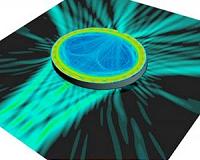 Capasso Lab Demonstrates Highly Unidirectional Whispering Gallery Microlasers
| The content herein, unless otherwise known to be public domain, are Copyright 1995-2010 - SpaceDaily. AFP and UPI Wire Stories are copyright Agence France-Presse and United Press International. ESA Portal Reports are copyright European Space Agency. All NASA sourced material is public domain. Additional copyrights may apply in whole or part to other bona fide parties. Advertising does not imply endorsement,agreement or approval of any opinions, statements or information provided by SpaceDaily on any Web page published or hosted by SpaceDaily. Privacy Statement |


