
require_once("mobile_device_detect.php"); mobile_device_detect(true,false,true,true,true,true,true,"../m/reports/No_cause_for_optimism_on_Iran_nuclear_deal_US_999.html",false); ?> include"/home2/www/vhosts/spacedaily.com/spxphp/spxphp-head-it.php" ?> include"/home2/www/vhosts/spacewar.com/swxphp/swxphp-start.php" ?>
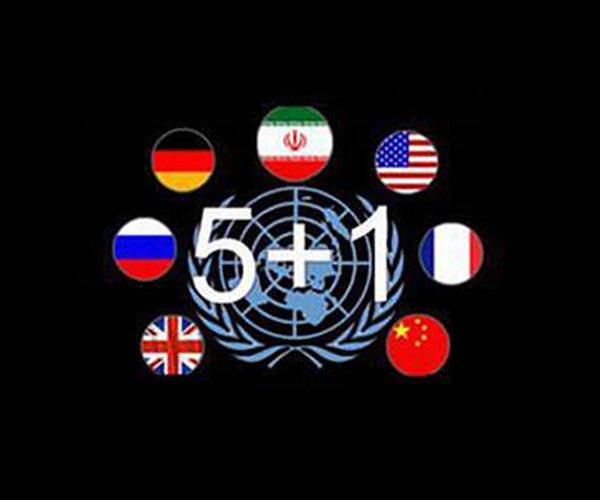
'No cause for optimism' on Iran nuclear deal: US![]() Israel PM calls on US to halt Iran nuclear talks Jerusalem (AFP) Dec 2, 2021 - Israeli Prime Minister Naftali Bennett called Thursday for an "immediate cessation" of resumed nuclear talks between Iran and major powers in Vienna, accusing the Islamic republic of "nuclear blackmail". In a phone call with US Secretary of State Antony Blinken, Bennett called instead for "concrete measures" to be taken against Iran. Bennett has been a consistent opponent of the 2015 agreement the powers have been seeking to revive. He said "Iran was carrying out 'nuclear blackmail' as a negotiation tactic and that this must be met with an immediate cessation of negotiations and by concrete steps taken by the major powers," a statement from his office said. It said Blinken had updated Bennett on what had been happening in the talks since their resumption on Monday after a five-month hiatus. The Israeli leader expressed concern about a new report from the UN nuclear watchdog issued during the talks which he said showed Iran had "started the process of enriching uranium to the level of 20 percent purity with advanced centrifuges at its Fordo underground facility". A year after then US president Donald Trump pulled out of the nuclear agreement in 2018 and started imposing sweeping sanctions, Iran began a gradual suspension of its undertakings in the deal. The countermeasures have seen Iran enrich uranium in greater quantities and to higher levels of purity than it had agreed, something Western governments are eager to end as quickly as possible. In April Iran said it would start enriching uranium up to 60 percent after an attack on its Natanz plant which it blamed on Israel. The chief of Israel's Mossad external intelligence agency, David Barnea, said Thursday at an internal ceremony in Jerusalem that a "bad" Iran deal was "intolerable." "It's clear there is no need for uranium to be enriched to 60 percent for civilian purposes. There is no need for three enrichment sites and there is no need for thousands of active centrifuges unless there is an intention to develop a nuclear weapon," Barnea said. "A bad deal, which I hope they do not reach, is intolerable from our perspective." Blinken, commenting in Stockholm after his call with Bennett, said Iran can't "sustain the status quo of building their nuclear programme while dragging their feet on talks. That... will not happen." Iran insists the absolute priority is the lifting of all US sanctions imposed after Trump's abandonment of the deal. The remaining parties to the 2015 agreement -- Britain, China, France, Germany and Russia -- have been participating directly in the Vienna talks. At Iran's insistence, the United States is doing so only indirectly.
|
The United States appeared Thursday to play down the possibility of reviving a nuclear deal between Iran and world powers, even as Tehran tabled draft proposals following the resumption of talks in Vienna.
"We're going to know very, very quickly, I think in the next day or two, whether Iran is serious or not," US Secretary of State Antony Blinken told reporters in Stockholm on the sidelines of a meeting of the Organization for Security and Co-operation in Europe (OSCE).
"In the very near future, the next day or so, we will be in a position to judge whether Iran actually intends now to engage in good faith."
But he cautioned: "I have to tell you, recent moves, recent rhetoric, don't give us a lot of cause for optimism."
In a phone call with Blinken on Thursday, Israeli Prime Minister Naftali Bennett had called for the "immediate cessation" of talks, which resumed on Monday.
Blinken declined to comment directly on the request.
"But even though the hour is getting very late, it is not too late for Iran to reverse course," Blinken said.
"What Iran can't do is sustain the status quo of building their nuclear programme while dragging their feet on talks. That... will not happen."
"That's also not our view alone. It's very clearly the view of our European partners. I have to say I had a good conversation as well" with Russian Foreign Minister Sergei Lavrov.
"I think Russia shares our basic perspective on this."
The 2015 agreement -- known as the Joint Comprehensive Plan of Action or JCPOA -- offered Iran a lifting of economic sanctions in return for strict curbs on its nuclear activities.
The goal was to make it practically impossible for Iran to build an atomic bomb, while allowing it to pursue a civilian nuclear programme.
But the deal started to unravel in 2018 when then US president Donald Trump pulled out and began imposing sanctions on the Islamic republic.
In turn, Iran, which denies it wants to acquire a nuclear arsenal, has gradually abandoned its commitments since 2019.
- 'Up to the West' -
US President Joe Biden has said he is willing to return to the deal as long as Iran also resumes the original terms.
Iran said on Thursday it had handed European powers two draft proposals to try to revive the JCPOA.
Lead negotiator Ali Bagheri told Iranian state television the proposals -- submitted on Wednesday, the third day of the talks in Vienna -- concerned two main issues facing the pact: the lifting of sanctions and Iran's nuclear commitments
"The first document sums up the Islamic republic's point of view concerning the lifting of sanctions, while the second is about Iran's nuclear actions," Bagheri told IRIB TV.
"Now the other side must examine these documents and prepare itself to hold negotiations with Iran based on these documents," said Bagheri.
Bagheri, echoing Foreign Minister Hossein Amir-Abdollahian, said Iran was in Vienna to resume talks but said it was up to the West.
"We have told the other side that we are in Vienna to pursue the talks... If they are ready to pursue the talks, we agree to pursue them," he told journalists in Vienna.
He said a timetable for the resumption of negotiations would be set up on Thursday.

Related Links
Learn about nuclear weapons doctrine and defense at SpaceWar.com
Learn about missile defense at SpaceWar.com
All about missiles at SpaceWar.com
Learn about the Superpowers of the 21st Century at SpaceWar.com
|
|
Tweet |
|
|
|