
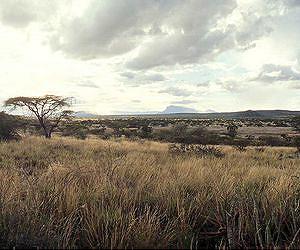
The Jan. 16 attack on the natural-gas installation at In Amenas, Algeria, like the Sept. 11, 2012, raid on the U.S. facility in Benghazi, Libya, was the work of al-Qaida affiliates operating in the Sahel, a region in North Africa defined by both the Sahara desert and centuries of tribal warfare.
Its latest iteration, responsible for more than 100,000 deaths, has been the decade-old Islamic insurgency in Algeria. Like its forbearers, the conflict has received scant international attention — until an attempted rescue of the In Amenas hostages by Algerian Special Forces resulted in 37 deaths, including several Americans.
It's time to ask if we are facing another failed state and what should be done about it.
The Sahara, the largest desert between the two poles, has been both an obstacle and a route for invaders — from the Romans to the French Foreign Legion. Although Timbuktu was long a center of learning and commerce, back to the golden empire of Mansa Musa, the region is now a neglected part of the world –making it an ideal safe haven for terrorists.
The sands respect no borders and erase divisions between Algeria and Mali, a fact traditionally exploited by desert nomads and lately by jihadists led by al-Qaida in the Islamic Maghreb.
Until French forces recaptured the main towns, AQIM had controlled northern Mali for 10 months and ran the area under Shariah law. The jihadists' pronounced goal, shared by Salafists and other radical Muslim groups, is to recreate the Caliphate of Islam's glory years of the eighth century, when it controlled territory from Andalusia to India.
Their confidence is not unfounded. Neither Mali nor its neighbors possess the capabilities or the will to defeat the Islamist insurgency. If, as President Francois Hollande recently announced, France will declare victory and withdraw its troops, the conflict threatens to continue metastasizing over time.
Local media have reported that the rebels have attracted recruits from other Islamist movements, such as the Boko Haram in Nigeria, and from countries as far away as Canada, as well as weapons from Libya. A precipitous withdrawal by the French would solidify the Islamists' belief that, if the Prophet could create his Caliphate from the sands of Medina, they can recreate it from the sands of Timbuktu.
The situation is further complicated by the region's oil and natural gas wealth. Its primary energy town, Hassi Messaoud, includes Algerian and foreign oil camps.
Despite extensive security precautions, its main defense has been an assumption that the Islamists have no desire to destroy the country's infrastructure because they would be eventual beneficiaries of its national resources.
According to analysts, such as from the Jamestown Foundation ("Was the Attack on Algerian Oil Facilities A Symptom of AQIM In-Fighting," Jan. 18), the attack on the In Amenas facility was not so much a discrediting of that assumption as evidence of a conflict within the leadership of AQIM.
The U.S. military, via AFRICOM, has already stuck its toe into this conflict by training Malian Special Forces units. But some of that training has already been lost because some of the trainees have joined AQIM. There's a lesson in that loss, however.
Depriving terrorists of safe havens is for certain in our national interest but we should not be carrying water for the NATO countries. France has the capability, if not all of the required resources, to manage the war. It is also in the interest of the Saharan states to turn their attention to the threat. European and West African countries have begun to get involved, albeit belatedly. The forces led by Nigeria are still milling around in Bamako with insufficient food and weapons. But the experienced desert troops from Chad and Niger already have enjoyed successes against the rebels.
The crisis in North Africa is not as bleak as it might appear. AQIM and other al-Qaida affiliates have been destroying historic Muslim sites in the area, which they claim to be a separate Islamist country. Such behavior has sparked a base of opposition among the general population.
Unfortunately, the Malian people have little love for the central government, either. To regain the allegiance of the population, it will have to mitigate its corrupt practices and borrow a page from Hezbollah by providing basic medical and social services.
As in similar conflicts, military action is essential but not the full answer. The United States and its allies need to unsheathe the much-underused weapon of information programs, whether through covert action or by emulating the Cold War successes of broadcasts such as Radio Free Europe and Radio Liberty, as well as taking advantage of applicable social media.
The Sahel is a political vacuum that the Islamists have been filling for years. Unless they are defeated, their influence will grow and link with other extreme movements such as Boko Haram to the south, will be strengthened. Likewise, they can establish new links with groups such as al-Shabaab in Somalia to the East.
AQIM must be stopped but the United States need not play a central role.
(Andre Le Gallo is a former national intelligence officer for counter-terrorism and senior operations officer with the CIA. He is the author of "The Caliphate," a novel that draws upon his several years in North and sub-Saharan Africa, where he served as chief of station.)
(United Press International's "Outside View" commentaries are written by outside contributors who specialize in a variety of important issues. The views expressed do not necessarily reflect those of United Press International. In the interests of creating an open forum, original submissions are invited.)
