Swiss politicians have voiced outrage and demanded an investigation after revelations that a second Swiss encryption company was allegedly used by the CIA and its German counterpart to spy on governments worldwide.
"How can such a thing happen in a country that claims to be neutral like Switzerland?" co-head of Switzerland's Socialist Party, Cedric Wermuth, asked in an interview with Swiss public broadcaster SRF late Thursday.
He called for a parliamentary inquiry after an SRF investigation broadcast on Wednesday found that a second Swiss encryption firm had been part of a spectacular espionage scheme orchestrated by US and German intelligence services.
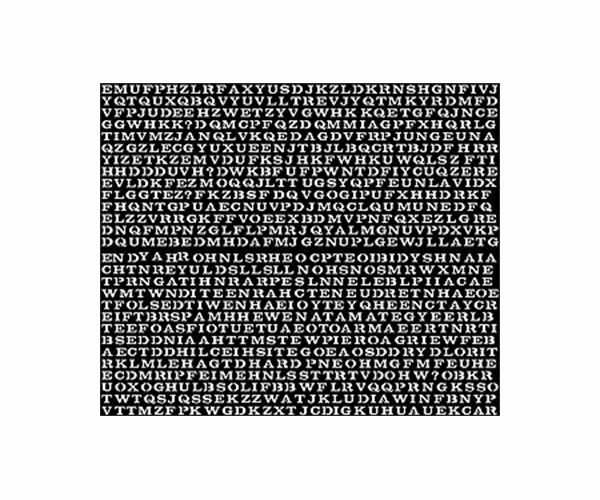
A first investigation had revealed back in February an elaborate, decades-long set-up, in which the CIA and its German counterpart creamed off the top-secret communications of governments through their hidden control of a Swiss encryption company called Crypto.
SRF's report this week found that a second but smaller Swiss encryption firm, Omnisec, had been used in the same way.
That company, which was split off from Swiss cryptographic equipment maker Gretag in 1987, sold voice, fax and data encryption equipment to governments around the world until it halted operations two years ago.
SRF's investigative programme Rundschau concluded that, like Crypto, Omnisec had sold manipulated equipment to foreign governments and armies.
Omnisec meanwhile also sold its faulty OC-500 series devices to several federal agencies in Switzerland, including its own intelligence agencies, as well as to Switzerland's largest bank, UBS, and other private companies in the country, the SRF investigation showed.
– Espionage within Switzerland? –
The findings unleashed fresh outrage in Switzerland, which is still reeling from the Crypto revelations.
"This shows that the problem is broader than just one company and we still have no answers on the political responsibility aspect," Wermuth said.
Hans-Peter Portman, a parliamentarian with the Liberal Party, agreed, saying he was particularly concerned to learn "Swiss businesses are likely implicated and possibly affected."
"This raises the question of espionage even within the country," he told SRF.
An investigation by the Swiss parliament's Control Delegation into the Crypto case concluded earlier this month that Switzerland's own intelligence service had benefitted from the information gathered by its foreign counterparts through the encryption firm.
According to the revelations in February by SRF, the Washington Post and German broadcaster ZDF, Crypto served for decades as a Trojan horse to spy on governments worldwide.
The company supplied devices for encoded communications to some 120 countries from after World War II to the beginning of this century, including to Iran, South American governments, India and Pakistan.
Unknown to those governments, Crypto was secretly acquired in 1970 by the US Central Intelligence Agency together with the then West Germany's BND Federal Intelligence Service.
Together they rigged Crypto's equipment to be able to easily break the codes and read the government customers' messages.
Citing a classified internal CIA history of what was originally called operation "Thesaurus" and later "Rubicon," the reports said that in the 1980s the harvest from the Crypto machines supplied roughly 40 percent of all the foreign communications US code-breakers processed for intelligence.