
SPACEWAR
Russia conducts space-based anti-satellite weapons test
by Staff Writers
Peterson AFB CO (SPX) Jul 27, 2020

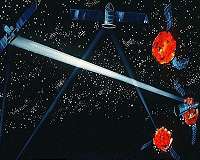
illustration only

U.S. Space Command has evidence that Russia conducted a non-destructive test of a space-based anti-satellite weapon. On July 15, Russia injected a new object into orbit from Cosmos 2543, currently Satellite Catalog Number 45915 in Space-Track.org.

Russia released this object in proximity to another Russian satellite, which is similar to on-orbit activity conducted by Russia in 2017, and inconsistent with the system's stated mission as an inspector satellite. Tracking information can be found on Space-Track.org.

"The Russian satellite system used to conduct this on-orbit weapons test is the same satellite system that we raised concerns about earlier this year, when Russia maneuvered near a U.S. government satellite," said Gen. John W. "Jay" Raymond, Commander of U.S. Space Command and U.S. Space Force Chief of Space Operations. "This is further evidence of Russia's continuing efforts to develop and test space-based systems, and consistent with the Kremlin's published military doctrine to employ weapons that hold U.S. and allied space assets at risk."

The U.S. State Department raised concerns in 2018, and again this year, that Russian satellite behaviors were inconsistent with their stated mission and that these satellites displayed characteristics of a space-based weapon. According to the Department of State, this behavior is hypocritical and concerning.

"This event highlights Russia's hypocritical advocacy of outer space arms control, with which Moscow aims to restrict the capabilities of the United States while clearly having no intention of halting its own counterspace program - both ground-based anti-satellite capabilities and what would appear to be actual in-orbit anti-satellite weaponry," said Dr. Christopher Ford, the U.S. Assistant Secretary of State currently performing the duties of the Under Secretary for Arms Control and International Security.

Last week's test is another example that the threats to U.S. and Allied space systems are real, serious and increasing. Russia's development and testing of orbital weapons highlights the importance of establishing the U.S. Space Force as a new branch of the armed forces and the U.S. Space Command as the nation's unified combatant command for space. It is a shared interest and responsibility of all spacefaring nations to create the conditions for a safe, stable, and operationally sustainable space environment.

"The United States, in coordination with our allies, is ready and committed to deterring aggression and defending the Nation, our allies and vital U.S. interests from hostile acts in space," Raymond concluded.


Related Links
U.S. Space Command
Military Space News at SpaceWar.com

SPACEWAR
France steps up space spending to gird for 'unfriendly' moves
Paris (AFP) July 24, 2020
France will increase spending on its new Space Force programme by several hundreds of millions of euros as it prepares for potential "unfriendly manoeuvres" among world powers, Defence Minister Florence Parly said Friday. "We're gone from a concept of space as a 'common good' in the service of science, to a space where countries are struggling for global supremacy," Parly told the Provence newspaper of Marseille. The new Air and Space Force, which Parly will officialise during a visit to Fran ... read more

Comment using your Disqus, Facebook, Google or Twitter login.

Share this article via these popular social media networks
del.icio.usdel.icio.us DiggDigg RedditReddit GoogleGoogle

SPACEWAR
Japan will reorient missile defense posture as Aegis Ashore is suspended

Raytheon Missiles and Defense awarded $2.3B production contract for missile defense radars

Lockheed Martin PAC-3 MSE Achieves Test Success

NGC and US Army team up for combined missile defense test

SPACEWAR
Senate offers more funding for hypersonic weapons tracking

Sweden tests new ground-to-air defense missile

Trump invokes Defense Production Act for hypersonic missile production

Successful testing of rocket motor and warhead designs demonstrate progress toward flight testing

SPACEWAR
Oversight gap leaves Pentagon unsure if Afghan drone project has helped, IG says

Britain buys General Atomics' Protector drone in $81M deal

Unleashing the potential of tethered drones

Firebird completes successful multi-day capability demonstration flights

SPACEWAR
South Korea's first military satellite launched

Alion to provide support to USAF for spectrum management

SpaceX launches South Korean communications satellite

Airbus signs contract with UK Ministry of Defence for Skynet 6A satellite

SPACEWAR
Marines begin deactivation of all tank battalions

U.S. Army requests design proposals to replace M-2 Bradley tank

US Air Force Orders Latest Northrop Grumman LITENING Targeting Pod Upgrade

British army to cut armored vehicles acquired for war in Afghanistan

SPACEWAR
Pentagon issues two contracts under DPA Title III to sustain workforces

US Senate passes $740.5 bn defense bill that would rename bases

Okinawa governor demands action after COVID-19 outbreak at U.S. bases

Pentagon appoints Kratsios to top technology office

SPACEWAR
Pompeo calls for 'free world' to triumph over China's 'new tyranny'

China orders closure of US consulate in Chengdu

Pompeo to meet UK PM in heat of China standoff

US defense chief plans to visit China as tensions grow

SPACEWAR
The smallest motor in the world

Crystalline 'nanobrush' clears way to advanced energy and information tech

Transporting energy through a single molecular nanowire

To make an atom-sized machine, you need a quantum mechanic