
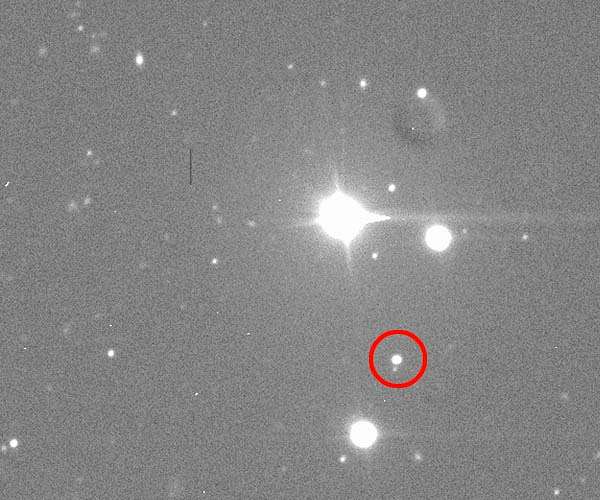
An international team of planetary scientists has found that the smallest near-Earth asteroids differ markedly in composition from kilometer-scale objects, a size-dependent trend with direct implications for meteorite origin studies, asteroid-family evolution, and planetary defense modeling.
The study, led by Dr. Nick Moskovitz of Lowell Observatory, analyzed 189 near-Earth asteroids (NEAs) and identified a clear compositional shift as object size decreases. S-complex asteroids – the type most closely linked to ordinary chondrites, the most common class of meteorites – account for roughly 65 percent of kilometer-scale NEAs but fall to about one-third of objects smaller than 50 meters.
The research draws on more than a decade of observational data, spanning 2014 to 2025, collected under the Mission Accessible Near-Earth Object Survey (MANOS). The team used three major 4-meter-class telescopes: the Lowell Discovery Telescope in Arizona, the SOAR Telescope in Chile, and the Mayall Telescope at Kitt Peak National Observatory. Asteroids were classified according to how their surfaces reflect sunlight across four wavelengths, providing a direct measure of surface color.
A key methodological challenge involved correcting for rotational brightness variations – the brightening and dimming that occurs as an asteroid spins. Without those corrections, measured colors can be skewed, introducing biases into both individual measurements and population-wide statistics.
"If you don't account for how an asteroid brightens and dims as it spins, you can end up with misleading colors," Moskovitz said. "For individual objects, the effect can be dramatic, and for population studies, it can introduce subtle but important biases."
After combining their classified sample with results from comparable surveys, the team assembled a broad dataset spanning a wide range of NEA sizes. The compositional shift from larger to smaller objects was consistent across the combined dataset.
The researchers examined several candidate explanations for the trend, including solar heating, tidal resurfacing during close Earth encounters, and variations in regolith grain size. None proved sufficient on its own. The findings instead align with recent dynamical models indicating that small NEAs originate disproportionately from a limited set of young asteroid families in the Main Belt – families whose bulk compositions differ from the broader population supplying larger NEAs to near-Earth space.
"This is one of the clearest pieces of evidence yet that the smallest NEAs come from a different mix of sources," Moskovitz said. "It helps explain why the meteorites that land on Earth don't perfectly match what we see among larger asteroids."
The results also carry operational significance for planetary defense. Small NEAs are statistically the most likely class to enter Earth's atmosphere, and accurate compositional data are needed to model atmospheric entry behavior and assess ground-impact risk.
"Understanding what small NEAs are made of is essential for impact-risk assessment," Moskovitz said. "Knowing their compositions helps us model how they behave if they were to enter the atmosphere and to inform any risk posed by an object large enough to reach the ground."
Research Report: NEO Colors from the Mission Accessible Near-Earth Object Survey (MANOS)
