
. Military Space News .
SPACE MEDICINE
Software as good as doctors at diagnosing skin cancer
By Marlowe HOOD
Paris (AFP) Jan 25, 2017


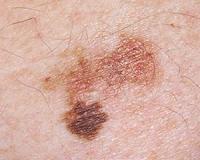
Image-scanning software developed at Stanford University can distinguish deadly skin cancers from benign ones as accurately as top dermatologists, according to a study published Wednesday.

The potentially life-saving technology could soon be incorporated in a smart phone, the researchers said, an advance reminiscent of the diagnostic device wielded by Dr McCoy in the 1960s Star Trek sci-fi series.

Adapting a Google algorithm designed to distinguish between categories of objects based on images -- telling a cat from a dog, for example -- the Stanford team compiled a database of nearly 130,000 photos of skin disease.

To be effective, the software would need to tell a benign lesion from a malignant carcinoma.

Computer scientists "trained" the algorithm to combine visual processing with a type of artificial intelligence called deep learning.

From the very outset, the results were startlingly good.

"That's when our thinking changed," said senior author Sebastian Thrun, a professor in the Stanford Artificial Intelligence Laboratory.

"We said, 'Look, this is not just a class project for students; this is an opportunity to do something great for humanity'."

Fine-tuned with the help of physicians, the app they created performed just as well as a panel of 21 board-certified dermatologists, the researchers reported in the science journal Nature.

In the United States alone, more than five million new cases of skin cancer are diagnosed every year.

For melanoma detected in its earliest stages, the five-year survival rate is about 97 percent. If the disease is uncovered only later, that drops to about 14 percent.

- The next level -

Dermatologists inspect skin for signs of cancer, relying on their training and experience.

If a lesion is spotted, the next step is typically a closer look with a hand-held microscope called a dermatoscope.

If doubt remains, the final phase of diagnosis is a biopsy -- taking a skin sample to be tested in a lab.

The images used in the new app -- representing over 2,000 different skin diseases -- were gathered from the internet and vetted by dermatologists.

"There's no huge dataset of skin cancer, so we had to make our own," said Brett Kuprel, co-author and Stanford graduate student.

In a final contest, the app was pitched against 21 dermatologists to identify cancerous and non-cancerous lesions in over 370 images.

Human and machine performed equally well.

The next step is to create a smart phone version, the researchers said.

"Everyone has a supercomputer in their pockets with a number of sensors in it, including a camera," noted co-lead author Andre Esteva, also a graduate student.

A smart phone app of this kind "might enable effective, easy and low-cost medical assessments of more individuals than is possible with existing medical-care systems," Sancy Leachman of Oregon Health and Science University and Glenn Merlino of the US National Cancer Institute wrote in a comment also published in Nature.

"Star Trek presented a vision of the future in which (McCoy) used a portable diagnostic device known as a tricorder, to assess the medical condition of Captain James Kirk and other Enterprise crew members.

"Although fanciful then, machines capable of the non-invasive diagnosis of human disease are becoming a reality," they added.

mh/mlr/mt

GOOGLE


Comment on this article using your Disqus, Facebook, Google or Twitter login.


Thanks for being here;
We need your help. The Space Media Network continues to grow but revenues have never been harder to maintain.

With the rise of Ad Blockers, and Facebook - our traditional revenue sources via quality network advertising continues to decline. And unlike so many other news sites, we don't have a paywall - with those annoying usernames and passwords.

Our news coverage takes time and effort to publish 365 days a year.

If you find our news sites informative and useful then please consider becoming a regular supporter or for now make a one off contribution.
SpaceMediaNetwork Contributor
$5 Billed Once


credit card or paypal
SpaceMediaNetwork Monthly Supporter
$5 Billed Monthly


paypal only


.


Related Links
Space Medicine Technology and Systems


Share this article via these popular social media networks
del.icio.usdel.icio.us DiggDigg RedditReddit GoogleGoogle

Previous Report
SPACE MEDICINE
Zuckerberg charity buys AI startup to battle disease
San Francisco (AFP) Jan 24, 2017
A charitable foundation backed by Mark Zuckerberg and his wife said Monday it has bought a Canadian artificial intelligence startup as part of a mission to eradicate disease. The Chan Zuckerberg Initiative did not disclose financial terms of the deal to acquire Toronto-based Meta, which uses AI to quickly read and comprehend scientific papers and then provide insights to researchers. Met ... read more


SPACE MEDICINE
S-500 to strengthen Russia's 'air defense system for the 21 Century'

Israel Introduces Arrow-3 Missile Interceptor System

Israel army gets new ballistic missile interceptors

Italy joins EUROSAM's Aster 30 B1NT program

SPACE MEDICINE
B-52 bomber drops unarmed nuclear cruise missiles in demo

Russian Smerch, Uragan Rocket Launchers to Get Stealth Cloaks

U.S. Navy helos getting Lockheed Martin counter-missile capability

India test-fires guided Pinaka Rocket Mark-II

SPACE MEDICINE
AUDS counter-UAV system achieves TRL-9 status

GenDyn offers Bluefin SandShark mini-drone for sale online

UAV performs first ever perched landing using machine learning algorithms

Liteye, Tribalco to deliver AUDS systems to U.S. armed forces

SPACE MEDICINE
Airbus to supply French satellite communication systems

Northrop Grumman receives $140m BACN contract modification

Sharing battlefield information at multiple classification levels via mobile handheld devices

BAE Systems contracted for radio frequency countermeasure services

SPACE MEDICINE
U.S. Army orders rough-terrain forklifts

EDA launches program to improve IED detection

Retired US generals to Trump: 'Torture is unnecessary'

What Russia's railgun can really do

SPACE MEDICINE
Canada sidelines a top admiral amid reports of leaks

Rolls-Royce to pay 671 pounds million in bribery settlement

Leonardo forms new U.K. company, consolidates businesses

Damascus says Israel missiles caused airbase explosions

SPACE MEDICINE
British PM says Trump 'recognises importance of NATO'

Trump aims for 'unquestioned' US military dominance

Japan to conduct simulated drills for China-Taiwan clash

James Mattis sworn in as Trump's defense secretary

SPACE MEDICINE
NIST updates 'sweet' 1950s separation method to clean nanoparticles from organisms

Nanocavity and atomically thin materials advance tech for chip-scale light sources

Ultra-precise chip-scale sensor detects unprecedentedly small changes at the nanoscale

New low-cost technique converts bulk alloys to oxide nanowires


The content herein, unless otherwise known to be public domain, are Copyright 1995-2024 - Space Media Network. All websites are published in Australia and are solely subject to Australian law and governed by Fair Use principals for news reporting and research purposes. AFP, UPI and IANS news wire stories are copyright Agence France-Presse, United Press International and Indo-Asia News Service. ESA news reports are copyright European Space Agency. All NASA sourced material is public domain. Additional copyrights may apply in whole or part to other bona fide parties. All articles labeled "by Staff Writers" include reports supplied to Space Media Network by industry news wires, PR agencies, corporate press officers and the like. Such articles are individually curated and edited by Space Media Network staff on the basis of the report's information value to our industry and professional readership. Advertising does not imply endorsement, agreement or approval of any opinions, statements or information provided by Space Media Network on any Web page published or hosted by Space Media Network. General Data Protection Regulation (GDPR) Statement Our advertisers use various cookies and the like to deliver the best ad banner available at one time. All network advertising suppliers have GDPR policies (Legitimate Interest) that conform with EU regulations for data collection. By using our websites you consent to cookie based advertising. If you do not agree with this then you must stop using the websites from May 25, 2018. Privacy Statement. Additional information can be found here at About Us.