
. Military Space News .
SPACE MEDICINE
Spaceflight changes the shape of astronauts' brains
by Brooks Hays
Ann Arbor, Mich. (UPI) Feb 1, 2017


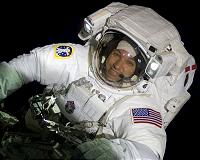
disclaimer: image is for illustration purposes only

When astronauts come back from a stint aboard the International Space Station, their brains are not as they were when they left Earth.

Scientists at the University of Michigan compared brain scans of 27 astronauts before and after spaceflight. Of the 27, twelve spent two weeks on shuttle flight missions and 14 spent six months on the space station. Researchers obtained the MRI scans from the NASA Lifetime Surveillance of Astronaut Health program.

The brains of all 27 astronauts showed increases and decreases of gray matter volume in different parts of the brain as a result of their time in space. The longer astronauts were in space, the more prounced the changes.

"We found large regions of gray matter volume decreases, which could be related to redistribution of cerebrospinal fluid in space," lead researcher Rachael Seidler, a professor of kinesiology and psychology at Michigan, said in a news release. "Gravity is not available to pull fluids down in the body, resulting in so-called puffy face in space. This may result in a shift of brain position or compression."

Seidler and her colleagues detailed their findings in the journal Microgravity.

Scientists found significant increases of gray matter volume in areas of the brain linked with balance and leg movement. The volume growth was most pronounced for astronauts living on the space station, who were constantly learning to adapt to microgravity.

"It's interesting because even if you love something you won't practice more than an hour a day," Seidler said. "In space, it's an extreme example of neuroplasticity in the brain because you're in a microgravity environment 24 hours a day."

Scientists are keen to explore the neural changes further, as they have yet to characterize all of the changes. Seidler is specifically interested to find out how long the neural changes last once astronauts are back on Earth.


Comment on this article using your Disqus, Facebook, Google or Twitter login.


Thanks for being here;
We need your help. The Space Media Network continues to grow but revenues have never been harder to maintain.

With the rise of Ad Blockers, and Facebook - our traditional revenue sources via quality network advertising continues to decline. And unlike so many other news sites, we don't have a paywall - with those annoying usernames and passwords.

Our news coverage takes time and effort to publish 365 days a year.

If you find our news sites informative and useful then please consider becoming a regular supporter or for now make a one off contribution.
SpaceMediaNetwork Contributor
$5 Billed Once


credit card or paypal
SpaceMediaNetwork Monthly Supporter
$5 Billed Monthly


paypal only


.


Related Links
Space Medicine Technology and Systems


Share this article via these popular social media networks
del.icio.usdel.icio.us DiggDigg RedditReddit GoogleGoogle

Previous Report
SPACE MEDICINE
One-year mission investigators debut preliminary results at NASA work
Houston TX (SPX) Feb 01, 2017
Preliminary research results for the NASA One-Year Mission debuted last week at an annual NASA conference. Last March, two men landed back on Earth after having spent nearly one year in space. NASA and Roscosmos, the Russian space agency, teamed up for an unprecedented One-Year Mission. One crewmember from each agency lived on the International Space Station for almost one year. NASA's Hum ... read more


SPACE MEDICINE
MEADS team submits updated proposal for Poland's Wilsa program

Raytheon contracted for Patriot missile support

Lockheed Martin to perform additional THAAD development

S. Korea, US defence chiefs back anti-missile system

SPACE MEDICINE
Raytheon, USAF developing new signal processor for AMRAAM

Russia to arm T-50 PAK FAs with BrahMos light cruise missiles

South Korea seeks Sidewinder and Maverick missiles from U.S.

Iran confirms missile test, denies breach of nuclear deal

SPACE MEDICINE
NAVAIR completes spike missile test with UAV target

New SkyGuardian variant of Predator B drone announced

Germany extends Heron drone lease contract

AUDS counter-UAV system achieves TRL-9 status

SPACE MEDICINE
Airbus provides satcom for EU security missions in Mali, Niger and Somalia

Flat-panel SATCOM for civilian-armored vehicles

Japan launches satellite to modernise military communications

Phasor teams with Thales to develop advanced broadband Smart Terminal

SPACE MEDICINE
U.S. Army tests Stryker with 30mm cannon

Rheinmetall, Steyr Mannlicher announce new assault rifle

BAE Systems producing howitzers for India

Pentagon chief holds fast against torture

SPACE MEDICINE
US defense chief begins Trump's plans to grow Pentagon

In a bid for defense exports, India is giving contracts to the private sector

Rich man loses millions in scam by fake French defence staff

Egypt's military to form pharmaceutical company

SPACE MEDICINE
Philippines' Duterte wants China sea patrols to stop kidnappings

In one week, Trump shakes up Washington and the world

NATO, Trump both want dialogue with Russia: Stoltenberg

NATO 'very closely' watching Russian influence in Balkans

SPACE MEDICINE
Scientists determine precise 3-D location 23,000 atoms in a nanoparticle

NIST updates 'sweet' 1950s separation method to clean nanoparticles from organisms

Nanocavity and atomically thin materials advance tech for chip-scale light sources

Ultra-precise chip-scale sensor detects unprecedentedly small changes at the nanoscale


The content herein, unless otherwise known to be public domain, are Copyright 1995-2024 - Space Media Network. All websites are published in Australia and are solely subject to Australian law and governed by Fair Use principals for news reporting and research purposes. AFP, UPI and IANS news wire stories are copyright Agence France-Presse, United Press International and Indo-Asia News Service. ESA news reports are copyright European Space Agency. All NASA sourced material is public domain. Additional copyrights may apply in whole or part to other bona fide parties. All articles labeled "by Staff Writers" include reports supplied to Space Media Network by industry news wires, PR agencies, corporate press officers and the like. Such articles are individually curated and edited by Space Media Network staff on the basis of the report's information value to our industry and professional readership. Advertising does not imply endorsement, agreement or approval of any opinions, statements or information provided by Space Media Network on any Web page published or hosted by Space Media Network. General Data Protection Regulation (GDPR) Statement Our advertisers use various cookies and the like to deliver the best ad banner available at one time. All network advertising suppliers have GDPR policies (Legitimate Interest) that conform with EU regulations for data collection. By using our websites you consent to cookie based advertising. If you do not agree with this then you must stop using the websites from May 25, 2018. Privacy Statement. Additional information can be found here at About Us.