The United States hopes to restart nuclear talks with Iran soon, a senior US official said Monday, while noting "alarming" progress by Tehran on developing nuclear capacity.
"We're hopeful we can be back in Vienna (for talks)… in a fairly short period of time," the senior administration official, who spoke on condition of anonymity, told reporters.
Iran's foreign ministry spokesman said Monday that the new round of discussions could begin by early November.
Iran's nuclear activity will be at the center of talks between US and Israeli national security teams in Washington on Tuesday and Wednesday.
Israeli National Security Advisor Eyal Hulata and his White House counterpart, Jake Sullivan, will join a meeting of the US-Israel Strategic Consultative Group, which groups representatives from both countries' diplomatic, military and intelligence agencies.
President Joe Biden — who reversed his predecessor Donald Trump's decision to pull the United States from international negotiations on curbing Iran's nuclear ambitions — is keen to resolve the standoff diplomatically.
"The path in Vienna for negotiations does remain open," the US official said. "The Iranians are sending indications to a number of parties that they are preparing to come back to Vienna and of course we will have to see whether they reengage in that process constructively or not."
Despite Israeli skepticism, the Biden administration believes "very strongly that the diplomatic path remains the best," the official said.
However, the official said the White House and Israel's new government agree that Iran has made rapid advances since Trump quit the international effort to monitor Tehran's nuclear activities in return for sanctions relief.
Tehran insists that it does not seek nuclear weapons, only an energy industry.
"We have a common assessment of the extent to which Iran's nuclear program has dramatically broken out of the box since the previous administration left the Iran nuclear deal," the official said.
"The breakout time, meaning stockpiles of enriched uranium and other ways to look at this, it's gone from about 12 months down to a period of a few months. So obviously that's quite alarming."
The official said the United States believes diplomacy will be "the best way to put a ceiling on the program and roll back the gains that Iran has made in recent years."
However, there is no movement to lifting sanctions and if diplomacy doesn't work "there are other avenues."
"We think the onus right now is on the Iranian side," the official said.
Iran says foresees nuclear talks resuming by early November
Tehran (AFP) Oct 4, 2021 –
Iran foresees talks with world powers aimed at reviving its nuclear deal resuming by early November, foreign ministry spokesman Saeed Khatibzadeh said Monday.
"I don't think it will take us the same amount of time as it took the Biden administration to come," Khatibzadeh said, referring to US diplomats under President Joe Biden indirectly joining the Vienna talks.
For the government of Iran's ultraconservative new President Ebrahim Raisi, "I don't think the (return to talks) will take as much as 90 days," he said, suggesting talks will be underway again by early November.
It is the first time Iran has suggested a rough date for a possible return to the table.
The 2015 nuclear deal gave Iran sanctions relief in return for tight controls on its nuclear programme, monitored by the UN.
In 2018 then-US president Donald Trump withdrew from the multilateral deal and began reimposing sanctions.
Tehran has gradually rolled back its nuclear commitments since 2019.
Talks in Vienna to revive the deal have been stalled since June, when Raisi was elected as Iran's president. He took office on August 3 and formed his government over the following weeks.
The talks had made little concrete progress and the process then went into a standstill, with Iran saying it needed time after the transition from the more moderate government of Hassan Rouhani.
Khatibzadeh on Monday said Iran's new administration was "examining the details" of the previous rounds of nuclear talks.
"As soon as this is done we will not waste one hour and we will give a new date" for the resumption of discussions, he added.
"The truth is that the executive team tasked with the nuclear (issue) has changed. The (new) negotiators will certainly have different opinions… and they will be presented" when the talks resume, he said.
The foreign ministry spokesman added that the other parties to the talks must embrace the change in Iran's government by showing "flexibility and comprehension".
Biden — who took office in January — has signalled a willingness to return to the deal and talks to that end began in April in Vienna, before they stalled.
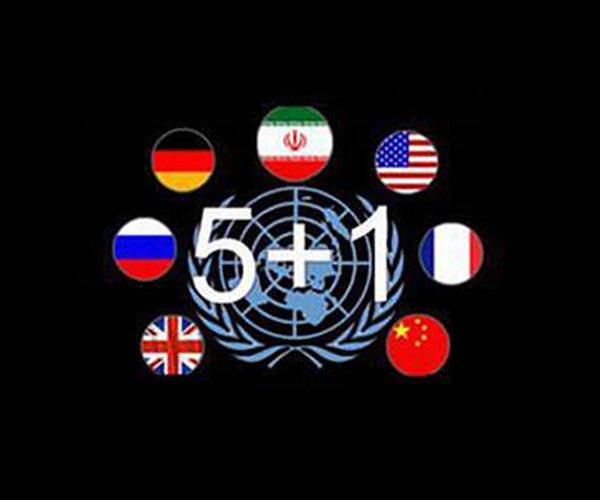
The talks involve Iran and the remaining parties to the deal — Britain, China, France, Germany and Russia — but the US has not participated directly.