
 In the short-term, the Monash researcher plans to continue work on the kidney stem cells to study how environmental factors influence how kidney cells behave, tests drugs for their ability to reduce kidney cyst formation and cell proliferation, and better understand how genetic kidney disorders develop in the first place. |
This achievement will allow group leader Associate Professor Sharon Ricardo and her team to model genetic kidney diseases in the laboratory and tease out the mechanisms that control these difficult-to-treat disorders.
"We're taking human kidney cells and winding back the clock to make their early precursors," Associate Professor Ricardo said.
For the challenging project, which was published in the Journal of the American Society of Nephrology, the Monash researchers started with healthy adult kidney cells, which they reprogrammed back to an embryonic-like state, then compared these kidney stem cells with off-the-shelf embryonic stem cells, and showed that both could form different embryonic tissue types, with their genetic features preserved.
"These kidney cells had their slate wiped clean. Now that gives us the opportunity to change that kidney precursor into all kidney cell types," Associate Professor Ricardo said.
In collaboration with Professor Peter Kerr from Monash Medical Centre, the research team has now generated four stem cell lines from patients with polycystic kidney disease and Alport syndrome, two leading genetic kidney disorders.
"As these stem cells can divide indefinitely in a culture dish, we can make a limitless source of patient-specific stem cells, make kidney cysts and screen drugs on those cells," Associate Professor Ricardo said.
"Our ultimate goal is to make off-the-shelf mature kidney cells that patients can use for drug testing and disease modelling."
Associate Professor Ricardo, who is approaching pharmaceutical companies to screen drugs on the kidney stem cells, believes that this personalised medicine approach will produce safer medicines in the future.
But in the short-term, the Monash researcher plans to continue work on the kidney stem cells to study how environmental factors influence how kidney cells behave, tests drugs for their ability to reduce kidney cyst formation and cell proliferation, and better understand how genetic kidney disorders develop in the first place.
Associate Professor Ricardo, who was funded by the Australian Stem Cell Centre and Alport Foundation, Australia, collaborated with six Monash researchers including lead author Bi Song and Professor Claude Bernard; Professor Peter Kerr, Monash Medical Centre; and Dr Andrew Laslett from CSIRO Molecular and Health Technologies, also in Clayton.
 del.icio.us del.icio.us |
 Digg Digg |
 Reddit Reddit |
 YahooMyWeb YahooMyWeb |
 Google Google |
 Facebook Facebook |

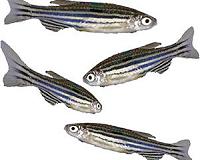 Zebrafish regrow fins using multiple cell types, not identical stem cells
| The content herein, unless otherwise known to be public domain, are Copyright 1995-2010 - SpaceDaily. AFP and UPI Wire Stories are copyright Agence France-Presse and United Press International. ESA Portal Reports are copyright European Space Agency. All NASA sourced material is public domain. Additional copyrights may apply in whole or part to other bona fide parties. Advertising does not imply endorsement,agreement or approval of any opinions, statements or information provided by SpaceDaily on any Web page published or hosted by SpaceDaily. Privacy Statement |


