
 |
 |
 |
 |
 |
 |
 |
 |
 |
 |

| . |  |
. |
Survey Of Weapons Experts Finds Sharp Rise In Chance Of Nuclear Attack
The world faces a 29 percent chance of a nuclear attack sometime in the next decade, particularly with the addition of a handful of new nuclear power nations, a congressional survey released Wednesday found. A survey of 85 top non-proliferation and national security experts from around the world, compiled by US Senator Richard Lugar, chairman of the Senate Foreign Relations Committee, also estimated that the risk of a major chemical or biological attack is greater than 30 percent, while the chance of a dirty bomb attack is pegged at 40 percent. "I am hopeful that this study will contribute to the discussion inside and outside of governments about how we can strengthen non-proliferation efforts, improve safeguards around existing weapons and materials, bolster intelligence gathering and interdiction capabilities, and expand international cooperation in dealing with a threat that should deeply concern all governments and peoples," Lugar said in a statement. The survey, conducted in late 2004 and early 2005, found that 79 percent of the experts polled believe that their own country was not spending enough money on non-proliferation. Most experts also believed that terrorists were more likely to carry out a nuclear attack than a government, and that terrorists were most likely to obtain a nuclear weapon or nuclear material through a black market transaction. All rights reserved. � 2005 Agence France-Presse. Sections of the information displayed on this page (dispatches, photographs, logos) are protected by intellectual property rights owned by Agence France-Presse. As a consequence, you may not copy, reproduce, modify, transmit, publish, display or in any way commercially exploit any of the content of this section without the prior written consent of Agence France-Presse. Related Links SpaceWar Search SpaceWar Subscribe To SpaceWar Express  U.S. Nuclear Experts Train Kazakhs
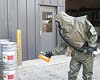 Almaty, Kazakhstan (UPI) Jun 21, 2005
U.S. nuclear experts ran a series of radiation security seminars in the Kazakh capital, Almaty, on ways to handle incidents involving radiation materials. |
|
|
| The content herein, unless otherwise known to be public domain, are Copyright 1995-2016 - Space Media Network. All websites are published in Australia and are solely subject to Australian law and governed by Fair Use principals for news reporting and research purposes. AFP, UPI and IANS news wire stories are copyright Agence France-Presse, United Press International and Indo-Asia News Service. ESA news reports are copyright European Space Agency. All NASA sourced material is public domain. Additional copyrights may apply in whole or part to other bona fide parties. Advertising does not imply endorsement, agreement or approval of any opinions, statements or information provided by Space Media Network on any Web page published or hosted by Space Media Network. Privacy Statement All images and articles appearing on Space Media Network have been edited or digitally altered in some way. Any requests to remove copyright material will be acted upon in a timely and appropriate manner. Any attempt to extort money from Space Media Network will be ignored and reported to Australian Law Enforcement Agencies as a potential case of financial fraud involving the use of a telephonic carriage device or postal service. |
