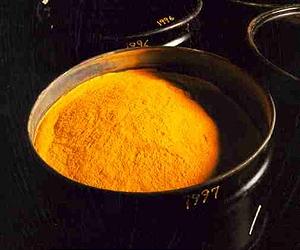
The ex-Soviet state of Belarus announced Wednesday it would eliminate its stocks of highly-enriched uranium by 2012, following talks with US Secretary of State Hillary Clinton.
Clinton won the pledge from Belarus Foreign Minister Sergei Martynov after talks on the sidelines of the OSCE summit in the Kazakhstan capital Astana.
"Foreign Minister Martynov announced that Belarus has decided to eliminate all of its stocks of highly enriched uranium (HEU) and intends to do so by the next nuclear security summit in 2012," said a joint statement.
"The United States intends to provide technical and financial assistance to support the completion of this effort as expeditiously as possible."
White House spokesman Robert Gibbs called the move "a significant step forward" and Clinton praised "a sign of progress in efforts to advance nuclear security and non-proliferation."
"This removal represents a significant, as I said, step for President (Barack) Obama's worldwide effort to secure nuclear material," Gibbs said.
In highly-enriched form, uranium can be used to form the warhead of a nuclear bomb and there have been fears over the security of the stocks held by ex-Soviet states such as Belarus.
Clinton said Belarus would be invited to the 2012 nuclear security summit in South Korea.
Wednesday's announcement marked a rare breakthrough in relations between Belarus and the United States, which only a few years ago slammed Lukashenko as Europe's last dictator.
Belarus strongman President Alexander Lukashenko had been quoted as saying earlier this year that the country had hundreds of kilogrammes of highly-enriched uranium and had no intention of eliminating it.
But the unpredictable Belarussian leader has also sought to make more positive gestures to the West in recent months and take his distance from his traditional allies in the Kremlin.
"The United States and Belarus acknowledged that enhanced respect for democracy and human rights in Belarus remains central to improving bilateral relations, and is essential to the progress of the country and its citizens," the joint statement said.
Lukashenko faces presidential elections on December 19 set to be marked by the lack of high-profile opposition candidates and sniping by Russia over his personality and policies.
"The United States hopes for substantial progress in these areas and that the December presidential elections in Belarus meet international standards," the statement said.
It praised Minsk for allowing monitors to check on the election. "In that regard, the decision by Belarus to invite a robust international monitoring presence to observe these elections is a welcome step," it added.
earlier related report
US hails Belarus move to eliminate uranium stocks
Washington (AFP) Dec 1, 2010 –
The White House welcomed a decision by the former Soviet republic of Belarus Wednesday to eliminate its stocks of highly-enriched uranium by 2012.
White House spokesman Robert Gibbs called the move "a significant step forward."
US Secretary of State Hillary Clinton earlier won the pledge from Belarus Foreign Minister Sergei Martynov after talks on the sidelines of the Organization for Security and Cooperation in Europe (OSCE) summit in the Kazakh capital Astana.
"This removal represents a significant, as I said, step for President (Barack) Obama's worldwide effort to secure nuclear material," Gibbs said.
The United States says it intends to extend technical and financial assistance to support this effort. Gibbs noted that South Korea has agreed to invite Belarus to a 2012 nuclear security summit contingent upon the country completing its removal of highly enriched uranium.
In highly-enriched form, uranium can be used to form the warhead of a nuclear bomb and there have been fears over the security of the stocks held by ex-Soviet republics such as Belarus.
Clinton was quoted as praising the decision "as a sign of progress in efforts to advance nuclear security and non-proliferation."
Belarus' strongman President Alexander Lukashenko had been quoted as saying earlier this year that the country had hundreds of kilograms (pounds) of highly-enriched uranium and had no intention of eliminating it.
Wednesday's announcement marked a rare breakthrough in relations between Belarus and the United States, which only a few years ago slammed Lukashenko as Europe's last dictator.
However, the unpredictable Belarussian leader has also in recent months made more postive gestures to the West, distancing himself from his traditional allies in the Kremlin.
Share This Article With Planet Earth