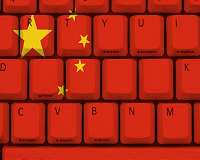
China has ordered the country's biggest technology firms to immediately "rectify" violations and shut accounts that publish "bad information", in the latest move by authorities to tighten policing of the web.
The Cyberspace Administration of China said it held a meeting this week with representatives from domestic tech giants Baidu, Sohu, Tencent, Netease and Phoenix to inform them of multiple violations in content published on their platforms.
The offences listed Wednesday by the authorities included misinterpreting policy directives, disseminating false information, distorting Chinese Communist Party history, plagiarising photos, and challenging public order.
The companies must "immediately … carry out special cleaning and rectification" in order to adhere to regulations, the CAC said in a statement.
China tightly controls the internet through a censorship system known as the "Great Firewall" and closely monitors social media networks for sensitive content.
Regulations in force since 2000 say websites are responsible for "ensuring the legality of any information" posted on their platforms.
The CAC provided several examples of problems in articles published by independent media accounts on domestic social media platforms.
This included a post on Baidu's Baijia platform that said the government's policies on real estate were to blame for a rise in housing prices, which the CAC called an "irresponsible attack".
The CAC also slammed Tencent for allowing the release of an article titled, "a Chinese warplane crashed on a US aircraft carrier, killing three US soldiers?", which turned out to be a plot from a television show.
New regulations that came into force on June 1 require online platforms to get a licence to post news reports or commentary about the government, economy, military, foreign affairs, and social issues.
In other recent moves, authorities have closed dozens of celebrity gossip blogs and issued new rules around online video content to eliminate programmes deemed offensive.
Since the death of Nobel Peace Prize laureate Liu Xiaobo last week, censors have been working in overdrive to scrub any tributes to the democracy activist.
Both keywords and images associated with Liu have been blocked across all major social media platforms in China, according to analysts.
The scope of censorship related to Liu expanded greatly after his death, a report by the Citizen Lab at the University of Toronto found.
"His death (is) the first time we see image filtering in one-to-one chat, in addition to image filtering in group chats," the report said.
But Chinese activists who have access to virtual private network (VPN) software, which allows people to circumvent the Great Firewall, have posted tributes to Liu on Twitter and Facebook in recent days, including photos of memorials next to bodies of water, since his ashes were scattered at sea.
'Oh, bother': Chinese censors can't bear Winnie the Pooh
Has Winnie the Pooh done something to anger China's censors? Some mentions of the lovable but dimwitted bear with a weakness for "hunny" have been blocked on Chinese social networks.
Authorities did not explain the clampdown, but the self-described "bear of very little brain" has been used in the past in a meme comparing him to portly Chinese President Xi Jinping.
Posts bearing the image … read more