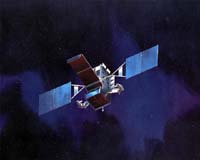
Lockheed Martin has delivered the latest block of flight software for the first geosynchronous orbit (GEO-1) spacecraft in the Space Based Infrared System (SBIRS) program.
The U.S. Air Force's SBIRS program is designed to provide early warning of missile launches, and simultaneously support other missions, including missile defense, technical intelligence and battlespace awareness.
The software is an interim version of the second of two major blocks of enhanced flight software designed to provide highly reliable spacecraft command and control operations.
It provides the functionality necessary to begin Baseline Integrated System Testing (BIST), which will characterize the performance of the integrated satellite and establish a performance baseline prior to entering thermal vacuum testing next year.
Lockheed Martin Space Systems, Sunnyvale, Calif., prime contractor for the SBIRS program, has enhanced the SBIRS flight software architecture to enable robust command and data handling, fault management and safe-hold capabilities on the GEO satellite system.
This delivery enables our team to begin baseline integrated system test which represents a key milestone on our path to integrate, test and deliver this system," said Jeff Smith, Lockheed Martin's SBIRS vice president and program manager.
The second flight software block contains applications that control space vehicle electrical power, temperature, attitude and navigation. It also features a robust fault management system, which responds when an anomaly is detected during on-orbit operations, putting the satellite into a safe state while operators on the ground analyze the situation and take corrective action.
Successful delivery of the final flight software block is necessary to support pre-launch spacecraft testing, including thermal vacuum testing which will validate spacecraft performance at temperature extremes greater than those expected during on-orbit operations.
Lockheed Martin is currently under contract to provide two HEO payloads and two GEO satellites, as well as ground-based assets to receive and process the infrared data. Both HEO payloads are on-orbit and performance meets or exceeds specifications.
Acoustic and pyroshock testing of the first GEO satellite began this month where the integrated spacecraft is subjected to the maximum sound and vibration levels expected during launch into orbit. Thermal vacuum testing is on track for mid-2009. After the extensive environmental and final integrated test phase, the spacecraft will be shipped to the Air Force in preparation for launch in fiscal year 2010 from Cape Canaveral Air Force Base, Fla.