Unintended consequences often combine the most diabolical of dangers with the greatest of huge rewards. This Janus-like face of danger and reward is often unrecognized and even ignored in the taking of major decisions by states and leaders.
Consider a few unintended consequences arising from seminal decisions over war and peace during the past eight decades.
Hitler invaded the Soviet Union in June 1941 assuming a speedy victory and swift collapse of the Stalin government. The Fuhrer dismissed Napoleon's experiences in 1812. And, Nazi ambitions weren't helped by Japan's decision to launch its attack on Pearl Harbor in December 1941.
The Japanese High Command believed that the destruction of the U.S. Pacific Fleet in Hawaii would so shock and paralyze the United States that Washington would immediately seek peace.
The first order unintended consequences, of course, was the unconditional surrender of both Nazi Germany and Fascist Japan in 1945.
Ironically, the greatest unintended consequence led to the creation of flourishing democracies in these defeated states forming the cornerstone for Western security that persists today. A further irony of course was the reversal of the one-time Soviet ally into the West's major adversary.
Regarding the Soviet Union, after a succession of gerontocratic leaders finally died, Mikhail Gorbachev inherited the reins of power. Fully aware of the fossilized condition of the Soviet system, Gorbachev imposed perestroika (restructuring) and glasnost (openness) as remedial actions to revitalize communism. To Gorbachev's astonishment, the reverse happened and the Soviet Union imploded.
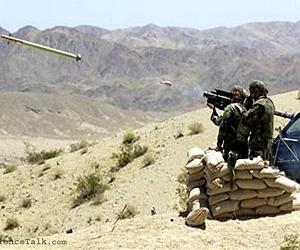
Following the Soviet invasion of Afghanistan in late 1979, the United States engaged in what was called Charlie Wilson's war to arm the mujahedin particularly with anti-air shoulder-fired Stinger missiles. These weapons helped turn the tide. The Soviets were defeated and withdrew.
But, alas, many of the mujahedin metamorphosed into Taliban and Afghanistan is anything from settled two decades later — clear examples of unanticipated consequences.
Across the Afghan border in Pakistan, India was the overwhelming threat. Three losing wars sharpened the sense of danger. Not only would Pakistan develop nuclear weapons as a counterweight to its super-sized neighbor but it created an array of militant groups such as Lashkar-e-Toiba as insurgents to chip away at India. These groups turned into Frankenstein monsters almost precipitating a fourth war after the attack in Mumbai five years ago and turning against the government so that these insurgencies have surpassed India as the No. 1 threat to Pakistan.
In the aftermath of the Arab Spring, with North Africa ablaze from Tunisia to Egypt; civil war in Syria further infecting the region; Iraq leaning toward its neighbor Iran; and of course Iran's nuclear ambitions, this column has suggested a situation akin to July 1914 in slow motion. Here the United States and the West in the form of NATO and the European Union face an array of potentially horrendous policy options each laden with frightening unintended consequences, with second-, third-, fourth- and even fifth-order effects.
The case for intervention in Syria for humanitarian reasons is self-evident. Arming the rebels seems appealing. But distinguishing between "good" and "bad" rebel groups is exceedingly difficult and a repeat of the Afghan experience cannot be easily dismissed.
Iran cannot be allowed to develop nuclear weapons. The ultimate option is the use of military force to prevent that outcome. Yet, the unintended consequences of any attack may be impossible to forecast or predict. As what happened after the initial invasion of Iraq and massive defeat of Saddam Hussein's army in 2003 that produced continuing chaos and violence, those unintended consequences must haunt any White House contemplating a strike against Iran.
Where does this take us? George W. Bush, unintended or otherwise, implicitly tried to repeat in Iraq what happened after World War II when enemies became staunch democratic allies. The effort to democratize the greater Middle East beginning with Iraq became America's greatest foreign policy blunder certainly since Vietnam and possibly ever. Thus, expecting good results may be as naïve as failing to consider unintended consequences.
In a majority of cases, unintended consequences arising from U.S. unilateral actions tend to produce negative and not positive results. Still, the pressure to intervene in Syria and in Iran may prove overwhelming. Should that occur, the United States must take careful stock not only of first order unintended consequences. Many orders of consequence must be examined before deciding on any action.
If the United States chooses to intervene in Syria and Iran, the likelihood of greater harm and damage being done than good is present. American leaders would be derelict if this history is ignored. However, since the U.S. government may be incapable of averting budgetary sequestration this very week, how will it deal with tough and very dangerous policy issues filled with oceans of unintended consequences?
(Harlan Ullman is chairman of the Killowen Group, which advises leaders of government and business, and senior adviser at Washington's Atlantic Council.)
(United Press International's "Outside View" commentaries are written by outside contributors who specialize in a variety of important issues. The views expressed do not necessarily reflect those of United Press International. In the interests of creating an open forum, original submissions are invited.)