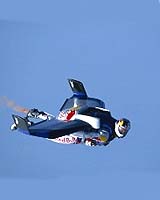
A new military parachute system which fits wings on soldiers could enable them to travel to 200 kilometres (124 miles) after jumping, Jane's Defence Weekly defence magazine said Friday.
The system, which involves the development of new modular carbon-fibre wings, will mean that aircraft can drop parachutists from 30,000 feet (9,150 metres) into an area of operations without flying into a danger zone.
Trials of the modular wing are being developed by the German firm Elektroniksystem und Logistik and Draeger. They are due to finish by the end of 2006, with the entire parachute and wings combination expected to be available during 2007.
Peter Felstead, editor of Jane's Defence Weekly, said the new system has been in use with the German army since 2003, but the development of the new wing means soldiers can travel much further than the current 48 kilometres.
"The new wing will also reduce the impact of wind conditions on the jumper and allow operatives to travel up to 40 kilometres carrying loads of around 100 kilogrammes," Felstead said.
"The system is reportedly 100 percent silent and extremely difficult to track by air on ground-based radar systems."
Jane's Defence Weekly reported that the next stage of the development will utilise small turbo-jet drives, as used on unmanned aerial vehicles, allowing jumpers to be carried longer distances without jumping from such extreme heights.