
 |
 |
 |
 |
 |
 |
 |
 |
 |
 |

| . |  |
. |
Ancient Ecosystem Thrives Millions Of Years Below Antarctic Glacier
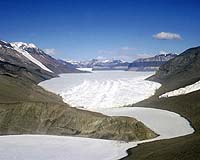
Bozeman MT (SPX) Apr 22, 2009 Scientists have found an ancient ecosystem below an Antarctic glacier and learned that it survived millions of years by transforming sulfur and iron compounds for growth. Described in the latest issue of Science, the ecosystem lives without light or oxygen in a pool of brine trapped below Taylor Glacier and next to frozen Lake Bonney in eastern Antarctica, said John Priscu, co-author of the Science article. Priscu is a longtime Antarctic researcher and professor in the Department of Land Resources and Environmental Sciences at Montana State University. The ecosystem contains a diversity of bacteria that thrive in cold, salty water loaded with iron and sulfur. The water averages 14 degrees Fahrenheit, but doesn't freeze because the water is three or four times saltier than the ocean. The scientists made a breakthrough discovery when they learned that the bacteria convert key elements on Earth into food, Priscu said. The bacteria cycle sulfur compounds to access iron in the bedrock. The ecosystem-- because it has been isolated for so long in extreme conditions - could explain how life might exist on other planets and serve as a model for how life can exist under ice, Priscu said. Jill Mikucki, lead author of the Science article and a former MSU graduate student, added that life below the glacier may help scientists answer questions about life on "Snowball Earth," the period when large ice sheets covered the Earth. The project also shows the power of multi-disciplinary collaborations, she said. Techniques in biogeochemistry, microbiology and molecular biology and other novel tests were used to figure out how the ecosystem could survive without photosynthesis. The ecosystem has the "potential to be a modern analog to what geochemistry and biogeochemistry was like millions of years ago," Mikucki continued. Priscu said researchers discovered the bacteria while investigating Blood Falls, a curious blood-red feature that flows from Taylor Glacier. They learned that the falls are red because they draw water from an iron rich pool, then discovered bacteria in their samples. The most common bacteria in the pool is Thiomicrospira arctica. The researchers can't drill down to the pool because the glacier is too thick and the pool is too far back from the glacier's nose, Priscu said. The pool is believed to be less than three miles across, however, and a remnant of an ancient ocean that was trapped at least 1.5 million years ago when Taylor Glacier moved over Lake Bonney. Priscu said scientists have known about Blood Falls for more than 100 years, and his research teams have collected data from there since the early 1990s. The Science paper grew out of Mikucki's research at MSU and Harvard University, he added. Mikucki studied Blood Falls for her doctoral degree at MSU and her postdoctoral research at Harvard. Mikucki, whose project was funded by the National Science Foundation, now teaches at Dartmouth College and continues to work with Priscu. One co-author on the Science article was Peter Lee at the Hollings Marine Laboratory in Charleston, S.C. He was a postdoctoral researcher at MSU when Mikucki was a graduate student. Other co-authors were Ann Pearson, David Johnston and Daniel Schrag of Harvard, Alexandra Turchyn from the University of Cambridge, James Farquhar from the University of Maryland, and Ariel Anbar from Arizona State University. Share This Article With Planet Earth
Related Links Montana State University Life Beyond Earth Lands Beyond Beyond - extra solar planets - news and science
 Stardust Sheds New Light On Origin Of Elements Of Life
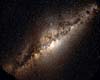 College Park MD (SPX) Mar 13, 2009
Using NASA's Spitzer Telescope, an international research team has found evidence that some stars in the center of the Milky Way galaxy have both carbon and oxygen in the dust that surrounds them, a rare combination in galactic dust. |
|
|

| The content herein, unless otherwise known to be public domain, are Copyright 1995-2007 - SpaceDaily.AFP and UPI Wire Stories are copyright Agence France-Presse and United Press International. ESA Portal Reports are copyright European Space Agency. All NASA sourced material is public domain. Additional copyrights may apply in whole or part to other bona fide parties. Advertising does not imply endorsement,agreement or approval of any opinions, statements or information provided by SpaceDaily on any Web page published or hosted by SpaceDaily. Privacy Statement |
 del.icio.us
 Digg
Digg Reddit
 YahooMyWeb
 Google
 Facebook