. Military Space News .


.
STELLAR CHEMISTRY
Are stellar explosions created equal?
by Staff Writers
Tel Aviv (SPX) Aug 30, 2011

Type Ia supernovae are thought to be born when an exceedingly dense star called a white dwarf receives more mass from a nearby star, until it's so 'overwhelmed' that it explodes.

Cosmic distances are difficult to grasp and no less difficult to measure. When it comes to other galaxies or even remote parts of our own Milky Way, distance measurements are nothing but assessments, derived from indirect clues.

Highly important among such clues are supernovae, extremely luminous stellar explosions. The distance to a supernova of a particular type, called Type Ia, can be calculated from its brightness: the brighter it appears, the closer it is to the viewer.

Thanks to such supernovae, for example, astronomers have famously revealed that our universe is expanding at an accelerated pace, which suggests that it's permeated with mysterious dark energy. These calculations, however, are based on the assumption that all Type Ia supernovae have the same luminosity. Are all these explosions indeed created equal?

Type Ia supernovae are thought to be born when an exceedingly dense star called a white dwarf receives more mass from a nearby star, until it's so 'overwhelmed' that it explodes. A new study reported in Science and led by Weizmann Institute researchers, has gained major insight into the nature of these mass 'donors.'

The study was performed by Dr. Avishay Gal-Yam and postdoctoral fellow Dr. Assaf Sternberg of Weizmann's Particle Physics and Astrophysics Department, in collaboration with scientists from more than a dozen research centers in the United States, Europe and Australia.

The researchers have revealed that in about a quarter of the cases in spiral galaxies, and possibly more, the companion star that 'donates' its mass to the white dwarf is probably a regular, medium-sized star, largely similar to our own Sun. They reached this conclusion by analyzing the outflow of gas, typical of sun-like stars, observed during the 'donation' of the mass.

These findings constitute a major step toward determining the nature of all stellar 'donors,' with the ultimate goal of establishing whether supernovae everywhere evolve in the same manner, having the same luminosity at various stages. Understanding their evolution, in turn, can greatly enhance our ability to measure distances throughout the cosmos and map its evolution and geometry.





Related Links
Weizmann Institute of Science
Stellar Chemistry, The Universe And All Within It

.
Get Our Free Newsletters Via Email
...
Buy Advertising Editorial Enquiries


. Comment on this article via your Facebook, Yahoo, AOL, Hotmail login.

Share this article via these popular social media networks
del.icio.usdel.icio.us DiggDigg RedditReddit GoogleGoogle


STELLAR CHEMISTRY
Galaxies are running out of gas
Canberra, Australia (SPX) Aug 30, 2011
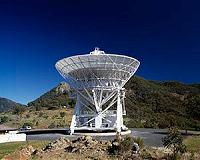
The Universe forms fewer stars than it used to, and a CSIRO study has now shown why - the galaxies are running out of gas. Dr Robert Braun (CSIRO Astronomy and Space Science) and his colleagues used CSIRO's Mopra radio telescope near Coonabarabran, NSW, to study far-off galaxies and compare them with nearby ones. Light (and radio waves) from the distant galaxies has taken time to travel to ... read more


STELLAR CHEMISTRY
Israeli spat blocks missile defense plan

Raytheon-Rafael get boost for Iron Dome

Raytheon Teams with Rafael to Market Iron Dome Weapon System

Airborne Infrared Sensor Cued In ABM Test With The Integrated Sensor Manager

STELLAR CHEMISTRY
Raytheon-Boeing Team Continues to Validate JAGM Single Rocket-Motor Solution

Russia 'surprised' by Iran's legal complaint over S-300

Ahmadinejad unveils new marine missile, torpedo

Taiwan to develop precision-guided missile

STELLAR CHEMISTRY
AeroVironment Introduces Shrike VTOL Unmanned Aircraft System

US drone attack kills four militants in Pakistan: officials

Canadian drone helped rebels in Libya

Raytheon Unmanned Aircraft Systems Open Architecture Could Yield Cost Savings

STELLAR CHEMISTRY
Lockheed Martin AMF JTRS Team Delivers Joint Tactical Radio to AFRL For C-130J And C-5 Integration Risk Reduction

Lockheed Martin Introduces Virtual Capability That Connects Interpreters with Battlefield Troops

ASC Signal Will Support L-3 Communications with Multi-Band Transportable Communications for a U.S. Government Agency

"Network in A Box" Allows Military Vehicles To Be Used For Multiple Missions

STELLAR CHEMISTRY
Lockheed Martin to Integrate TRADOC Architecture Under New $26.1M Contract

US Army Selects Northrop Grumman for Force Protection Contract

USAF And Lockheed Martin Sign 5-Year Tri-Mode Seeker Cooperative Agreement

Lockheed Martin Delivers Third Production C-5M Super Galaxy To USAF

STELLAR CHEMISTRY
Pentagon under fire over war contracts

S.Africa carries out defence policy review

Pentagon under fire over war contracts

China says US report on its military 'groundless'

STELLAR CHEMISTRY
China state news agency accuses US of 'interfering'

China accuses US of 'exaggerating' military threat

Europe and NATO weakened despite Libya victory

Biden to meet China's leader-in-waiting

STELLAR CHEMISTRY
Boeing and BAE Systems to Develop Integrated Directed Energy Weapon for US Navy

System Integration of High Energy Laser Technology Demonstrator Completed

Raytheon Acquires Directed Energy Capabilities of Ktech Corporation


Memory Foam Mattress Review
Newsletters :: SpaceDaily Express :: SpaceWar Express :: TerraDaily Express :: Energy Daily
XML Feeds :: Space News :: Earth News :: War News :: Solar Energy News
.

The content herein, unless otherwise known to be public domain, are Copyright 1995-2011 - Space Media Network. AFP and UPI Wire Stories are copyright Agence France-Presse and United Press International. ESA Portal Reports are copyright European Space Agency. All NASA sourced material is public domain. Additional copyrights may apply in whole or part to other bona fide parties. Advertising does not imply endorsement,agreement or approval of any opinions, statements or information provided by Space Media Network on any Web page published or hosted by Space Media Network. Privacy Statement