
 |
 |
 |
 |
 |
 |
 |
 |
 |
 |

| . |  |
. |

Pasadena CA (SPX) Nov 05, 2010 The Ball Aerospace-built Deep Impact Flyby spacecraft successfully completed another "first" for NASA on November 4 when its onboard cameras captured spectacular images of comet Hartley 2 as part of the EPOXI mission. This was the first time in history that two comets - Hartley 2 and Tempel 1 - have been imaged by the same spacecraft, same instruments, and with the same spatial resolution. The rendezvous with Hartley 2 is the third mission for the Deep Impact spacecraft. The first was in 2005 when the Impactor aboard the Deep Impact spacecraft collided with comet Tempel 1 and excavated debris from the comet's nucleus. Images captured by cameras aboard both the Impactor and the Flyby have been used by the scientific community to study the composition of Tempel 1. The second was the Extrasolar Planet Observation and Characterization (EPOCh) mission that ended in August 2008, providing observations of the Earth in both visible and infrared wavelengths. "Deep Impact is proving to be a spacecraft that keeps on giving," said David L. Taylor, president and CEO of Ball Aerospace and Technologies Corp. "When it launched in January of 2005, the Deep Impact mission was the priority, so it's extremely rewarding to see a three-peat performance six years later that provides more beneficial science data." Science observations of comet Hartley 2 began on Sept. 5, with the mission's encounter phase commencing the evening of Nov. 3, when the spacecraft was about eighteen hours from the time of closest approach to the comet's nucleus. The spacecraft flew past the comet at approximately 8 a.m. (MDT) on November 4 when the spacecraft was re-oriented to maintain imaging of the comet nucleus while pointing its high-gain antenna at Earth in order begin downlinking nearly 5,800 images. Hartley-2 is the fifth time that a comet has been imaged close-up. In the months leading up to its closet encounter with Comet Hartley 2, the spacecraft responded to multiple commands to align itself for optimum viewing. Approximately the size of a subcompact car, the spacecraft had already used about half of its 85 kg of hydrazine fuel to complete the encounter with Tempel 1. Following the Hartley 2 imaging, it will still have enough useable fuel, 4 kg, to support science observations from its current orbit, should NASA task it with a new assignment. Ball Aerospace was the 2005 Deep Impact mission prime contractor, responsible for the two-part spacecraft: the Impactor spacecraft and Flyby spacecraft; three high-resolution cameras; algorithm development; environmental testing; and launch and mission support. Since its launch, the Deep Impact spacecraft and mission team have logged 3.2 billion miles. Because the vast majority of mission costs are the initial design, testing and launch, the recycled Deep Impact provided savings on the order of 90 percent that of a hypothetical mission with similar goals, starting from the ground up.
earlier related report "NASA extended its pioneering exploration of the solar system today with the successful flyby of Comet Hartley 2 by our EPOXI mission. The stunning new images returned of the comet as it zoomed past the spacecraft at a relative speed of more than 27,000 mph are awe inspiring. "The images taken and other science collected should help reveal new insights into the origins of our solar system as scientists pore over them in the months and years to come. And they are also yet another example of the incredible dedication, skill, and innovation of the engineers and scientists at NASA, and our partners, who accomplish these incredible technological feats. "This mission represents one of NASA's most successful deep space exploration projects. The encounter with Hartley 2 today adds to the data collected by the mission during Deep Impact's prime mission to Comet Tempel 1 in 2005 and the science acquired during the successful EPOCh mission. "EPOXI is a wonderful example of the strong collection of NASA science missions we have coming up in the next few years that will enable us to visit destinations across the solar system in new and exciting ways, look through new windows out across our vast cosmos, and expand our understanding of our own home planet. Our increased investment in science will continue to yield valuable dividends for the future. "On behalf of the entire NASA family and interested stargazers around the world, my congratulations to the EPOXI team for a great moment of scientific exploration and discovery."
Share This Article With Planet Earth
Related Links EPOXI at NASA EPOXI at UBM Asteroid and Comet Mission News, Science and Technology

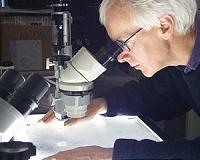 The Man Behind Comet Hartley 2
Pasadena CA (JPL) Nov 04, 2010 Over the last 40 years, Malcolm Hartley has done just about every possible job for Siding Spring Observatory's UK Schmidt telescope in New South Wales, Australia. The British-born, Scottish-educated Hartley has logged time as the 1.2 meter (3.9 foot) telescope's observer, processor, copier, hypersensitization expert, and quality controller. On the afternoon of March 16, 1986, Hartley's job ... read more |
|
|
| The content herein, unless otherwise known to be public domain, are Copyright 1995-2010 - SpaceDaily. AFP and UPI Wire Stories are copyright Agence France-Presse and United Press International. ESA Portal Reports are copyright European Space Agency. All NASA sourced material is public domain. Additional copyrights may apply in whole or part to other bona fide parties. Advertising does not imply endorsement,agreement or approval of any opinions, statements or information provided by SpaceDaily on any Web page published or hosted by SpaceDaily. Privacy Statement |


 del.icio.us
 Digg
Digg Reddit
 YahooMyWeb
 Google
 Facebook


