|
 |
 |
 |
 |
 |
 |
 |
 |
 |

| . |  |
. |
Ball Aerospace Proud Of ERBS Spacecraft That Keeps Going And Going
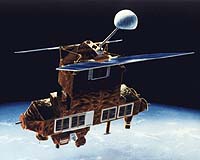
Boulder CO (SPX) Nov 03, 2004 Ball Aerospace & Technologies recently celebrated the 20th anniversary of one of the longest-running space mission to date. The Earth Radiation Budget satellite (ERBS) was launched in 1984 as the first spacecraft specifically designed to be launched by a space shuttle. Ball Aerospace was responsible for the spacecraft bus and the Stratospheric Aerosol Gas Experiment (SAGE II), one of the three instruments onboard. In 1984, ERBS was expected to have a two-year design life, but 20 years later, this mission is still supplying valuable data about the Earth's ozone layer. ERBS was part of NASA's three-satellite Earth Radiation Budget Experiment (ERBE), designed to investigate how energy from the Sun is absorbed and re-emitted by the Earth. This process of absorption and re-radiation is one of the principal drivers of the Earth's weather patterns. Observations from ERBS were also used to determine the effects of human activities (such as burning fossil fuels and the use of CFCs) and natural occurrences (such as volcanic eruptions) on the Earth's radiation balance. After two decades of data from SAGE II aboard ERBS, scientists at NASA and Hampton University's Center for Atmospheric Sciences, believe that ozone depletion is slowing. During the last four years ERBS received an overhaul by a ground-based "pit crew" of Ball Aerospace engineers who restored some of the systems on the vintage spacecraft. The reaction wheels, which have been running constantly for 20 years, were used along with small rockets to adjust the orbit and a previously decommissioned Nickel Cadmium battery was returned to service in a tricky switch-over to compensate for a failing battery. ERBS and SAGE II are expected to return data about the Earth's ozone until the recently revived battery fails. Until then, the instrument will continue to provide scientists with a critical view of the Earth's ozone layer. Related Links Ball Aerospace & Technologies SpaceDaily Search SpaceDaily Subscribe To SpaceDaily Express  MSG-4 Contract Means Sunny Outlook For European Weather Forecasting
 Paris, France (ESA) Nov 03, 2004
ESA PR 58-2004. The contract for a fourth Meteosat Second Generation (MSG) spacecraft was signed today, ensuring continuity of European meteorological satellite services with the delivery of data for weather forecasting, climate and the environment for many years into the future. |
|
|

| The content herein, unless otherwise known to be public domain, are Copyright 1995-2006 - SpaceDaily.AFP and UPI Wire Stories are copyright Agence France-Presse and United Press International. ESA PortalReports are copyright European Space Agency. All NASA sourced material is public domain. Additionalcopyrights may apply in whole or part to other bona fide parties. Advertising does not imply endorsement,agreement or approval of any opinions, statements or information provided by SpaceDaily on any Web page published or hosted by SpaceDaily. Privacy Statement |