|
 |
 |
 |
 |
 |
 |
 |
 |
 |

| . |  |
. |
 by Staff Writers Washington DC (SPX) Mar 31, 2017
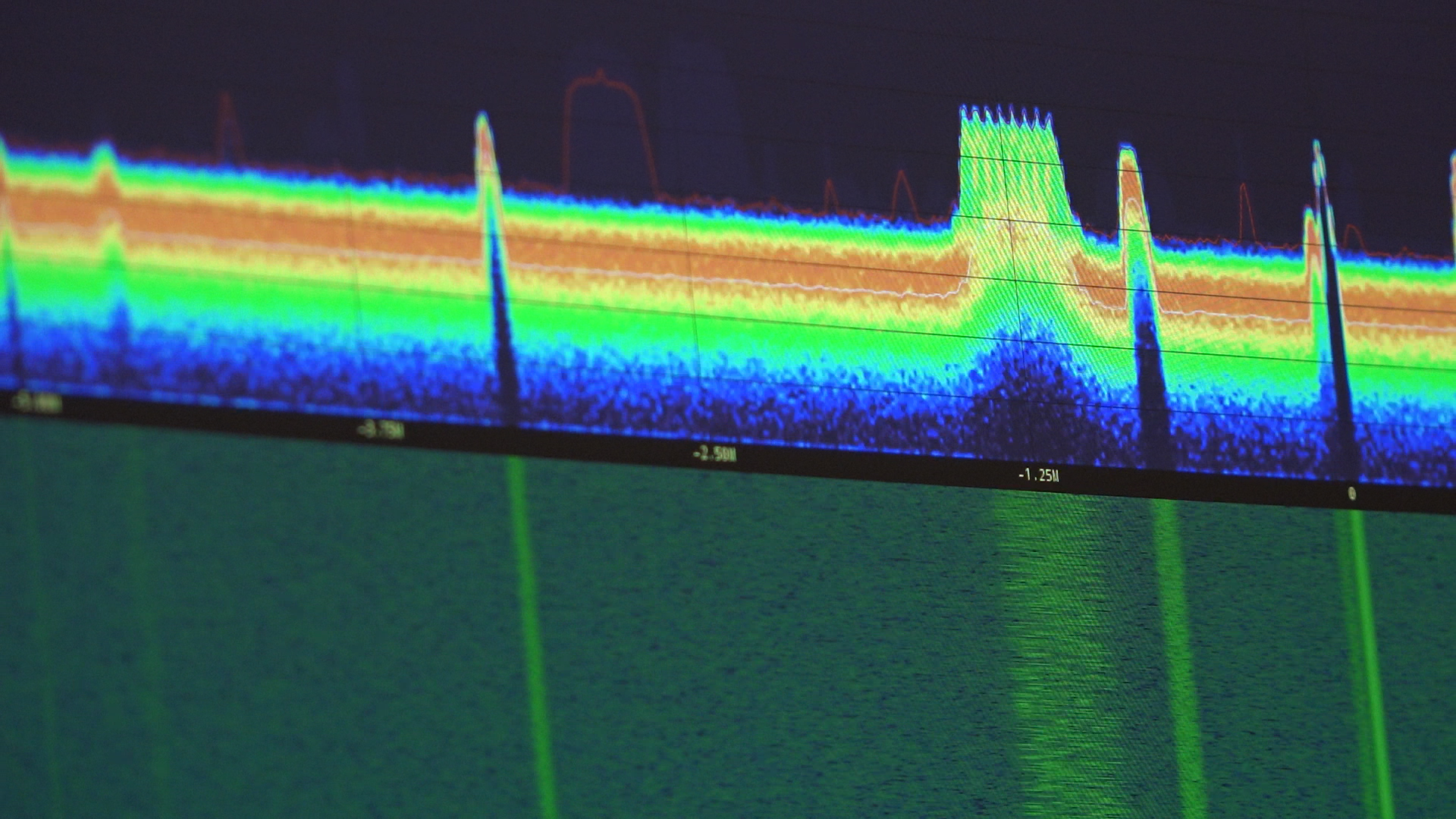
If human ears could hear the electromagnetic spectrum, the noise levels these days would be overwhelming. The skyrocketing use of wireless devices in military and civilian domains has created a complicated and cacophonous environment, filled with signals of widely varying frequency and amplitude and a menagerie of modulations. For warfighters trying to maintain critical communications links, interpret ambiguous radar returns, or defend against electronic warfare tactics, the ability to sort through that thicket of waveforms is essential-to identify where key signals are coming from, what kind of signals they are, and how best to send and receive information via the least contested spectral bands. Toward that end, DARPA earlier this month hosted the Battle of the ModRecs-a low-key competitive opportunity for engineers with a penchant for antennas and algorithms to test their skills in modulation recognition. "We're looking to push modulation recognition out of its comfort zone," said DARPA program manager Tom Rondeau. "We want scientists and engineers to rethink conventional approaches and advance the technology to new heights, so it will function dynamically and with precision-not just under laboratory conditions but in real-world scenarios." Held for a few days in conjunction with the IEEE DySPAN conference in Baltimore, where Rondeau and staffers created a sort of pop-up spectrum testbed, the Battle put hand-coded, expert systems against newer, experimental systems designed to take advantage of recent advances in machine learning. "In this realistic scenario with complex waveforms, the hand-coded systems performed better than the machine-learning systems," Rondeau said. "But it was close, and we don't think that lead is going to last for long. We now have a better understanding of the state of the art and which directions to explore as we pursue our goal of more effectively managing the spectrum." The Baltimore event was one of several related exercises planned for this year. A February hackfest hosted in Brussels, for example, focused on radio interference, and an upcoming event in the San Francisco Bay Area will focus on unmanned aerial vehicles. Through these efforts and a variety of ongoing DARPA programs, including the Spectrum Collaboration Challenge that program manager Paul Tilghman is overseeing, DARPA aims to build an improved technological capacity for spectrum-related situational awareness and help U.S. forces make better use of this powerful but limited electromagnetic resource. Information about upcoming hackfests and related events will be posted here
 Israel taps Elbit Systems for advanced radios
Washington (UPI) Mar 22, 2017 Elbit Systems Ltd has been awarded a five-year Israeli Ministry of Defense contract for the supply of advanced radio systems. Hundreds of radio systems will be provided under the approximately $100 million cotract. Among the systems to be supplied by Elbit are hand-held, vehicle-mounted and airborne third-generation Software Defined Radios for advanced network services at a high ... read more Related Links Defense Advanced Research Projects Agency Read the latest in Military Space Communications Technology at SpaceWar.com

|
|||||||||||||
|
|
| The content herein, unless otherwise known to be public domain, are Copyright 1995-2024 - Space Media Network. All websites are published in Australia and are solely subject to Australian law and governed by Fair Use principals for news reporting and research purposes. AFP, UPI and IANS news wire stories are copyright Agence France-Presse, United Press International and Indo-Asia News Service. ESA news reports are copyright European Space Agency. All NASA sourced material is public domain. Additional copyrights may apply in whole or part to other bona fide parties. All articles labeled "by Staff Writers" include reports supplied to Space Media Network by industry news wires, PR agencies, corporate press officers and the like. Such articles are individually curated and edited by Space Media Network staff on the basis of the report's information value to our industry and professional readership. Advertising does not imply endorsement, agreement or approval of any opinions, statements or information provided by Space Media Network on any Web page published or hosted by Space Media Network. General Data Protection Regulation (GDPR) Statement Our advertisers use various cookies and the like to deliver the best ad banner available at one time. All network advertising suppliers have GDPR policies (Legitimate Interest) that conform with EU regulations for data collection. By using our websites you consent to cookie based advertising. If you do not agree with this then you must stop using the websites from May 25, 2018. Privacy Statement. Additional information can be found here at About Us. |


 del.icio.us
 Digg
Digg Reddit
 Google