
 |
 |
 |
 |
 |
 |
 |
 |
 |
 |

| . |  |
. |

College Park MD (SPX) Aug 12, 2010 Sleek design and ease of use are just two of the main reasons consumers are increasingly attracted to tablets and e-readers. And these devices are only going to get better - display technology improvements are on the way. Several e-reader products on the market today use electrophoretic displays, in which each pixel consists of microscopic capsules that contain black and white particles moving in opposite directions under the influence of an electric field. A serious drawback to this technology is that the screen image is closer to black-on-gray than black-on-white. Also, the slow switching speed (~1 second) due to the limited velocity of the particles prevents integration of other highly desirable features such as touch commands, animation, and video. Researchers at the University of Cincinnati Nanoelectronics Laboratory are actively pursuing an alternative approach for low-power displays. Their assessment of the future of display technologies appears in the American Institute of Physics' Applied Physics Letters. "Our approach is based on the concept of vertically stacking electrowetting devices," explains professor Andrew J. Steckl, director of the NanoLab at UC's Department of Electrical and Computer Engineering. "The electric field controls the 'wetting' properties on a fluoropolymer surface, which results in rapid manipulation of liquid on a micrometer scale. Electrowetting displays can operate in both reflective and transmissive modes, broadening their range of display applications. And now, improvements of the hydrophobic insulator material and the working liquids enable EW operation at fairly low driving voltages (~15V)." Steckl and Dr. Han You, a research associate in the NanoLab, have demonstrated that the vertical stack electrowetting structure can produce multi-color e-paper devices, with the potential for higher resolution than the conventional side-by-side pixel approach. Furthermore, their device has switching speeds that enable video content displays. What does all of this mean for the consumer? Essentially, tablets and e-readers are about to become capable of even more and look even better doing it. Compared to other technologies, electrowetting reflective display screens boast many advantages. The electrowetting displays are very thin, have a switching speed capable of video display, a wide viewing angle and, just as important, Steckl says, they aren't power hogs.
Share This Article With Planet Earth
Related Links American Institute of Physics Space Technology News - Applications and Research

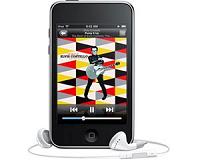 Chinese 'peel' widget converts Apple Touch to phone: report
Beijing (AFP) Aug 10, 2010 A Chinese firm has developed a special protective case known as the "Apple Peel" for converting the iPod Touch media player into a mobile phone, state media said Tuesday. The Apple Peel 520 from Shenzhen-based Yosion Technology is expected to be available next week in online stores and is targeted at aspirant owners of Apple's trendy iPhone who are baulking at paying the full price. The ... read more |
|
|
| The content herein, unless otherwise known to be public domain, are Copyright 1995-2010 - SpaceDaily. AFP and UPI Wire Stories are copyright Agence France-Presse and United Press International. ESA Portal Reports are copyright European Space Agency. All NASA sourced material is public domain. Additional copyrights may apply in whole or part to other bona fide parties. Advertising does not imply endorsement,agreement or approval of any opinions, statements or information provided by SpaceDaily on any Web page published or hosted by SpaceDaily. Privacy Statement |


 del.icio.us
 Digg
Digg Reddit
 YahooMyWeb
 Google
 Facebook


