
 |
 |
 |
 |
 |
 |
 |
 |
 |
 |

| . |  |
. |
Bulgarian Astronomers Discover New Asteroid
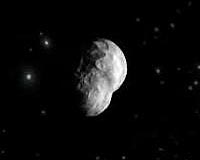
Sofia, Bulgaria (XNA) Dec 15, 2008 Harvard's Minor Planet Center for the Solar System has acknowledged the existence of a new asteroid discovered by Bulgarian astronomers at the end of last week, a Bulgarian research body said Friday. The object, in the constellation Taurus, is two km in diameter and presently situated in the inner parts of the main asteroid belt, making its full turn around the Sun for a period of 3.2 years, the Center for Space Research of Sofia University said. The asteroid has temporarily been dubbed 2008 WN96 by the international organization at Harvard. The three scientists who made the new discovery under "Star Society MPC A79" are now conducting further research to affirm the characteristics of the new object, the center said. The three have discovered nine new celestial bodies, including the 2005 UT12, the 2007 PQ2 and the 2007 QD2, since 2005 in spite of the lack of government financing, the center added. The center said the 2008 WN96 will probably be the last asteroid discovered in Bulgaria as the three scientists will start working on a new long-term project sponsored by the U.S. government in the beginning of 2009.
Source: Xinhua News Agency Share This Article With Planet Earth
Related Links Sofia University Asteroid and Comet Mission News, Science and Technology
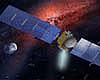
 Dawn Set For Mars Flyby
 Pasadena CA (JPL) Dec 02, 2008
The Dawn spacecraft is healthy and on course for its flyby of Mars early next year. The planet's gravity will help boost the probe on its way to rendezvous with Vesta. While the spacecraft has its sights set on the asteroid belt (via Mars), its path is now bringing it closer to Earth. Meanwhile, from Earth's perspective, Dawn appears to be approaching a blindingly close encounter with the Sun. With so much happening in the solar system, all readers, whether local or not, are invited to turn their attention here. |
|
|

| The content herein, unless otherwise known to be public domain, are Copyright 1995-2007 - SpaceDaily.AFP and UPI Wire Stories are copyright Agence France-Presse and United Press International. ESA Portal Reports are copyright European Space Agency. All NASA sourced material is public domain. Additional copyrights may apply in whole or part to other bona fide parties. Advertising does not imply endorsement,agreement or approval of any opinions, statements or information provided by SpaceDaily on any Web page published or hosted by SpaceDaily. Privacy Statement |
 del.icio.us
 Digg
Digg Reddit
 YahooMyWeb
 Google
 Facebook