|
 |
 |
 |
 |
 |
 |
 |
 |
 |

| . |  |
. |
China's Failed Sinosat-2 May Be Pushed Out Of Orbit
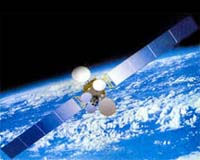
Beijing, China (XNA) Nov 30, 2006 Although scientists haven't given up hope of getting China's SinoSat-2 to final come online, the satellite may have to be pushed out orbit and allowed to burn up in the earth's atmosphere, said a SinoSat spokesperson on Wednesday. Fan Xingmin, told Xinhua that although the satellite's solar array and antenna have not fully deployed, ground control can still maneuver it. "The satellite might become space junk if it stays in the orbit but cannot work properly," he said. Designed to be China's first direct-to-home satellite SinoSat-2was launched on Oct. 29. It was only revealed on Tuesday that it was not working. "If SinoSat-2 cannot be restored, it has to be pushed out of orbit to leave room for its substitute," he said. The Shanghai-based Oriental Morning Post on Wednesday quoted an unidentified space expert, as saying that there is little hope SinoSat-2 can be made to work properly. The expert speculated that it will likely end up being directed toward the earth where it will burn up as it falls through the earth's atmosphere. The satellite's manufacturer Chinese Research Institute of Space Technology (CRIST) still believes the trouble is only temporary and its researchers are trying to fix for the problem. "SinoSat-2", is designed to serve broadcast TV, digital TV, live broadcast TV and digital broadband multimedia systems on the Chinese mainland, Hong Kong, Macao and Taiwan. It was supposed to operate for 15 years.
Source: Xinhua News Agency Related Links SinoSat Read More About the Chinese Space Program  China's First Circumlunar Exploration Satellite To Be Ready Next Feb
 Beijing, China (XNA) Nov 30, 2006
China will wrap up construction of the country's first circumlunar exploration satellite, Chang'e I, by February so that the moon orbiting project will start on schedule, according to moon probe program chief scientist Ouyang Ziyuan. "We've made good progress with the crucial technology. Testing work will be completed by the end of the year," the academician from the Chinese Academy of Sciences was quoted as saying by the Beijing Daily on Wednesday. |
|
|

| The content herein, unless otherwise known to be public domain, are Copyright 1995-2006 - SpaceDaily.AFP and UPI Wire Stories are copyright Agence France-Presse and United Press International. ESA PortalReports are copyright European Space Agency. All NASA sourced material is public domain. Additionalcopyrights may apply in whole or part to other bona fide parties. Advertising does not imply endorsement,agreement or approval of any opinions, statements or information provided by SpaceDaily on any Web page published or hosted by SpaceDaily. Privacy Statement |