|
 |
 |
 |
 |
 |
 |
 |
 |
 |

| . |  |
. |
China To Launch Third Sino-Brazilian Satellite In September
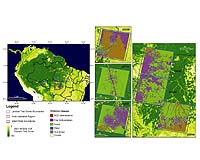
Beijing (XNA) Jun 18, 2007 China plans to launch in September the third earth resources satellite jointly developed by China and Brazil, said Sun Laiyan, director of the China National Space Administration here Thursday. Satellite 02B will be soon moved into a space environment simulator and go through a number of tests, said Sun. Before returning to China in April this year, the satellite underwent a series of tests at the Brazilian National Space Research Institute (INPE). These included electromagnetic interference tests, and tests to detect propellant leaks. China and Brazil have cooperated on space projects for 19 years. Satellites 01 and 02 jointly developed by the two countries were launched in 1999 and 2003 respectively. China and Brazil have also agreed to develop satellite 03 and 04 and launch satellite 03 in 2009. The satellites will be used to gather information on the Earth's environment, agriculture, urban development planning and water pollution. Source: Xinhua News Agency Community Email This Article Comment On This Article Related Links China National Space Administration Brazilian National Space Research Institute (INPE) The Chinese Space Program - News, Policy and Technology China News from SinoDaily.com
 China Launches Communications Satellite SinoSat-3
 Xichang, China (SPX) Jun 01, 2007
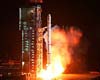
China on early Friday morning launched "SinoSat-3", a communications satellite for radio and television broadcasting, aboard a Long March-3A carrier rocket, marking the 100th flight of its Long March series. The satellite, launched from the Xichang Satellite Launch Center in the southwest Sichuan province at 0:08 a.m. (Beijing Time), separated from the rocket about 24 minutes after lift-off, before entering the geosynchronous orbit, data from the northwest Xi'an Satellite Control center show. |
|
|

| The content herein, unless otherwise known to be public domain, are Copyright 1995-2006 - SpaceDaily.AFP and UPI Wire Stories are copyright Agence France-Presse and United Press International. ESA PortalReports are copyright European Space Agency. All NASA sourced material is public domain. Additionalcopyrights may apply in whole or part to other bona fide parties. Advertising does not imply endorsement,agreement or approval of any opinions, statements or information provided by SpaceDaily on any Web page published or hosted by SpaceDaily. Privacy Statement |