|
 |
 |
 |
 |
 |
 |
 |
 |
 |

| . |  |
. |
Complex Meteorology At Venus
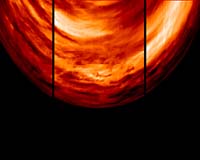
Paris, France (SPX) Oct 16, 2006 In its relentless probing of Venus's atmosphere, ESA's Venus Express keeps revealing new details of the Venusian cloud system. Meteorology at Venus is a complex matter, scientists say. New night-side infrared images gathered by the Ultraviolet, Visible and Near-Infrared Mapping Spectrometer (VIRTIS) in July 2006, clearly show new details of a complex cloud system. The first (false colour) view - the composite of three infrared images acquired by VIRTIS, was taken on 22 July when the spacecraft was flying around the apocentre of its orbit (point of maximum distance from the planet surface) at about 65 000 kilometres altitude. Venus was in the night side. Using its capability to observe at 1.7-micrometre wavelenght, VIRTIS could probe at about 15-20 kilometres altitude, below the thick cloud deck situated at about 60 kilometres from the surface. The thermal radiation coming from the oven-hot surface of Venus is represented by the intensity of the colours: the brighter the colour (towards white), the more radiation comes from the surface, so the less cloudy the region in the line of sight between the view and the spacecraft is. The edge of the images, taken at a time interval of about 30 minutes from each other, do not precisely match. This is due to the fact that clouds on Venus move very rapidly and constantly vary their shape. Venus's atmosphere is certainly the most dynamic among the terrestrial planets that have one, taking only four days to completely rotate around the planet. "Clouds at Venus present repetitive patterns and recurrent features, but they are very variable in position both on short and long time scales," said Giuseppe Piccioni who, with Pierre Drossart, is the instrument co-Principal Investigator. "This makes meteorology a very complex matter for this planet." Since the thermal radiation from the surface of Venus is in practice modulated by the presence of the clouds, taking the negative of the image it is possible to see directly the clouds structure on the night side, and so study its morphology and dynamics. Related Links Venus Express  Flying Over The Cloudy World
 Paris (ESA) Jul 13, 2006
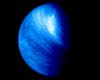
On 20 April 2006, after its first 9-day, elongated orbit around Venus, ESA's Venus Express started to get closer to the planet, until it reached its final 24-hour long orbit on 7 May. During this time, and up to today, the spacecraft has been working relentlessly: the new data coming in are already providing first glimpses on planetary features never seen before. |
|
|

| The content herein, unless otherwise known to be public domain, are Copyright 1995-2006 - SpaceDaily.AFP and UPI Wire Stories are copyright Agence France-Presse and United Press International. ESA PortalReports are copyright European Space Agency. All NASA sourced material is public domain. Additionalcopyrights may apply in whole or part to other bona fide parties. Advertising does not imply endorsement,agreement or approval of any opinions, statements or information provided by SpaceDaily on any Web page published or hosted by SpaceDaily. Privacy Statement |