|
|
|
|
|
|
|
|
|


| . |  |
. |
|
|
|
 by Staff Writers Pasadena CA (JPL) Jun 06, 2013
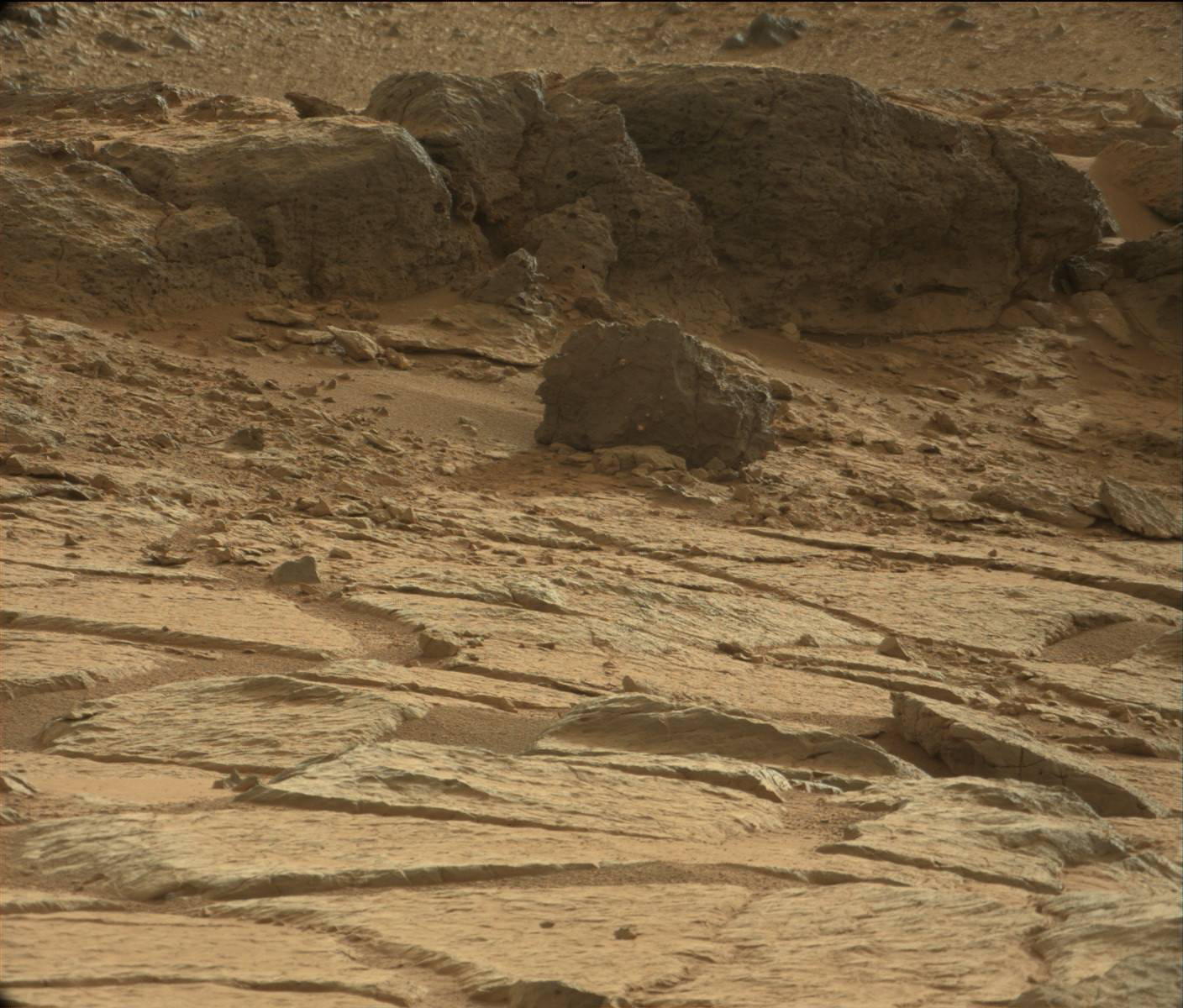
NASA's Mars Science Laboratory mission is approaching its biggest turning point since landing its rover, Curiosity, inside Mars' Gale Crater last summer. Curiosity is finishing investigations in an area smaller than a football field where it has been working for six months, and it will soon shift to a distance-driving mode headed for an area about 5 miles (8 kilometers) away, at the base Mount Sharp. In May, the mission drilled a second rock target for sample material and delivered portions of that rock powder into laboratory instruments in one week, about one-fourth as much time as needed at the first drilled rock. "We're hitting full stride," said Mars Science Laboratory Project Manager Jim Erickson of NASA's Jet Propulsion Laboratory, Pasadena, Calif. "We needed a more deliberate pace for all the first-time activities by Curiosity since landing, but we won't have many more of those." No additional rock drilling or soil scooping is planned in the "Glenelg" area that Curiosity entered last fall as the mission's first destination after landing. To reach Glenelg, the rover drove east about a third of a mile (500 meters) from the landing site. To reach the next destination, Mount Sharp, Curiosity will drive toward the southwest for many months. "We don't know when we'll get to Mount Sharp," Erickson said. "This truly is a mission of exploration, so just because our end goal is Mount Sharp doesn't mean we're not going to investigate interesting features along the way." Images of Mount Sharp taken from orbit and images Curiosity has taken from a distance reveal many layers where scientists anticipate finding evidence about how the ancient Martian environment changed and evolved. While completing major first-time activities since landing, the mission has also already accomplished its main science objective. Analysis of rock powder from the first drilled rock target, "John Klein," provided evidence that an ancient environment in Gale Crater had favorable conditions for microbial life: the essential elemental ingredients, energy and ponded water that was neither too acidic nor too briny. The rover team chose a similar rock, "Cumberland," as the second drilling target to provide a check for the findings at John Klein. Scientists are analyzing laboratory-instrument results from portions of the Cumberland sample. One new capability being used is to drive away while still holding rock powder in Curiosity's sample-handling device to supply additional material to instruments later if desired by the science team. For the drill campaign at Cumberland, steps that each took a day or more at John Klein could be combined into a single day's sequence of commands. "We used the experience and lessons from our first drilling campaign, as well as new cached sample capabilities, to do the second drill campaign far more efficiently," said sampling activity lead Joe Melko of JPL. "In addition, we increased use of the rover's autonomous self-protection. This allowed more activities to be strung together before the ground team had to check in on the rover." The science team has chosen three targets for brief observations before Curiosity leaves the Glenelg area: the boundary between bedrock areas of mudstone and sandstone, a layered outcrop called "Shaler" and a pitted outcrop called "Point Lake." JPL's Joy Crisp, deputy project scientist for Curiosity, said "Shaler might be a river deposit. Point Lake might be volcanic or sedimentary. A closer look at them could give us better understanding of how the rocks we sampled with the drill fit into the history of how the environment changed."
Related Links Mars Science Laboratory Mars News and Information at MarsDaily.com Lunar Dreams and more
|
|
|
| The content herein, unless otherwise known to be public domain, are Copyright 1995-2014 - Space Media Network. AFP, UPI and IANS news wire stories are copyright Agence France-Presse, United Press International and Indo-Asia News Service. ESA Portal Reports are copyright European Space Agency. All NASA sourced material is public domain. Additional copyrights may apply in whole or part to other bona fide parties. Advertising does not imply endorsement,agreement or approval of any opinions, statements or information provided by Space Media Network on any Web page published or hosted by Space Media Network. Privacy Statement |

 del.icio.us
 Digg
Digg Reddit
 Google