
 |
 |
 |
 |
 |
 |
 |
 |
 |
 |

| . |  |
. |

Pasadena CA (JPL) May 04, 2011 NASA's Dawn spacecraft has reached its official approach phase to the asteroid Vesta and will begin using cameras for the first time to aid navigation for an expected July 16 orbital encounter. The large asteroid is known as a protoplanet - a celestial body that almost formed into a planet. At the start of this three-month final approach to this massive body in the asteroid belt, Dawn is 1.21 million kilometers (752,000 miles) from Vesta, or about three times the distance between Earth and the moon. During the approach phase, the spacecraft's main activity will be thrusting with a special, hyper-efficient ion engine that uses electricity to ionize and accelerate xenon. The 12-inch-wide ion thrusters provide less thrust than conventional engines, but will provide propulsion for years during the mission and provide far greater capability to change velocity. "We feel a little like Columbus approaching the shores of the New World," said Christopher Russell, Dawn principal investigator, based at the University of California in Los Angeles (UCLA). "The Dawn team can't wait to start mapping this Terra Incognita." Dawn previously navigated by measuring the radio signal between the spacecraft and Earth, and used other methods that did not involve Vesta. But as the spacecraft closes in on its target, navigation requires more precise measurements. By analyzing where Vesta appears relative to stars, navigators will pin down its location and enable engineers to refine the spacecraft's trajectory. Using its ion engine to match Vesta's orbit around the sun, the spacecraft will spiral gently into orbit around the asteroid. When Dawn gets approximately 16,000 kilometers (9,900 miles) from Vesta, the asteroid's gravity will capture the spacecraft in orbit. "After more than three-and-a-half years of interplanetary travel, we are finally closing in on our first destination," said Marc Rayman, Dawn's chief engineer, at NASA's Jet Propulsion Laboratory in Pasadena, Calif. "We're not there yet, but Dawn will soon bring into focus an entire world that has been, for most of the two centuries scientists have been studying it, little more than a pinpoint of light." Scientists will search the framing camera images for possible moons around Vesta. None of the images from ground-based and Earth-orbiting telescopes have seen any moons, but Dawn will give scientists much more detailed images to determine whether small objects have gone undiscovered. The gamma ray and neutron detector instrument also will gather information on cosmic rays during the approach phase, providing a baseline for comparison when Dawn is much closer to Vesta. Simultaneously, Dawn's visible and infrared mapping spectrometer will take early measurements to ensure it is calibrated and ready when the spacecraft enters orbit around Vesta. Dawn's odyssey, which will take it on a journey of 4.8-billion kilometers (3-billion miles), began on Sept. 27, 2007, with its launch from Cape Canaveral Air Force Station in Florida. It will stay in orbit around Vesta for one year. After another long cruise phase, Dawn will arrive at its second destination, an even more massive body in the asteroid belt, called Ceres, in 2015. These two icons of the asteroid belt will help scientists unlock the secrets of our solar system's early history. The mission will compare and contrast the two giant bodies, which were shaped by different forces. Dawn's science instrument suite will measure surface composition, topography and texture. In addition, the Dawn spacecraft will measure the tug of gravity from Vesta and Ceres to learn more about their internal structures.
Share This Article With Planet Earth
Related Links Dawn Asteroid and Comet Mission News, Science and Technology

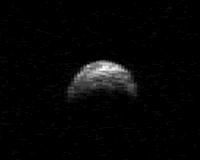 Spacecraft Earth to Perform Asteroid 'Flyby' This Fall
Pasadena CA (JPL) May 03, 2011 Since the dawn of the space age, humanity has sent 16 robotic emissaries to fly by some of the solar system's most intriguing and nomadic occupants - comets and asteroids. The data and imagery collected on these deep-space missions of exploration have helped redefine our understanding of how Earth and our part of the galaxy came to be. But this fall, Mother Nature is giving scientists around the ... read more |
|
|
| The content herein, unless otherwise known to be public domain, are Copyright 1995-2010 - SpaceDaily. AFP and UPI Wire Stories are copyright Agence France-Presse and United Press International. ESA Portal Reports are copyright European Space Agency. All NASA sourced material is public domain. Additional copyrights may apply in whole or part to other bona fide parties. Advertising does not imply endorsement,agreement or approval of any opinions, statements or information provided by SpaceDaily on any Web page published or hosted by SpaceDaily. Privacy Statement |


 del.icio.us
 Digg
Digg Reddit
 YahooMyWeb
 Google
 Facebook


