The rapid success of the Russian army in conquering one-third of the territory of neighboring Georgia in only five days last month has started sobering up a lot of military planners around the world, especially in the United States and Europe. For it teaches the sobering lesson that significant land wars between major industrial powers are not inconceivable after all.
Since the collapse of communism, it has been widely assumed by U.S. policymakers that gigantic, full-scale land wars on major continents involving hundreds of thousands or even millions of troops have become inconceivable. Georgia changed all that.
As a consequence of the collapse of communism and of the widespread complacency that followed it, U.S. and European nations' military forces in the U.S.-led North Atlantic Treaty Organization were rapidly reduced to a fraction of the levels they were maintained at in order to deter aggression during the Cold War.
However, today the Russian army is going through its most ambitious modernization and equipment upgrades program in at least 30 years. It is already vastly more powerful in conventional military terms than any forces the Europeans would have to oppose it on their own.
Only the United States could restore the military balance in Europe, but U.S. troop levels in Germany have been reduced from 300,000 at the height of the Cold War to less than 50,000 today. The bulk of the combat brigades of the U.S. Army are fully committed to continuing operations in Iraq and Afghanistan.
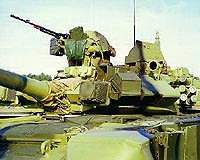
Nor is Russia alone in planning for the possible contingencies of having to fight land wars on a very large scale in different parts of the Eurasian land mass. India and China have come to the same conclusion. As we have noted in recent columns, India in December 2007 closed a deal with Russia to buy 347 more T-90S Main Battle Tanks in addition to the 310 it purchased in 2001.
The potential enemy the Indian army would have to face is quite clear: It would be its traditional enemy Pakistan, whose future looks increasingly unpredictable and unstable, given the growth of extreme Islamist elements in popularity and political credibility, the assassination of former Prime Minister Benazir Bhutto and the consequent fall of Pakistani President Pervez Musharraf.
Russia certainly does not factor as a likely enemy of India in any foreseeable scenario. The two great nations have no areas of significant strategic conflict in the foreseeable future, and their alliance, transcending their vastly different political systems and political cultures, has now endured for more than 40 years.
India's relations with the United States have warmed dramatically over the past decade, and that process has continued steadily under both Republican and Democratic presidents in Washington and under the Bharatiya Janata Party and the Congress-United Progressive Alliance-led coalition governments in New Delhi, so the process enjoys bipartisan blessings on both sides.
Nevertheless, the energy and resources the Indians are investing in building up their conventional political power should serve notice that India will not be content to follow U.S. wishes on a wide range of security issues in South Asia but will be determined to have the power to act independently on its own behalf.
(Part 3: Why large land forces still matter)
 del.icio.us
 Digg
Digg Reddit
 YahooMyWeb
 Google
 Facebook