
 |
 |
 |
 |
 |
 |
 |
 |
 |
 |

| . |  |
. |

London, UK (SPX) Oct 29, 2010 The evolution of complex life is strictly dependent on mitochondria, the tiny power stations found in all complex cells, according to a new study by Dr Nick Lane, from the University College London and Dr William Martin, from the University of Dusseldorf. "The underlying principles are universal. Energy is vital, even in the realm of evolutionary inventions," said Dr Lane, UCL Department of Genetics, Evolution and Environment. "Even aliens will need mitochondria." For 70 years scientists have reasoned that evolution of nucleus was the key to complex life. Now, in work published this week in Nature, Lane and Martin reveal that in fact mitochondria were fundamental to the development of complex innovations like the nucleus because of their function as power stations in the cell. "This overturns the traditional view that the jump to complex 'eukaryotic' cells simply required the right kinds of mutations. It actually required a kind of industrial revolution in terms of energy production," explained Dr Lane. At the level of our cells, humans have far more in common with mushrooms, magnolias and marigolds than we do with bacteria. The reason is that complex cells like those of plants, animals and fungi have specialized compartments including an information centre, the nucleus, and power stations - mitochondria. These compartmentalised cells are called 'eukaryotic', and they all share a common ancestor that arose just once in four billion years of evolution. Scientists now know that this common ancestor, 'the first eukaryote', was a lot more sophisticated than any known bacterium. It had thousands more genes and proteins than any bacterium, despite sharing other features, like the genetic code. But what enabled eukaryotes to accumulate all these extra genes and proteins? And why don't bacteria bother? By focusing on the energy available per gene, Lane and Martin showed that an average eukaryotic cell can support an astonishing 200,000 times more genes than bacteria. "This gives eukaryotes the genetic raw material that enables them to accumulate new genes, big gene families and regulatory systems on a scale that is totally unaffordable to bacteria," said Dr Lane. "It's the basis of complexity, even if it's not always used." "Bacteria are at the bottom of a deep chasm in the energy landscape, and they never found a way out," explained Dr Martin. "Mitochondria give eukaryotes four or five orders of magnitude more energy per gene, and that enabled them to tunnel straight through the walls of the chasm." The authors went on to address a second question: why can't bacteria just compartmentalise themselves to gain all the advantages of having mitochondria? They often made a start but never got very far. The answer lies in the tiny mitochondrial genome. These genes are needed for cell respiration, and without them eukaryotic cells die. If cells get bigger and more energetic, they need more copies of these mitochondrial genes to stay alive. Bacteria face exactly the same problem. They can deal with it by making thousands of copies of their entire genome - as many as 600,000 copies in the case of giant bacterial cells like Epulopiscium, an extreme case that lives only in the unusual guts of surgeonfish. But all this DNA has a big energetic cost that cripples even giant bacteria - stopping them from turning into more complex eukaryotes. "The only way out", said Dr Lane, "is if one cell somehow gets inside another one - an endosymbiosis." Cells compete among themselves. When living inside other cells they tend to cut corners, relying on their host cell wherever possible. Over evolutionary time, they lose unnecessary genes and become streamlined, ultimately leaving them with a tiny fraction of the genes they started out with: only the ones they really need. The key to complexity is that these few remaining genes weigh almost nothing. Calculate the energy needed to support a normal bacterial genome in thousands of copies and the cost is prohibitive. Do it for the tiny mitochondrial genome and the cost is easily affordable, as shown in the Nature paper. The difference is the amount of DNA that could be supported in the nucleus, not as repetitive copies of the same old genes, but as the raw material for new evolution. "If evolution works like a tinkerer, evolution with mitochondria works like a corps of engineers," said Dr Martin. The trouble is that, while cells within cells are common in eukaryotes, which often engulf other cells, they're vanishingly rare in more rigid bacteria. And that, Lane and Martin conclude, may well explain why complex life - eukaryotes - only evolved once in all of Earth's history.
Share This Article With Planet Earth
Related Links UCL Research Department of Genetics, Evolution and Environment Nick Lane Life Beyond Earth Lands Beyond Beyond - extra solar planets - news and science

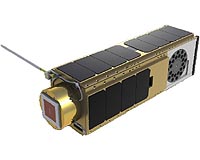 Microbes And Molecules Get A Space-Stress Test
Huntsville AL (SPX) Oct 25, 2010 Astrobiologists searching for life beyond Earth need to know how well life and its building blocks fare in space. To find out, NASA will monitor a miniature "crew" of organic molecules and microbes orbiting Earth for 6 months. "This will be the first mission since the early 1970s to test a life form's mettle outside the protection of Earth's magnetic field," says science team member Wayne ... read more |
|
|
| The content herein, unless otherwise known to be public domain, are Copyright 1995-2010 - SpaceDaily. AFP and UPI Wire Stories are copyright Agence France-Presse and United Press International. ESA Portal Reports are copyright European Space Agency. All NASA sourced material is public domain. Additional copyrights may apply in whole or part to other bona fide parties. Advertising does not imply endorsement,agreement or approval of any opinions, statements or information provided by SpaceDaily on any Web page published or hosted by SpaceDaily. Privacy Statement |


 del.icio.us
 Digg
Digg Reddit
 YahooMyWeb
 Google
 Facebook


