
 |
 |
 |
 |
 |
 |
 |
 |
 |
 |

| . |  |
. |

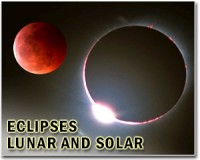
Williamstown MA (SPX) Jul 09, 2010 Professor Jay Pasachoff of Williams College's astronomy department is on Easter Island in the middle of the Pacific Ocean preparing to observe the July 11 total solar eclipse. The eclipse will be one of the least observed ever, since so much of the path is over ocean. Easter Island, 2,500 miles west of the Chilean South American mainland, is the only substantial land in the path, until the extreme end of the eclipse reaches Patagonia at sunset. Some eclipse scientists and eco-tourists will observe totality from smaller islands or atolls in French Polynesia or the Cook Islands, from two chartered airplanes, and from a chartered ship. Pasachoff has travelled to Easter Island with students Muzhou Lu, Williams College '12, and Craig Malamut, a Keck Northeast Astronomy Consortium Summer Fellow and Wesleyan '11. They are joined on site by Prof. Marek Demianski. They will be carrying out high-resolution imaging to look for motions in the corona and to continue following the varying magnetic-field configuration in the solar corona as a function of the solar-activity cycle. Though the sunspot cycle remains in an extreme low, some other indications of solar activity have been increasing and the researchers are eager to see the condition of the low and middle corona. Pasachoff is the coauthor of papers with Miloslav Druckmuller of the Czech Republic and Vojtech Rusin of Slovakia on the former's extensive image processing to bring out fine details and high contrast in the corona at the eclipses of 2005, 2006, and 2008. They plan to compare the images they capture at this month's eclipse with similar images planned to be taken from Polynesia and the Cook Islands as well as those taken with one of the expedition's Nikon telephoto lenses from an airplane that will take off from Tahiti. The airplane observations are in collaboration with Glenn Schneider of the University of Arizona and Joel Moskowitz of New York. They expect to see motions at least in polar plumes. The researchers also will use the images to fill gaps between the observations of the corona on the solar disk taken with NASA's new Solar Dynamics Observatory and the observations of the outer corona taken with the Naval Research Laboratory's coronagraph on the Solar and Heliospheric Observatory; they have contributed to similar images for the past several eclipses but now will have the improved SDO images as part of the expedition's montage. Several of the cameras will be computer controlled using software called Solar Eclipse Maestro, written by Xavier Jubier of France. The event will be Pasachoff's 51st solar eclipse. He is Chair of the International Astronomical Union's Working Group on Eclipses. The Williams College team is accompanied by a documentary crew filming for the National Geographic Channel, and their activities will be covered in a special program, titled Easter Island Eclipse, partly pre- recorded and partly expected to have new eclipse footage that will air July 11th at 11 pm. In Williamstown, the National Geographic Channel is on cable channel 201.
Share This Article With Planet Earth
Related Links Williams College Solar and Lunar Eclipses at Skynightly

 Rainy forecast douses plans to view Easter Island eclipse
Santiago, Chile (AFP) July 8, 2010 Easter Island will be overcast and drizzly Sunday, weather experts said - a disappointing forecast for thousands hoping to view what would be, if the weather cooperates, a spectacular solar eclipse. About 4,000 tourists have traveled to tiny Pacific ocean outpost to view Sunday's rare total eclipse of the sun, but Chile's meteorological office on Easter Island said dreary weather may ruin ... read more |
|
|
| The content herein, unless otherwise known to be public domain, are Copyright 1995-2010 - SpaceDaily. AFP and UPI Wire Stories are copyright Agence France-Presse and United Press International. ESA Portal Reports are copyright European Space Agency. All NASA sourced material is public domain. Additional copyrights may apply in whole or part to other bona fide parties. Advertising does not imply endorsement,agreement or approval of any opinions, statements or information provided by SpaceDaily on any Web page published or hosted by SpaceDaily. Privacy Statement |


 del.icio.us
 Digg
Digg Reddit
 YahooMyWeb
 Google
 Facebook


