
 |
 |
 |
 |
 |
 |
 |
 |
 |
 |

| . |  |
. |

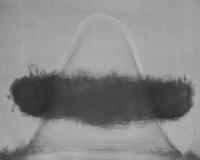
Kingston, Canada (SPX) Apr 13, 2011 A chance observation by a Queen's researcher might have ended a decades-old debate about the precise way antifreeze proteins (AFP) bind to the surface of ice crystals. "We got a beautiful view of water bound to the ice-binding site on the protein," says Peter Davies, a professor in the Department of Biochemistry and a world leader in antifreeze protein research. "In a sense we got a lucky break." AFPs are a class of proteins that bind to the surface of ice crystals and prevent further growth and recrystallization of ice. Fish, insects, bacteria and plants that live in sub-zero environments all rely on AFPs to survive. AFPs are also important to many industries, including ice cream and frozen yogurt production which relies on AFPs to control ice-crystal growth. The implications of this finding reach far beyond creating low-fat, high water-content ice cream that maintains a rich, creamy texture. Having a clear idea of how AFPs bind to the surface of ice crystals would allow researchers and industries to engineer strong, versatile AFPs with countless commercial applications ranging from increasing the freeze tolerance of crops to enhancing the preservation of transplant organs and tissues. While determining the crystal structure of an AFP from an Antarctic bacterium, biochemistry doctoral candidate Christopher Garnham was fortunate enough to see an exposed ice-binding site-a rare find in the field of AFP crystallography that Mr. Garnham studies. The ice binding surface of an AFP contains both hydrophobic or 'water repelling' groups as well as hydrophilic or 'water loving' groups. Until now, the exact function of these counter-acting forces with respect to ice-binding was unknown. While the presence of water repellent sites can appear counterintuitive on a protein that bonds with ice, Mr. Garnham and Dr. Davies are hypothesizing that the function of these water repellent sites is to force water molecules near the surface of the protein into an ice-like cage that mirrors the pattern of water molecules on the surface of the ice crystal. The water-loving sites on the protein's surface then anchor this ice-like cage to the protein via hydrogen bonds. Not until the ordered waters are anchored to the AFP is it able to bond to ice.
Share This Article With Planet Earth
Related Links Queen's University Space Technology News - Applications and Research

 Tissue Engineers Use New System To Measure Biomaterials, Structures
Providence RI (SPX) Apr 13, 2011 Tissue engineering makes biologists builders, but compared to their civil engineering counterparts, they don't know much about the properties of the materials and structures they use, namely living cells. To improve that knowledge, Brown University researchers have developed a simple and reliable system for measuring the power that cells employ to assemble into three-dimensional tissue. Th ... read more |
|
|
| The content herein, unless otherwise known to be public domain, are Copyright 1995-2010 - SpaceDaily. AFP and UPI Wire Stories are copyright Agence France-Presse and United Press International. ESA Portal Reports are copyright European Space Agency. All NASA sourced material is public domain. Additional copyrights may apply in whole or part to other bona fide parties. Advertising does not imply endorsement,agreement or approval of any opinions, statements or information provided by SpaceDaily on any Web page published or hosted by SpaceDaily. Privacy Statement |


 del.icio.us
 Digg
Digg Reddit
 YahooMyWeb
 Google
 Facebook


