|
 |
 |
 |
 |
 |
 |
 |

| . |  |
. |

|
|
. |

 by Staff Writers New Haven CT (SPX) Oct 11, 2011
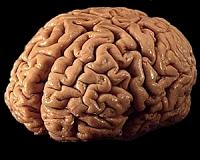
Winning may not be the only thing, but the human brain devotes a lot of resources to the outcome of games, a new study by Yale researchers suggest. The study published in the journal Neuron shows that when participants play games, such as rock-paper-scissors, almost the entire brain is engaged, not just the reward centers of the brain, which have been assigned the central role for shaping adaptive human behavior. "Our brain functions to maximize the chance of survival and reproduction, so reward should be important for all cognitive functions, and thus most brain regions," said Timothy Vickery, postdoctoral fellow in the Department of Psychology and lead author of the study. Textbooks teach that sensations of reward and punishment are centered in a region at the center of the brain called the basal ganglia, which contains a network of cells distributing dopamine, a neurotransmitter that reaches into the prefrontal cortex and other areas of the brain. The theory has been confirmed by previous functional magnetic imaging (fMRI) scans that show high levels of activity in the dopamine network when subjects are presented by desirable or frightening stimuli. Vickery - along with Yale colleagues Marvin Chun, professor of psychology and neurobiology, and senior author Daeyeol Lee, professor of neurobiology, psychology and researcher for the Kavli Institute of Neuroscience - wanted to know if the textbooks were leaving out the role of other brain areas. They used a technique called multi-voxel pattern analysis to analyze fMRI data. Instead of comparing the overall signal strength corresponding to reward and punishment within each region of the brain, the new analysis looked for patterns within patches of brain activity. Just as a computer vision algorithm is trained to "recognize" objects from an image pattern, this technique involves training the computer to "recognize" reactions to wins and losses from brain activity patterns. They found that wins and losses in games were recognizable from almost all areas of the brain. "We aren't saying that the dopamine network is not the core system of reward processing in the brain," Vickery said. "Our novel point is that this information makes it way throughout the entire brain in a much more far-reaching manner than previously thought."
Yale University All About Human Beings and How We Got To Be Here
|
. |
|
| The content herein, unless otherwise known to be public domain, are Copyright 1995-2011 - Space Media Network. AFP and UPI Wire Stories are copyright Agence France-Presse and United Press International. ESA Portal Reports are copyright European Space Agency. All NASA sourced material is public domain. Additional copyrights may apply in whole or part to other bona fide parties. Advertising does not imply endorsement,agreement or approval of any opinions, statements or information provided by Space Media Network on any Web page published or hosted by Space Media Network. Privacy Statement |

 del.icio.us
 Digg
Digg Reddit
 Google