|
 |
 |
 |
 |
 |
 |
 |
 |
 |

| . |  |
. |
Indian Ocean Nations To Launch High-Tech Tsunami Warning Buoys
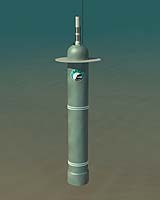
Perth, Australia (AFP) Aug 05, 2005 A coalition of Indian Ocean nations agreed Friday to develop and launch dozens of high-tech buoys which they hope will provide advance warning of any approaching tsunami. Twenty seven nations from around the Indian Ocean Rim will share technology, some costs and operational support in an effort to build and install more than 70 of the devices over the next two years, officials at a United Nations-backed conference said. The buoys, known as DART for deep-ocean assessment reporting of tsunamis, cost an estimated 230,000 US dollars each and are currently only built in the United States. But conference officials meeting in the Australian city of Perth said the Americans were willing to share the technology as part of an aid package to nations threatened by future tsunamis. Ten older-versions of the units are currently operating around the world but none are in the Indian Ocean where at least 20 will be needed, officials said. The buoys will now be built in other nations, including Thailand and Indonesia and installed around the world, with special emphasis on areas such as the 3500-kilometre (2175-mile) -long Java Trench, the western Indian Ocean and off Sumatra. Officials said the units were sensitive enough to detect miniscule changes in water column pressure. The move for an improved warning system follows last years Boxing Day tsunami which formed after a 9.3 magnitude earthquake rocked the northern tip of the Java Trench off Indonesia. The tsunami swept through the region killing an estimated 217,000 people in countries including Indonesia, Thailand, India and Sri Lanka and causing billions of dollars damage. About 100 delegates from the UN-backed Intergovernmental Coordination Group (ICG) which was set-up to implement the warning system, have been meeting in the Western Australian state capital over the last three days to agree on operational details. ICG spokesman Neville Smith, the vice chair of the UNs Intergovernmental Oceanographic Commission, said there had been a magnificent response to the challenged posed by the December 26 disaster. "I think this meeting has demonstrated the determination and willingness of the countries of the Indian Ocean to do what is needed technically, scientifically and in terms of cooperation to ensure a safe and reliable warning system is in place," he said. "This meeting has made significant progress in several areas. The agreement to share essential data is critical to the effectiveness and reliability and dependability of that system." The new generation DART will be smaller and less visible than existing buoys and officials are hopeful they will be less vulnerable to vandalism from pirates. As part of the warning system, ICG member nations also agreed to set up a communal seismic and oceanographic database in Perth that will allow each to access real-time information from around the Indian Ocean. India was elected to chair the ICG over the next two years but remains the only country not to have given written consent to exchange real-time seismic data, although officials said they had given a verbal undertaking to do so. Indian delegate Harsh Gupta, a geophysicist at the Department of Ocean Development in New Delhi, said there had been a reluctance to share real-time data but the problem was being resolved. Doctor Gupta said although major tsunamis were rare, the system would also detect events such as cyclones in the Bay of Bengal, where 20 per cent of world's major storm surges occur. The ICG will meet again in Hyderabad, India in December to ratify the DART partnership and ensure the buoys are made to standard specifications. Related Links SpaceDaily Search SpaceDaily Subscribe To SpaceDaily Express  Brown Grad Student's Seismic Study Shakes Up Plate Tectonics
 Providence RI (SPX) Jul 29, 2005
Earth's cool, rigid upper layer, known as the lithosphere, rides on top of its warmer, more pliable neighbor, the asthenosphere, as a series of massive plates. Plates continuously shift and break, triggering earthquakes, sparking volcanic eruptions, sculpting mountains and carving trenches under the sea. |
|
|

| The content herein, unless otherwise known to be public domain, are Copyright 1995-2006 - SpaceDaily.AFP and UPI Wire Stories are copyright Agence France-Presse and United Press International. ESA PortalReports are copyright European Space Agency. All NASA sourced material is public domain. Additionalcopyrights may apply in whole or part to other bona fide parties. Advertising does not imply endorsement,agreement or approval of any opinions, statements or information provided by SpaceDaily on any Web page published or hosted by SpaceDaily. Privacy Statement |